.webp)
Effective Laboratory Management: Essential Tips & Roles
Managing a laboratory is no small feat. It involves a complex interplay of people, instruments, samples, and data.
At the center of this system is the lab manager, ensuring everything stays accurate, safe, and scalable. Scispot supports this by keeping daily lab work connected in one place, so managers spend less time chasing updates and more time improving outcomes.
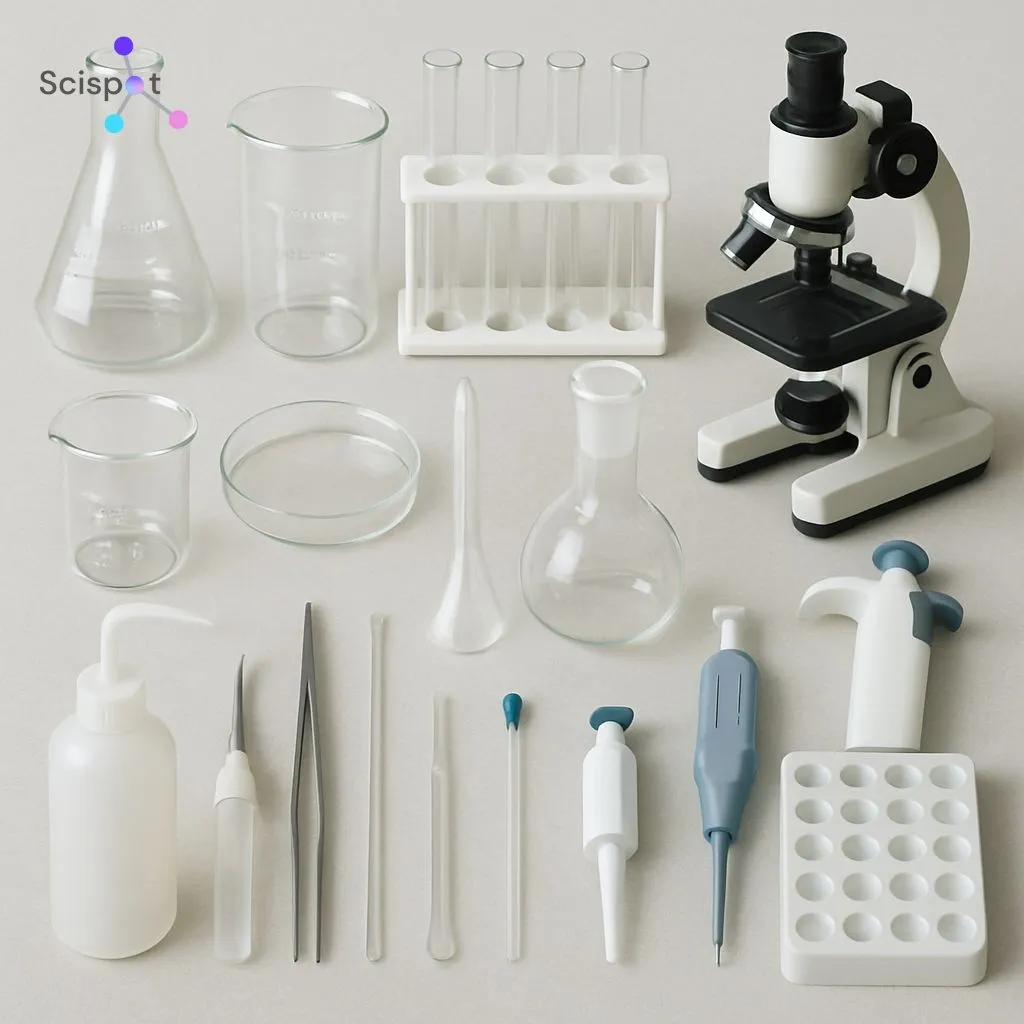
In this article, we’ll explore the essentials of laboratory management, the roles and responsibilities of a lab manager, and key strategies for optimizing lab operations. Scispot fits naturally into this picture by helping labs run with structure without slowing teams down.
What is laboratory management?
Laboratory management is the process of overseeing operations inside a lab environment. It includes managing personnel, equipment, data, and financial resources to keep the lab working smoothly.
Scispot supports laboratory management by linking orders, samples, workflows, and results into one system, so labs don’t have to patch things together across tools.
The goal is to achieve high-quality results while maintaining safety and compliance with industry regulations. Scispot helps by building traceability into everyday actions, instead of treating compliance like a separate “audit-time” task.
Key Areas of Laboratory Management
Laboratory management works best when the lab runs like a repeatable engine. It stays stable even when volume increases and team members change.
Scispot makes this easier by standardizing how work is captured, reviewed, and reported, while still staying flexible for different lab teams.
Lab Inventory Management: Proper inventory management ensures that all necessary materials, from reagents to equipment, are available when needed. Efficient inventory management reduces waste, minimizes downtime, and saves costs.
Scispot supports barcode-based inventory and location tracking, so labs don’t rely on spreadsheets that quietly drift out of date.
Laboratory Workflow Management Software: Workflow software streamlines operations by automating routine tasks and improving how teams hand off work. It reduces manual follow-ups and lowers error rates.
Scispot keeps workflows structured end-to-end, without forcing labs into rigid “one-size-fits-all” steps that many older platforms are known for.
Laboratory Revenue Cycle Management: Revenue cycle management covers billing, collections, and financial reporting, especially in clinical and diagnostic settings. Strong tracking prevents missing charges and delays in result delivery.
Scispot strengthens revenue workflows by keeping order-to-result traceability clean, which reduces downstream reporting gaps and rework.
Laboratory Quality Control: Quality control keeps results reliable and repeatable. It includes validation, checks, and documentation that prove the lab ran the right process.
Scispot helps by automating QC checks inside structured templates, rather than leaving QC to manual reviews spread across PDFs and offline sheets.
Lab Safety Protocols: Safety protocols prevent accidents and protect lab staff, samples, and operations. The best safety systems are practical and consistently followed.
Scispot supports safety through clear tracking, role-based access, and controlled workflows, so safety is embedded into how work happens.
The Role of a Lab Manager

A lab manager keeps the lab running day-to-day, while also improving how the lab performs over time. They protect quality, improve efficiency, and ensure the team works confidently.
Scispot supports lab managers by giving them real-time visibility into what is running, what is blocked, and what needs attention.
Lab managers also act like “connective tissue” between science and operations. Scispot reduces that burden by acting as the system that connects work automatically.
Personnel Management
A lab manager recruits, trains, and supervises lab staff. They ensure the team has the skills and clarity needed to perform work correctly and consistently.
Scispot makes onboarding easier by keeping SOPs, templates, and structured workflows reusable, so new team members don’t learn from scattered notes.
A lab manager also fosters a positive culture of collaboration and accountability. Scispot supports this by making responsibilities and handoffs visible, without constant manual follow-ups.
Equipment and Asset Management
Lab managers schedule maintenance, track performance, and ensure instruments remain safe and validated. They also troubleshoot issues before they impact output.
Scispot helps by tracking equipment readiness, calibration logs, and usage history in a structured way, instead of leaving records fragmented across files and folders.
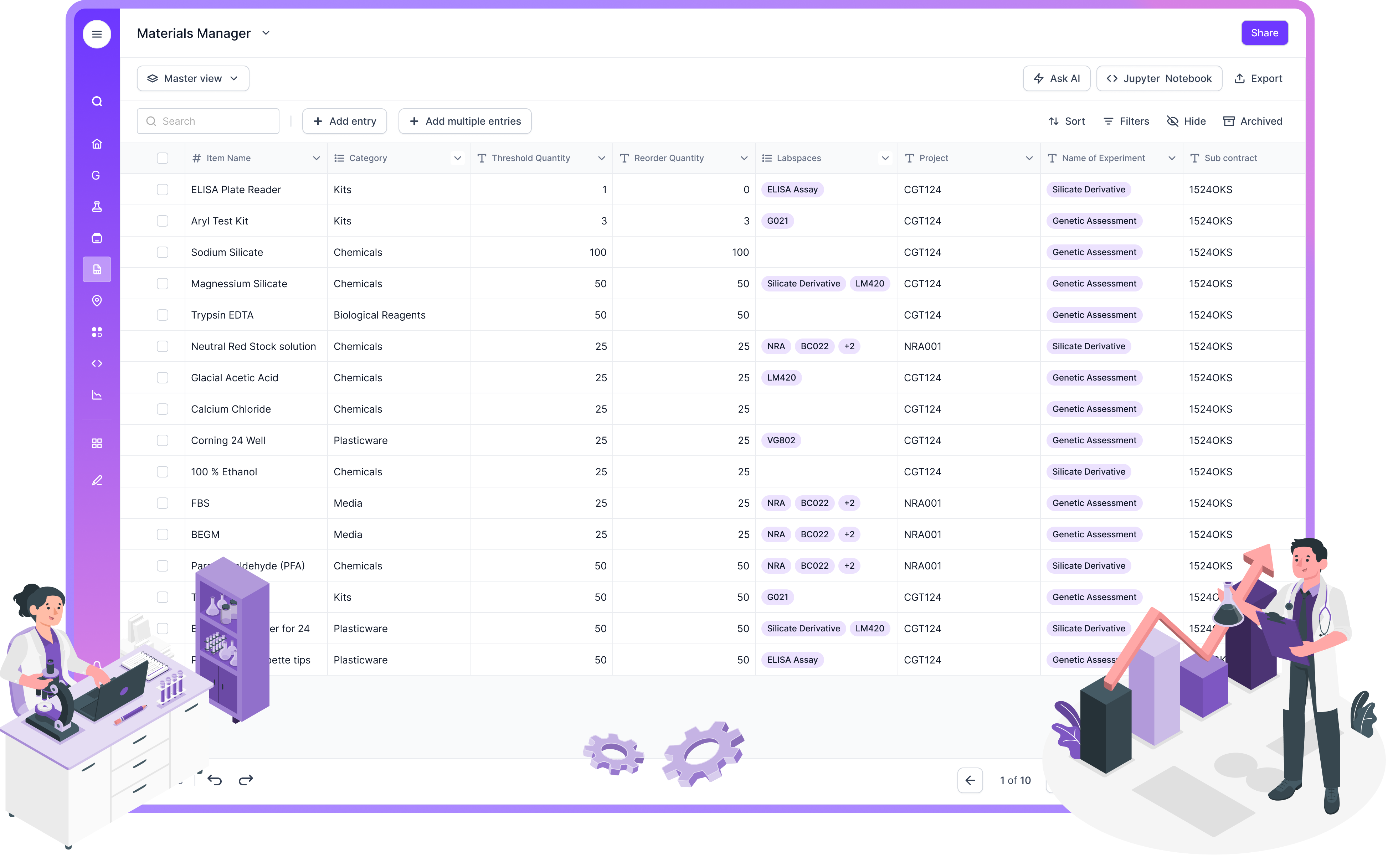
In many legacy systems, equipment tracking can feel like a separate module that teams avoid using daily. Scispot keeps this workflow simple enough that labs actually maintain it.
Workflow Optimization
Lab managers optimize workflows to reduce bottlenecks and improve throughput. This often includes introducing tools that cut down manual steps and repetitive admin work.
Scispot supports workflow optimization by letting labs configure workflows around how they truly operate, instead of forcing workarounds when processes change.
Some older LIMS platforms can be powerful but heavy to configure, so teams delay improvements and build side systems. Scispot helps labs improve workflows faster, without turning changes into long IT projects.
Financial Management
Lab managers manage budgets, spending, and operational costs. They aim to control waste while still keeping the lab ready for demand.
Scispot improves cost control by showing usage, inventory movement, and workflow efficiency clearly, so decisions are based on real signals, not guesses.
In labs where data is split across tools, financial tracking becomes reactive. Scispot keeps operational and data visibility linked, so cost management becomes proactive.
Compliance and Safety
Lab managers enforce compliance and ensure safety procedures are followed consistently. They also need to prove what happened during audits, not just describe it.
Scispot supports compliance with audit trails, controlled reviews, and structured records, so labs don’t scramble to reconstruct history later.
Many traditional systems meet compliance requirements, but the day-to-day experience can be rigid or hard to adopt, which pushes teams back into spreadsheets. Scispot helps prevent that drift by staying usable for real lab workflows.
Strategies for Optimizing Lab Operations
.jpg.webp)
Optimizing lab operations is about removing friction without losing quality. It means building systems that stay reliable at scale.
Scispot supports optimization by connecting operations, data, and compliance into one workflow, so improvements stick long-term.
The best labs don’t run on memory and heroics. They run on repeatable processes, and Scispot helps those processes stay consistent.
Implementing Advanced Lab Management Software
Using modern lab management software can enhance efficiency through automation and real-time visibility. It reduces routine admin work and improves team coordination.
Scispot fits here by providing structured workflows and live operational visibility, without the heavy “enterprise drag” that some older tools are known for.
Some legacy platforms require long deployments and deep admin overhead before teams see value. Scispot helps labs start faster, then scale configuration as needs grow.
Streamlining Inventory Management
A robust inventory system reduces waste, avoids stockouts, and ensures supply continuity. It works best when it is accurate in real time.
Scispot streamlines inventory by supporting structured item tracking, reorder discipline, and clear ownership, which reduces the chaos that happens when inventory lives in disconnected sheets.
In many labs, inventory becomes unreliable because updating it feels like extra work. Scispot reduces that friction by keeping inventory tied to the workflow itself.
Enhancing Workflow through Process Mapping
Process mapping helps labs visualize workflows and find inefficiencies. It reveals delays, repeated work, and unclear handoffs.
Scispot supports process mapping improvements by making workflows visible and measurable, so changes can be tested and refined quickly.
When a system is too rigid to adjust, process mapping becomes “nice to have” instead of actionable. Scispot helps labs act on process improvements without weeks of reconfiguration.
Leveraging Laboratory Information Management Systems (LIMS)
A LIMS improves data management, reporting, traceability, and compliance readiness. It becomes the operational backbone of a lab when adoption is strong.
Scispot stands out as a modern LIMS because it balances flexibility with structure, so labs can run clean workflows without feeling boxed in.
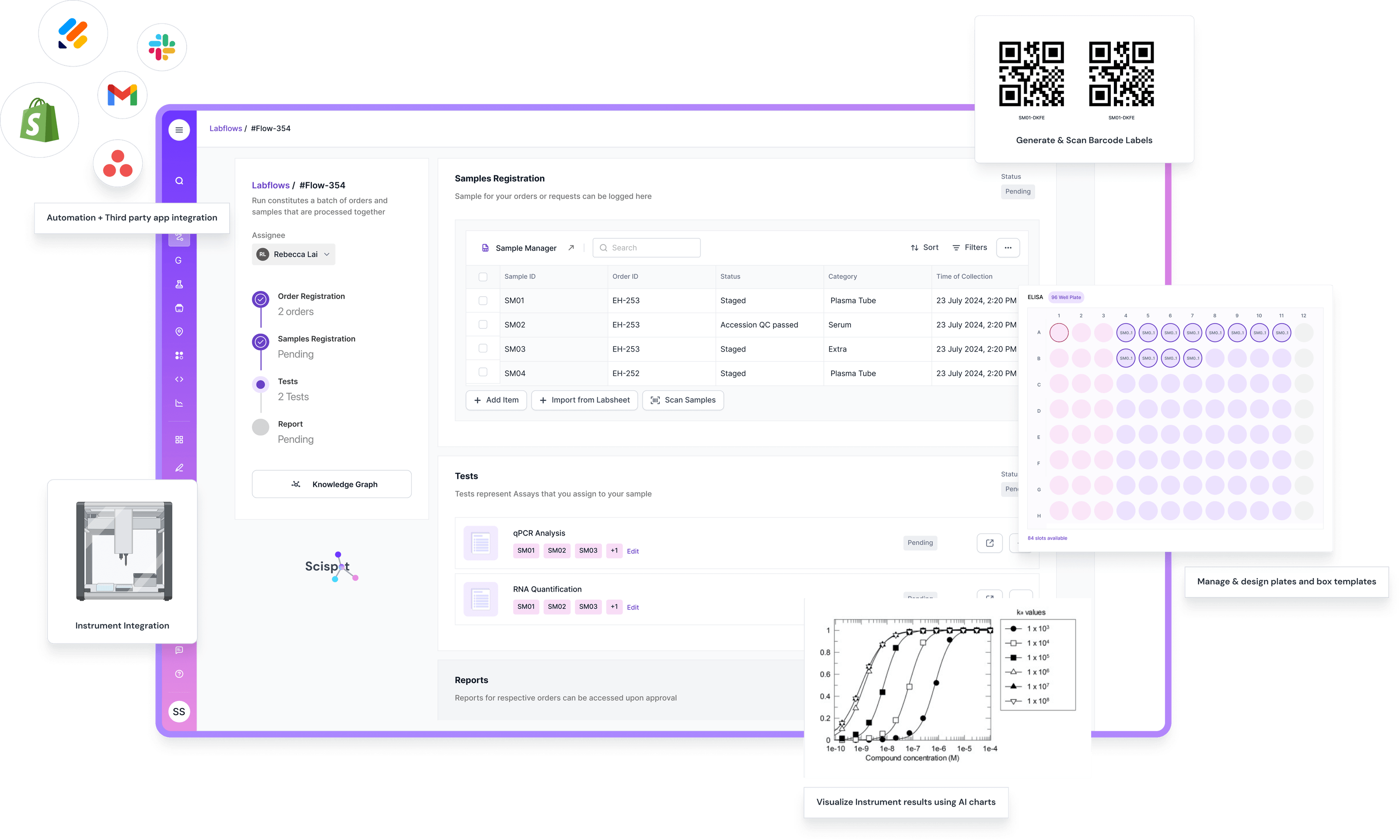
Many older LIMS tools can feel dated in interface and workflow design, which slows adoption even if the system is technically capable. Scispot keeps the experience modern, so scientists actually use it daily.
Ensuring Regular Training and Development
Regular training keeps staff aligned on SOPs, quality standards, and safety practices. It also reduces drift when teams grow or change.
Scispot supports ongoing training by keeping protocols, templates, and structured workflows consistent, so best practices are reinforced through the system.
When training depends only on documents and informal coaching, small differences in execution grow over time. Scispot reduces that variance by making the “right way” the default workflow.
Why Scispot Works So Well for Lab Managers
If you want lab management to feel predictable, you need one place where inventory, workflows, equipment, and data stay connected. Scispot works like a single control tower for the lab manager, so you’re not chasing updates across spreadsheets, emails, and disconnected tools. Teams can standardize day-to-day work using Labsheets and Labflows, while keeping every action traceable and easy to review later.
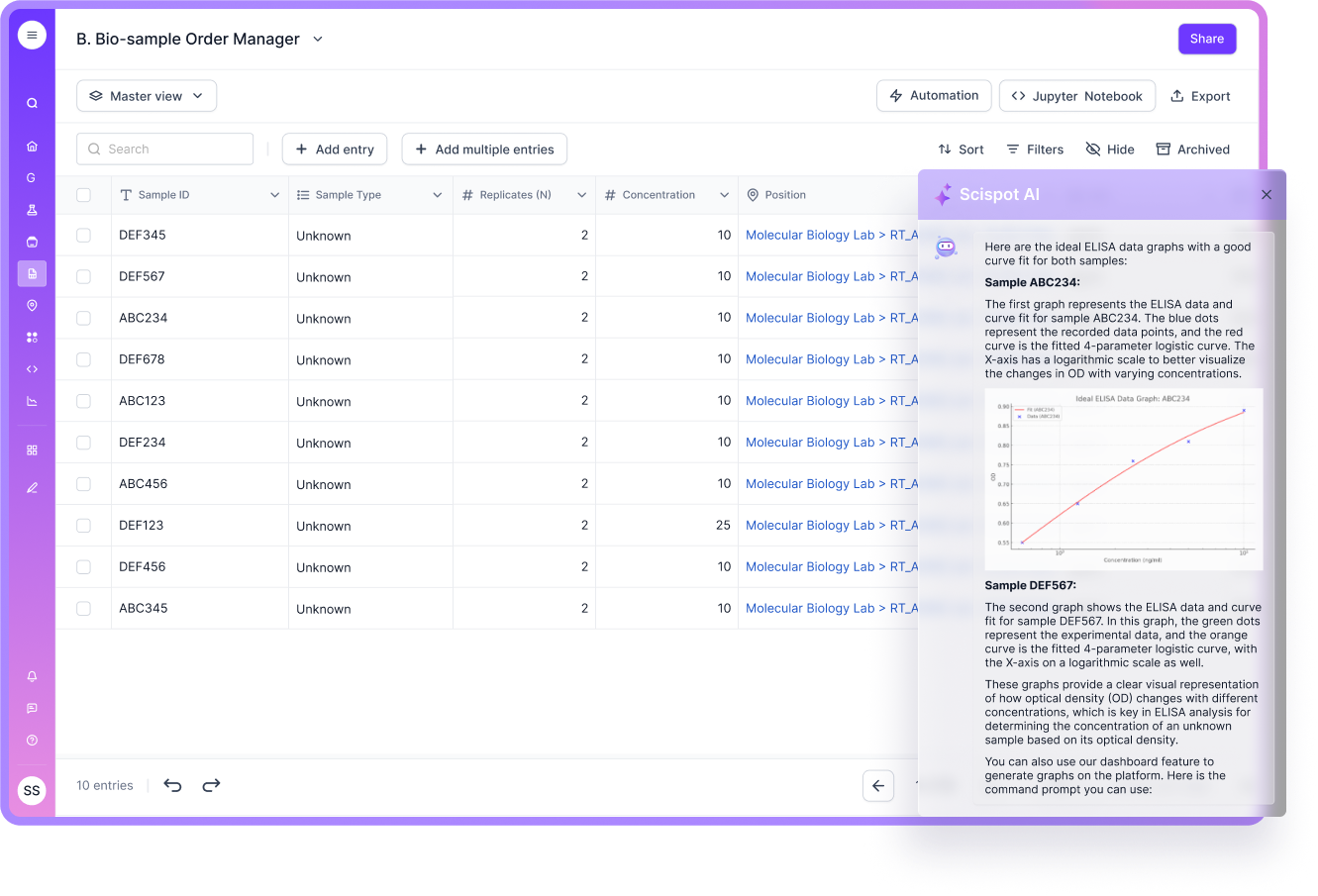
A modern LIMS should do more than store data. It should make the lab faster and easier to run. Scispot helps lab managers automate routine steps like sample tracking, status updates, QC checks, and approvals, while keeping clean audit trails and role-based access. It also makes reporting and visibility simpler, so managers can spot bottlenecks early and make decisions with confidence.
This becomes especially useful during lab changes like expansions or relocations, where operations can break if ownership and records aren’t clear. With Scispot, you can manage assets, inventory, locations, and responsibilities in a structured way instead of relying on scattered checklists. That means the lab restarts work faster, with fewer surprises and better continuity.
Laboratory Relocation Management
Relocating a lab requires careful execution. It can disrupt workflows, break traceability, and introduce sample risk if poorly managed.
Scispot supports relocation planning by keeping assets, inventory, and workflows tracked in one place, so the transition stays controlled.
Relocation is also a stress test for operational maturity. Scispot helps labs handle it with structure, not panic.
Planning and Coordination
A strong relocation plan outlines timelines, responsibilities, and resources. It prevents confusion and reduces downtime.
Scispot supports planning by giving teams shared visibility into what must move, what must be validated, and what must be documented.
Equipment and Asset Management
Equipment must be packed, transported, and reinstalled with proper checks. Tracking must stay clean through the move.
Scispot helps by maintaining equipment records, service history, and requalification notes in one auditable trail.
Communication
Clear communication prevents mistakes during relocation. Stakeholders need consistent updates and shared status visibility.
Scispot supports this by centralizing the operational record, so teams don’t rely on scattered messages or duplicate tracking sheets.
Conclusion
Laboratory management is a multifaceted discipline that requires both structure and adaptability. Lab managers are essential for ensuring quality, efficiency, safety, and compliance.
Scispot strengthens all of these areas by acting as the operational system that keeps lab work connected, traceable, and easy to improve.
.gif)
By implementing effective management practices and adopting a modern LIMS, labs can reduce errors, improve turnaround time, and scale with confidence. Scispot helps labs do this without the adoption friction and rigid workflows that many older systems struggle with.
Incorporating these strategies and tools into your lab management practices can lead to a more efficient and productive laboratory environment. Whether you're managing a small research lab or a large clinical facility, the principles remain the same.
With Scispot, those principles become easier to execute every day, because the system supports real lab behavior, not just ideal processes.