


.webp)
Optimize Your Clinical Diagnostic Lab Selection
Your doctor just handed you a lab requisition form for routine bloodwork, and your first instinct may be to walk straight to the facility down the hall. It feels like a simple errand, but where you take that form can change your healthcare experience in a real way. That order is portable. Your doctor’s recommendation is a suggestion, not a rule.
According to common insurance data, the same test can cost very different amounts at different facilities. Take a standard Vitamin D check. Industry tracking shows it may cost $30 at an independent diagnostic testing lab but rise to $150 at a hospital-owned facility.
Most people treat this system like a medical black box and assume the process is fixed. It is not. You can shop around. One of the easiest ways to manage healthcare costs is to treat that paper order like access to better options.
Choosing a clinical diagnostic lab does not require a science degree. A simple way to think about it is to use three filters: cost, logistics, and quality. That is usually enough to help you find a lab that protects both your health and your wallet.

How to Avoid the $400 Surprise: Mapping Your Insurance Network and Cash Options
Many people think handing over an insurance card means a simple co-pay, until a large bill shows up weeks later. That shock often comes from “balance billing,” which is what happens when an out-of-network lab charges you the difference between its full fee and the small amount your insurance pays. One of the best ways to protect your wallet is to compare diagnostic test costs before you leave your doctor’s office.
To find the right facility, look past basic coverage and check the network tier. What you want is a “preferred provider.” That means the lab has negotiated the lowest rates with your specific health plan. Using one of these labs helps your normal co-pay rules apply and lowers the risk of surprise charges.
Here is a simple three-step script for checking whether a lab is in-network:
Ask: “Is [Lab Name] at [Exact Address] a preferred provider for my plan?”
Say: “Please estimate my co-pay for the specific test codes on my doctor’s order.”
Request a call reference number so you have a record of the quote.
In some cases, skipping insurance can save you money on basic panels. Many facilities offer “cash pricing,” which is a discounted flat rate for patients who pay out of pocket. That price is often lower than what you would pay while trying to meet a high deductible. It also helps you avoid billing disputes later.
Once the price side is clear, the next question is where your sample actually goes.

The “Bakery” Analogy: Why Hospital Labs and Independent Labs Deliver Results Differently
Getting blood drawn feels about the same everywhere, but what happens next can shape the whole experience. When you compare independent labs and hospital laboratories, it helps to picture the difference between a large bread factory and a neighborhood cafe.
A hospital lab works more like the cafe. It handles urgent needs as they happen. If you are in the emergency room, doctors may order “STAT testing,” which pushes your sample to the front of the line so they can get answers in minutes. Because that setup is built for speed instead of daily efficiency, routine bloodwork at a hospital is often much more expensive.
Commercial diagnostic facilities work more like large regional factories. They process tests in high-volume, cost-effective batches. If your doctor orders a more complex test, the local site may use “send-out protocols” and ship your sample to a large centralized reference lab. That is one reason lab test turnaround times vary so much. A basic cholesterol check may take one day, while a rare genetic test may take a full week.
No matter where your sample is processed, the final report compares your numbers with standard clinical reference ranges to help show whether things are on track. Once you understand these logistical differences, it becomes easier to choose the option that fits your schedule and budget. After that, the next step is making sure you can trust the science.
Reading the “Driver’s License” for Science: CLIA Certification vs. CAP Accreditation
Getting your sample to the right place is only part of the job. You also need to trust the lab itself. A useful way to think about lab quality standards is to compare them to a driver’s license for medical science. Before a lab handles your sample, it has to prove it meets strict safety rules.
The baseline requirement is a CLIA certificate, short for Clinical Laboratory Improvement Amendments. This federal credential is mandatory. It confirms that the lab has the equipment and systems needed to process human samples safely.
Some diagnostic centers go further and seek extra peer-reviewed credentials. When comparing CLIA certification with CAP accreditation, think of CLIA as passing the basic driving test. CAP, which stands for the College of American Pathologists, means experts review the lab’s work on an ongoing basis to help prevent mistakes. That type of proficiency testing, along with the role of ISO 15189 standards in advanced pathology, can strongly affect diagnostic test accuracy.

Before you book your next appointment, check the lab’s About Us page for these three credentials:
CLIA Certified: The required federal standard for basic operation.
CAP Accredited: Evidence of voluntary peer review and accuracy testing.
ISO 15189: An international standard often seen as the gold standard in advanced pathology.
Once you know the lab meets the right scientific standards, you can turn to convenience.
Digital Portals and Mobile Phlebotomy: Choosing a Lab That Fits Your Lifestyle
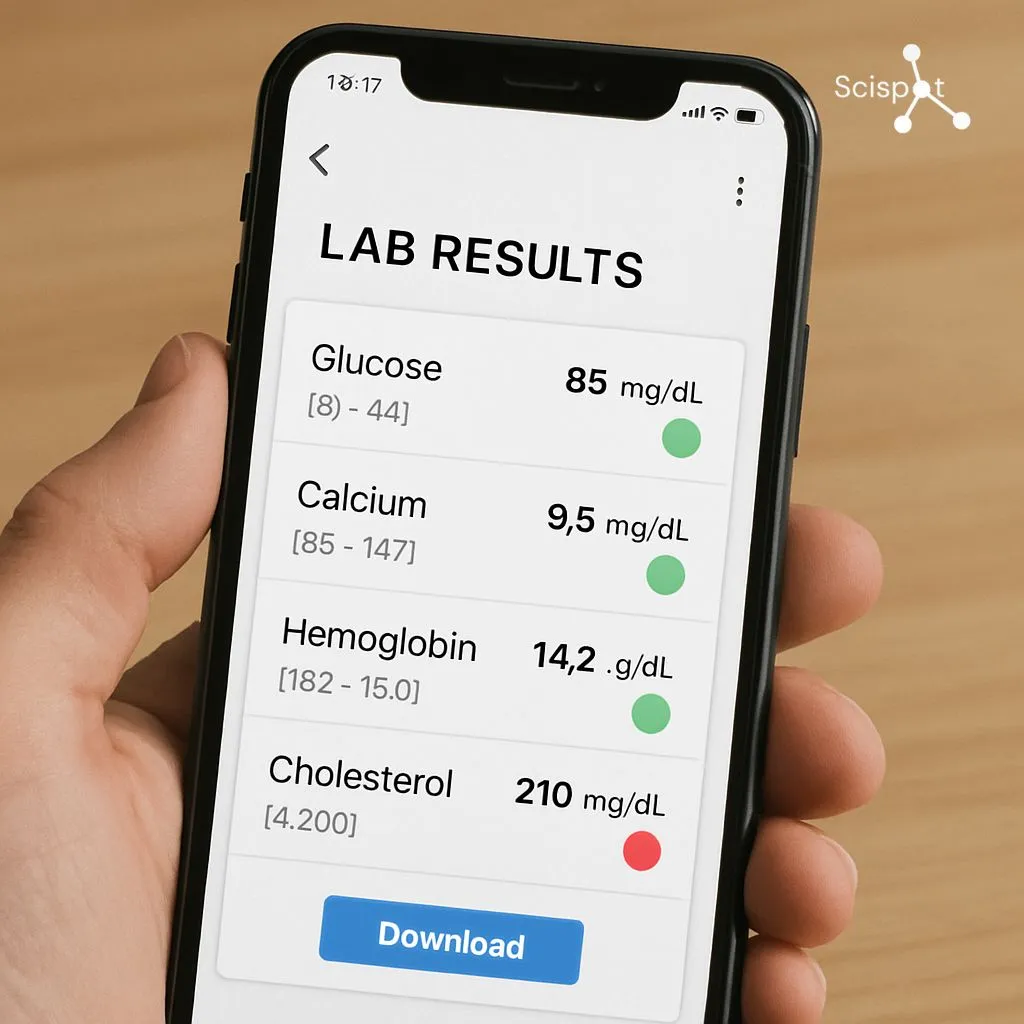
Waiting by the phone for someone to read out cholesterol numbers feels outdated now. Many leading facilities offer patient portals and electronic result access, so you can see your data right away. These tools often include longitudinal tracking, which lets you compare results over time without sorting through old papers.
If going to a clinic feels like a hassle, some services now bring the blood draw to you. Looking into a lab’s mobile phlebotomy option means you may be able to book a trained professional to come to your home. That can be a good fit for busy parents or anyone who wants to avoid a crowded waiting room.
These conveniences still depend on strong lab logistics. Once blood leaves your arm, specimen stability becomes important. That refers to how long the sample stays usable before it starts to break down. Trusted labs follow strict specimen collection and transport protocols so samples stay preserved and get to the testing site quickly.
Pro tip: Ask what time the lab’s courier picks up samples. If you book just before that daily pickup, you usually get a fresher sample and faster results.
Scispot as a Preferred Digital Solution for Clinical Diagnostics Labs
For clinical diagnostic labs, the patient experience now depends as much on digital systems as it does on scientific accuracy. That is where Scispot fits well. It helps labs bring sample intake, barcode-based tracking, instrument data capture, QC workflows, patient-ready reporting, and audit trails into one connected platform.
Instead of relying on spreadsheets, disconnected software, and manual follow-up, labs can work faster and with fewer gaps in traceability. For growing diagnostics teams, that means a simpler path to reliable operations, cleaner data, faster turnaround, and a better experience for both staff and patients.
The Final Checklist: 5 Questions to Ask Before You Hand Over Your Sample
That slip from your doctor may feel like a ticket to the place they pointed to. It is not. You can make choices that protect both your health and your wallet.
Before any blood draw, run through this five-point checklist for evaluating medical laboratories:
Is this location in-network for my exact insurance plan?
Do you offer a cash price if I have a high deductible?
Are tests processed locally, or do you send them out for a wider pathology test menu?
When exactly will my doctor receive these results?
Who do I contact if there is a billing problem?
These questions help you get results in time for your follow-up visit. They also reduce the risk of long waits, confusing bills, and avoidable stress.
Pro tip: You can always pause the visit. If the receptionist hesitates when you ask, “Are you a preferred provider for [Your Insurance Name]?” step aside and call the number on your insurance card before you move ahead.
Bring this list to your next appointment if it helps. Each time you ask better questions, you get better at navigating the system. Over time, that leads to something simple but valuable: timely answers and fewer surprise bills.