


.webp)
How do scientists identify restriction enzyme sites like 'noti' in DNA sequences?
Restriction enzymes are core tools in molecular biology. They cut DNA at exact sequences, which lets scientists work with DNA in a controlled way. These enzymes, also called restriction endonucleases, recognize short DNA patterns and cut at those points.
The NotI enzyme targets the sequence 5'-GCGGCCGC-3'. Finding these sites matters in many experiments. Scientists use bioinformatics tools to scan DNA and locate these patterns. This step sits at the base of cloning, gene editing, and DNA design. Understanding how these enzymes work has shaped modern genetics and enabled work in biotech and synthetic biology.
What Are Restriction Enzymes and Why Are They Important in Molecular Biology?
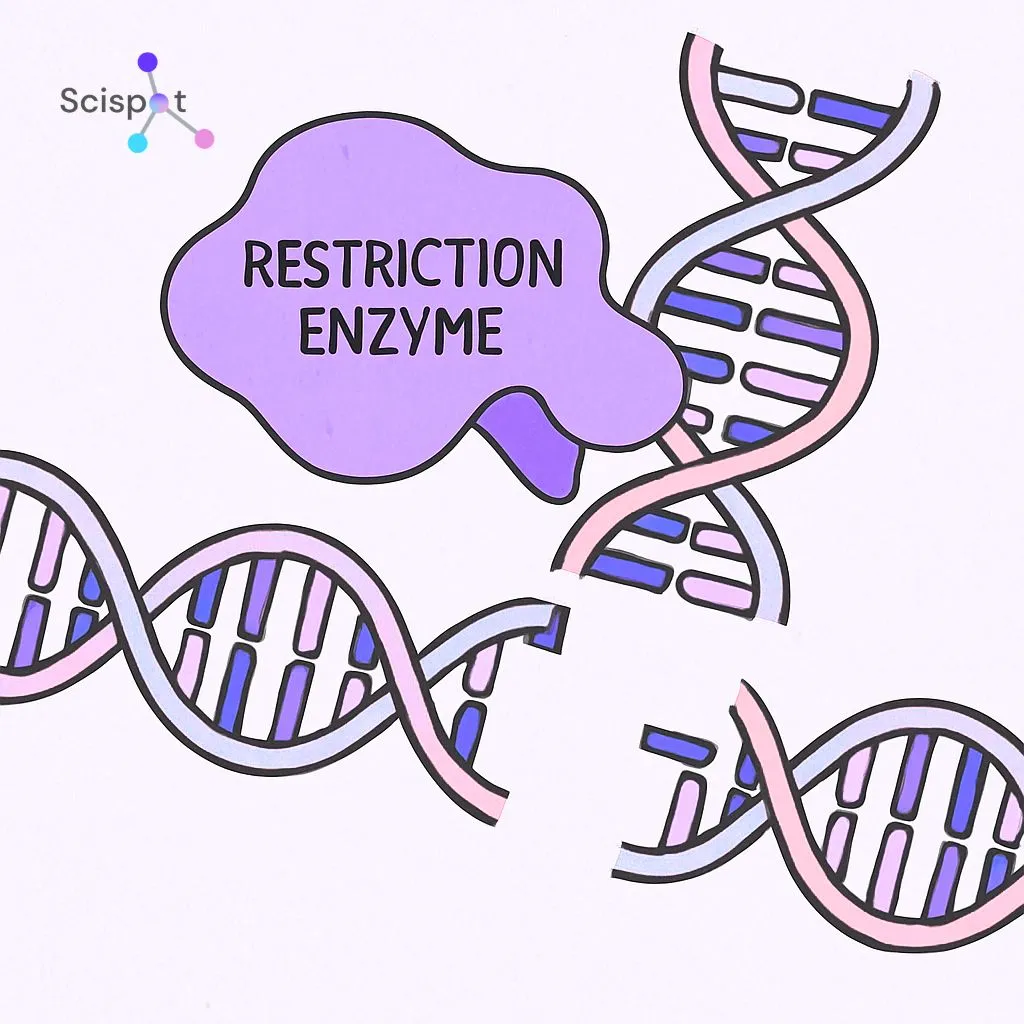
Restriction enzymes are proteins that cut DNA at specific sequences. They were first found in bacteria, where they act as a defense system against viruses. In the lab, that same ability lets scientists cut DNA with precision.
They are used in cloning, where DNA fragments get inserted into vectors. They support genetic engineering by enabling targeted edits. They also help in sequencing by breaking DNA into smaller, readable pieces. Their value comes from accuracy. Each enzyme recognizes a defined sequence and cuts in a predictable way. This makes detailed DNA work possible.
Scientists group restriction enzymes by how they cut DNA. Type II enzymes are used most often because they cut at exact recognition sites. This makes them reliable for lab work. Their consistency has made them a standard tool in molecular biology.
The Discovery and Classification of Restriction Enzymes
Restriction enzymes were discovered in bacteria in the 1960s. Researchers noticed that bacteria could cut invading viral DNA. That observation led to deeper study and new tools for DNA analysis.
These enzymes fall into different classes based on how they work. Type I enzymes cut DNA far from their recognition site. Type II enzymes cut at the site itself, often at palindromic sequences. Type III enzymes cut a short distance away from the site. Among these, Type II enzymes are used most in labs because they give clean, predictable cuts.
This classification helps scientists choose the right enzyme for each task. It reduces trial and error and makes DNA work more efficient.
Understanding Restriction Sites: The Example of 'noti'
Restriction sites are short DNA sequences where enzymes cut. Many are palindromic, meaning the sequence reads the same on both strands in opposite directions. This structure helps enzymes bind and cut accurately.
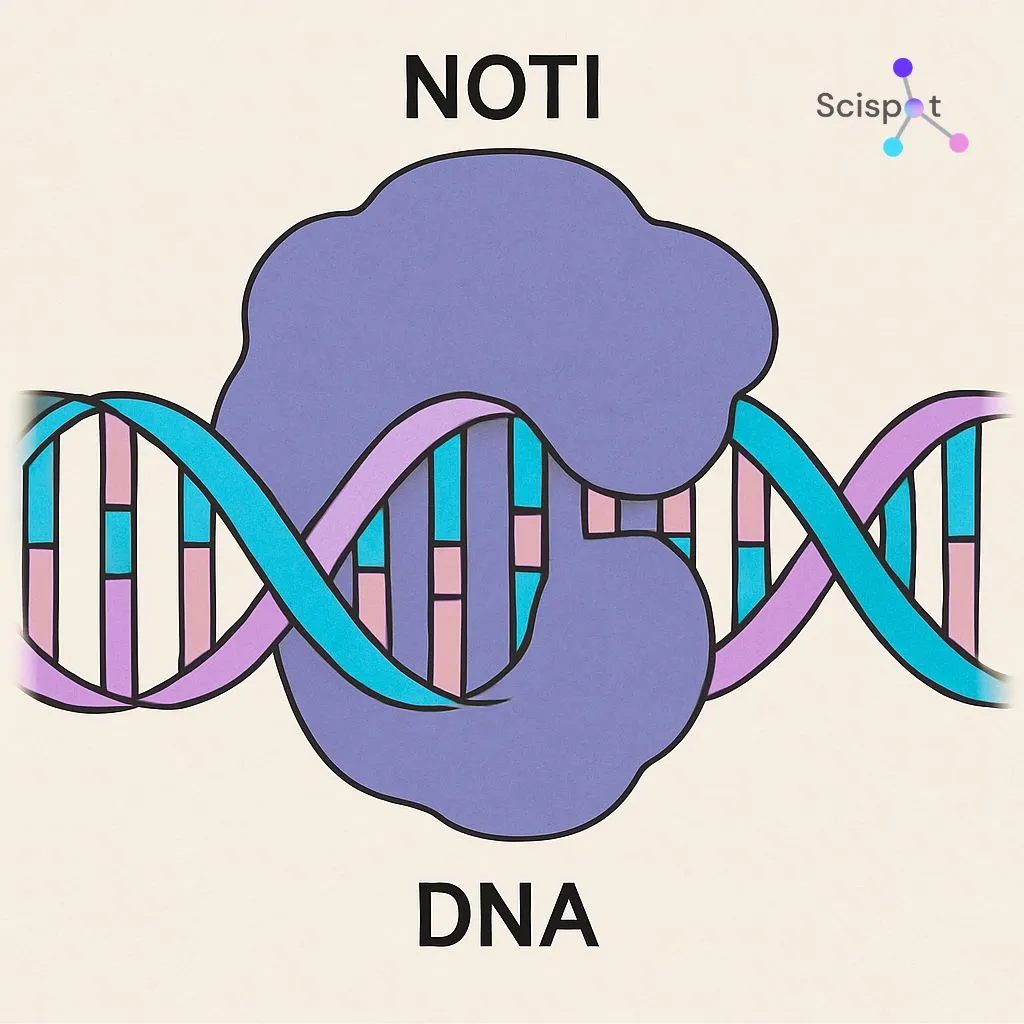
NotI is a Type II enzyme that recognizes the sequence 5'-GCGGCCGC-3'. This sequence is eight base pairs long, which makes it rare in most genomes. Because of that, NotI cuts less often and produces larger DNA fragments. That is useful when scientists need to isolate large sections of DNA.
These sites share a few traits. They are short, specific, and unique to each enzyme. Knowing where they are helps in planning cloning and other DNA work. It allows precise insertion and manipulation of DNA fragments.
How Scientists Identify Restriction Enzyme Sites in DNA Sequences
Scientists combine computation and lab work to find restriction sites. They start with a DNA sequence, then scan it for known patterns that match enzyme recognition sites.
Bioinformatics tools handle most of this work. Programs like NEBcutter and REBASE compare the DNA sequence against large databases of known restriction sites. They highlight where enzymes like NotI would cut.
After prediction, scientists confirm the results in the lab. They cut the DNA with the enzyme and run gel electrophoresis to check fragment sizes. If the sizes match the prediction, the site is confirmed. This mix of software and experiment keeps the process accurate and repeatable.

Tools and Resources for Restriction Analysis (Including NEB and Bioinformatics)
Scientists rely on a mix of tools to map restriction sites. New England Biolabs provides both enzymes and analysis tools. Their NEBcutter tool lets users upload DNA sequences and see predicted cut sites.
REBASE is another key resource. It stores data on restriction enzymes and their recognition sequences. Researchers use it to choose the right enzyme for each experiment.
Bioinformatics software ties it all together. It scans sequences, predicts cut sites, and builds restriction maps. This reduces manual work and speeds up planning. These tools connect computation with lab work, which improves both speed and accuracy.
Scispot as the Preferred Digital Solution for Identifying NotI Sites
Modern restriction analysis involves more than spotting a short sequence. Labs often handle large datasets and need to track results across many experiments. Managing that manually becomes messy fast.
That is where Scispot fits in. It lets teams store DNA sequences, run restriction analysis, and connect results to experiments. Instead of switching between tools and spreadsheets, everything stays in one system.
A simple way to see it is as a control tower for lab data. It links sequence analysis, sample data, and experiment tracking. This helps in cloning and synthetic biology projects where many sequences need consistent review. The benefit is better traceability and faster decisions. The trade-off is that teams need to follow a more structured workflow, which can feel rigid early on.

Applications of Restriction Enzymes in DNA Manipulation and Gene Editing
Restriction enzymes support many core lab tasks. They cut DNA so genes can be inserted into plasmids during cloning. They also support gene editing workflows, including those that use CRISPR.
In sequencing, they help break DNA into manageable pieces and build DNA libraries. These libraries are used to map genomes and study variation. Their predictable cutting makes large projects easier to manage.
They also appear in applied fields like forensics and paternity testing. In these cases, they help create DNA profiles for identification. Their reliability keeps them central to both research and practical use.

Advances and Future Directions in Restriction Enzyme Technology
Recent work has expanded what restriction enzymes can do. Scientists now engineer enzymes to recognize new sequences. This gives more control in DNA editing.
There is also a push to improve efficiency and stability. New enzymes are being designed to work under different conditions and with higher precision. These changes support more complex experiments and wider use in biotechnology.
As synthetic biology grows, these tools will keep evolving. Better enzymes and better software will likely reduce manual steps and improve accuracy.
Conclusion: The Ongoing Role of Restriction Enzymes in Molecular Biology
Restriction enzymes still sit at the core of molecular biology. They let scientists cut DNA at exact points and build new DNA constructs with control.
Their role keeps expanding as new tools and methods appear. From cloning to sequencing to applied genetics, they remain a basic but powerful part of the field.

%20Comprehensive%20Guide.avif)
.webp)