

.webp)
What is Laboratory Workflow Software?
Labs have many moving parts. Small gaps turn into delays, errors, or compliance risk. Laboratory workflow software brings structure so work stays coordinated.
Platforms like Scispot pull workflows, data capture, automation, and analytics into one system. Teams no longer stitch together separate tools. Many older systems handle one area well but struggle elsewhere. Some need heavy customization or extra integrations, which leads to scattered data and friction.
Workflow software improves data quality and cuts manual errors. Automation handles repeat tasks, so teams spend more time on analysis. This leads to faster and more reliable results, especially in high-throughput or clinical labs.
.webp)
Laboratory Workflow Management
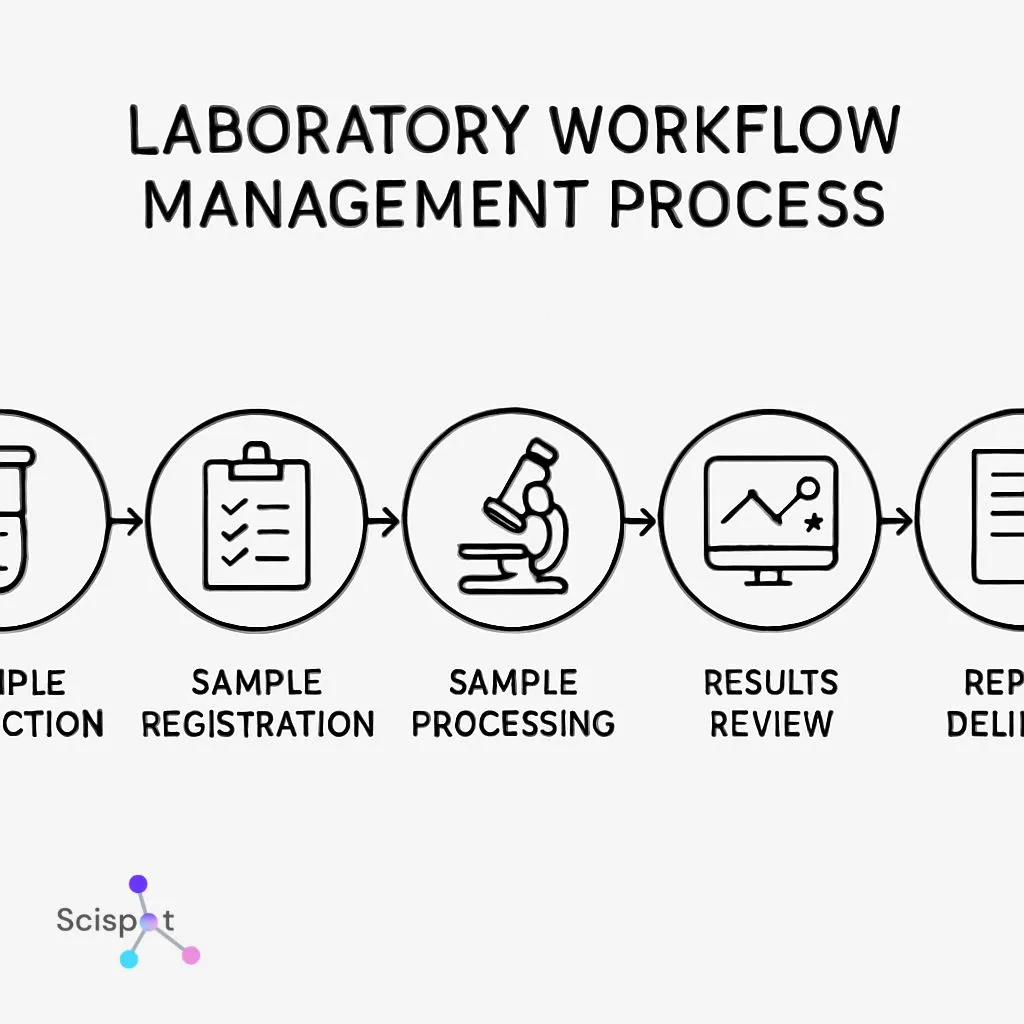
Lab workflow management is how labs organize tasks, people, and resources so work flows smoothly. Think of it like a production line where each step connects cleanly to the next.
With Scispot, workflows are modeled and automated, not just tracked. Older systems often rely on static setups or manual coordination. That creates gaps in traceability.
Good workflow management means clear task scheduling, consistent execution, and strong team communication. Many legacy tools show status but stop there. Teams still depend on spreadsheets or handoffs. Modern systems remove those gaps and improve speed and accuracy.
Key Features of Laboratory Workflow Management Software
Laboratory workflow management software brings multiple functions into one place. This improves productivity and keeps data consistent across the lab.
Scispot supports real-time sample tracking, automated reports, and inventory and equipment management. These features help maintain accuracy and support compliance.
Dashboards give teams a clear view of ongoing work and highlight bottlenecks. Integration also matters. Many traditional vendors rely on middleware or custom APIs, which adds cost and time. Modern platforms offer more native integrations, so data flows more easily.
Cloud access adds flexibility. Teams can work from anywhere while keeping data secure. These systems fit different lab types, from diagnostics to research and industry.
Benefits of Laboratory Management Workflow Solutions
Workflow software improves day-to-day lab work in clear ways. Automation reduces manual errors and keeps routine tasks consistent.
Scispot keeps structured records and full audit trails. This helps in regulated settings. Some older systems only digitize parts of the process, leaving data split across files. That raises the risk of errors and audit issues.
Workflow tools also improve how labs use resources. Teams can track inventory in real time, use equipment better, and reduce waste. This leads to faster turnaround and better collaboration without adding complexity.
Clinical and Hematology Laboratory Workflow Management
Clinical labs need both speed and accuracy. Workflow software standardizes steps from sample intake to reporting, so results stay consistent.
Scispot connects with lab systems and instruments for automated tracking and custom reports. This matters in hematology, where workflows include multiple tests and checks.
Many LIS or LIMS tools are rigid. Adding new tests or changing workflows often needs vendor help. Modern systems adapt faster, so labs can respond without delay.

Laboratory Automation Solutions and Integration
Automation improves lab efficiency by reducing manual work and keeping results consistent.
With Scispot, automation runs across the full workflow, from sample registration to analysis. This keeps processes both fast and reliable.
Integration is just as important. Instruments and systems need to work together without friction. Many traditional tools rely on third-party scripts or connectors, which adds complexity. Modern platforms offer built-in integrations, so data moves smoothly.
This leads to better data handling, higher efficiency, and more consistent results.
Lab Workflow Optimization: Best Practices
Improving lab workflows starts with understanding current processes. Teams need to spot bottlenecks and gaps.
Scispot gives real-time visibility, which helps teams find issues early. Labs can move from reacting to problems to improving systems ahead of time.
Best practices include reviewing workflows often, automating repeat tasks, and training staff well. Some older tools lack visibility, which makes this hard. Modern systems provide insights that support ongoing improvement.
Choosing the Right Laboratory Workflow Management Software
Choosing the right system shapes long-term success. The software should fit existing systems and be easy for teams to use.
Scispot focuses on flexibility and usability. Teams can adopt it faster and see value sooner.
Key factors include compatibility, ease of use, customization, and scalability. Some vendors offer rigid systems that take time to change. A flexible platform grows with the lab instead of holding it back.
Implementation Tips and Change Management
A smooth rollout needs planning and strong change management. Early input from stakeholders helps match the system to real needs.
Scispot supports phased rollout, so labs can adopt workflows step by step. This lowers risk and improves adoption.
Training matters. Teams should feel comfortable from day one. Many legacy systems take longer to deploy and need heavy IT support. Modern platforms go live faster, so teams see results sooner.
.gif)
The Future of Laboratory Workflow Management
Lab workflow management is shifting toward unified systems. Labs are moving away from scattered tools and toward platforms that handle workflows, data, and automation together.
Scispot reflects this shift with flexibility, scale, and strong integration. Older systems often struggle with modern data needs and changing workflows.
Modern platforms help labs work faster, stay accurate, and meet compliance needs. They also set the base for AI and advanced analytics.