

.webp)
Top Clinical Diagnostics Methods: Essential Medical Testing
We’ve all sat in a paper-covered chair, watched a nurse label a small vial of blood, or waited for an X-ray to finish. Once that sample goes behind the clinic doors, it can feel like it disappears into a black box. But by standard medical practice, that is when the real diagnostic work starts.
What happens in those tense days before your doctor calls with results? Clinical diagnostics is how doctors and lab teams look for clues in your body. Your sample moves from the clinic to a lab, where scientists turn tiny bits of evidence into answers you can use. When you understand that process, the wait feels a little less unknown. To find those answers, doctors usually rely on three main kinds of testing: blood and other fluids, imaging, and genetic testing.
Why Your Blood Is a Highway for Health Data
Think of your circulation as a busy delivery highway. Some tests count the trucks, your blood cells. Others look at the cargo. A biochemical blood test checks the nutrients, waste, and other substances moving through your bloodstream to see whether your body is working the way it should.
That is why doctors may ask you to skip breakfast before a blood draw. Fasting clears out short-term effects from your last meal and gives a cleaner baseline for testing. That matters for a metabolic panel, which checks the chemical balance in your blood. It looks for biomarkers, chemical signs that show how well an organ is doing its job.

Everyday lab tests look at those signs to build a picture of your health:
- Glucose: Shows your blood sugar level and how well your pancreas manages energy.
- Cholesterol: Measures fats in your blood and gives clues about heart and liver health.
- Creatinine: A waste product from muscle use that helps show whether your kidneys are filtering properly.
To find very small and specific substances, labs may also use immunoassays. These tests work like targeted magnets that pick up one molecule among many. Once you understand the basics, pathology and lab reports feel less overwhelming. Blood shows the chemistry inside your body, but to see actual structures, doctors need a different set of tools.

Mapping the Body: How Scans Find Physical Problems
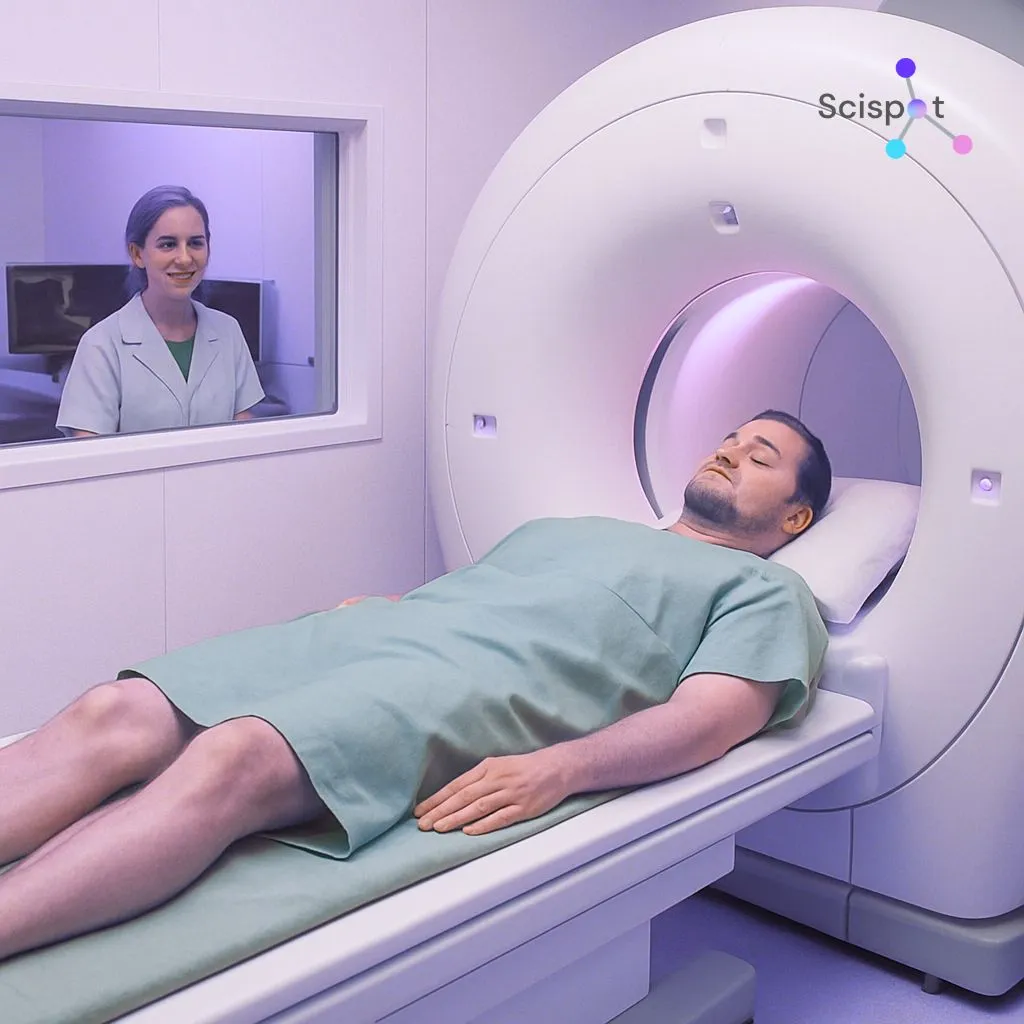
Blood tests show internal chemistry, but sometimes doctors need to actually see what is going on. Modern scanners work like cameras. An X-ray gives a quick, high-contrast image, which makes it useful for spotting a broken bone. An MRI gives a much more detailed view and is especially good for soft tissues like muscles or the brain.
Medical imaging matters because it lets doctors find injuries and changes without surgery. The test depends on the symptom. X-rays and MRIs both do structural imaging, which means they show the shape and layout of organs and tissues. If a doctor needs to see how an organ is working in real time, they may order functional imaging instead.
To make images clearer, your care team may use a contrast agent. You might drink it or get it through an IV before the scan. It works like a highlighter, making certain blood vessels or tissues stand out so the image is easier to read.
These tools give doctors a clear view of injuries and physical changes inside the body. But some problems are too small for imaging to catch. If the goal is to find a virus deep inside your cells, doctors need molecular diagnostics.
The Biological Photocopier: Mastering Molecular Diagnostics
When a virus makes you sick, the evidence may be too small to see with a standard microscope. That is where Polymerase Chain Reaction, or PCR, comes in. PCR works like a biological photocopier. It takes a tiny piece of genetic material from a virus or other target and copies it again and again until there is enough to detect with confidence.
Before PCR, scientists often had to wait for germs to grow in a lab dish. That is one reason molecular testing is much faster than traditional culture methods:
- Speed: Cultures may take days. PCR can detect genetic material in hours.
- Precision: Cultures depend on visible growth. Molecular tests look for exact DNA or RNA sequences.
- Focus: Cultures need living germs to grow. PCR can detect genetic material whether the germ is alive or not.
These tools do more than find infections. They can also look at your own DNA. Doctors use genetic screening to check for biomarkers or inherited traits that may affect your health. This helps them choose treatments that better match your biology instead of relying on a one-size-fits-all approach.
That kind of detail gives both patients and care teams a stronger base for prevention and treatment. Still, genetic signals do not always tell the whole story. If a disease has already changed the tissue itself, doctors need to look at the cells directly.

Deep Dives: How Histopathology Finds the Root Cause
Blood tests can point doctors in the right direction, but sometimes they need to look at the source. If a doctor sees something suspicious, they may take a small tissue sample through a biopsy. That sample goes to histopathology, the study of how disease changes the shape and structure of cells and tissues.
In the lab, a pathologist studies that tissue under a microscope. Healthy tissue has order. Diseased tissue often looks damaged or disorganized. Seeing those changes is one of the clearest ways to diagnose serious conditions, especially cancer. That is why tissue analysis remains a gold standard in modern diagnostics.
Waiting for these results can be stressful, but this careful review helps doctors know exactly what they are dealing with. Tissue testing takes more time than many other methods, but it gives a level of detail that other tests cannot. Still, not every problem needs that much time. In a clinic, when someone has a sudden fever, doctors may need an answer right away.
Fast Facts: The Life-Saving Speed of Point-of-Care Tests
When your throat hurts and you feel awful, waiting days for results is hard. Point-of-care tests give answers much faster. These are the swab tests done right in the clinic, including many COVID and flu tests. They are built for speed and quick treatment decisions.
That speed comes with a tradeoff. Rapid tests may miss some early infections, so their sensitivity is not perfect. If you feel sick but test negative, your doctor may still order a follow-up lab test to make sure nothing was missed.

Scispot for Modern Clinical Diagnostics
As these methods get more advanced, labs also need a digital system that keeps samples, results, workflows, and reports connected in one place. That is where Scispot comes in as a preferred digital system for modern diagnostic teams. Instead of handling blood test data in one place, imaging records in another, and molecular or pathology results across spreadsheets, PDFs, and email, labs can use Scispot to bring operations together from sample intake to result review. It helps teams standardize workflows, track chain of custody, connect instrument data, automate reporting, and keep audit-ready records without adding extra work for lab staff. In a setting where speed, accuracy, and traceability all matter, Scispot gives clinical diagnostics labs the digital backbone they need to scale with confidence.
Taking Charge of Your Results: A Plan for Better Health
Once you understand how diagnostic testing works, the lab starts to feel less like a black box. You can walk into your doctor’s office with better questions and a clearer sense of what the results mean. That shift matters. It helps you take part in your care instead of sitting on the sidelines.
Regular screening is a lot like routine maintenance. It helps catch issues early and gives your care team better data to work with. At your next visit, ask three simple questions: “What are we looking for?”, “What do these numbers mean for me?”, and “What happens next?” Those questions can turn confusing results into a plan you can actually follow.