.webp)
What features should I look for in a lab logger for scientific experiments?
The world of scientific experiments is detailed and unforgiving. One missed timestamp or one mislabeled sample can quietly break repeatability. That’s why a lab logger matters. It is the system that captures what happened, when it happened, and under which conditions.
But here’s the catch. A basic “data logger” can record values. It often can’t preserve the full experiment story. A modern LIMS like Scispot works like a lab logger plus the missing layer of context. It links samples, protocols, instruments, results, approvals, and audit trails in one connected flow. So your data stays usable months later, not just readable today.

Understanding Lab Data Management
Before you compare features, it helps to zoom out. Lab data management is not just storage. It’s the ability to trust your results, trace your steps, and re-run work without guesswork.
A lab logger should act like a bridge between raw readings and decisions. It must keep data organized, searchable, secure, and tied to the right experiment version. Many labs realize too late that “logging values” is easy, but “reconstructing the experiment” is the hard part. That’s where Scispot stands out, because it treats logging as part of the full experiment workflow, not a separate side task.
Key Components of Lab Data Management
Data collection should be accurate and consistent across runs. It should capture metadata too, like operator, instrument, lot number, and protocol version, not just the numeric output.
Data storage should be structured and retrievable. A lot of tools store readings in flat files or siloed folders, which works until teams scale and files multiply.
Data analysis should be built into the same workspace. Otherwise teams export to spreadsheets, copy-paste charts, and lose traceability between the source and the summary.
Data sharing should be controlled and reliable. Emailing attachments and chasing “final_v7” files is still common in labs, but it creates confusion and weakens compliance readiness.
With these fundamentals in mind, here’s what to prioritize when choosing a lab logger.
Essential Features of a Lab Logger
1. User-Friendly Interface
A lab logger should feel effortless for scientists and lab techs. If it takes weeks of training, people will avoid it. And logging will slip back into spreadsheets.
This is one area where modern platforms like Scispot feel ahead of many older lab systems. Some legacy LIMS tools are powerful, but they can feel heavy, menu-driven, and built for admins more than bench users. Scispot keeps the experience clean, so logging becomes part of the daily flow, not extra “documentation work.”
2. Real-Time Data Monitoring
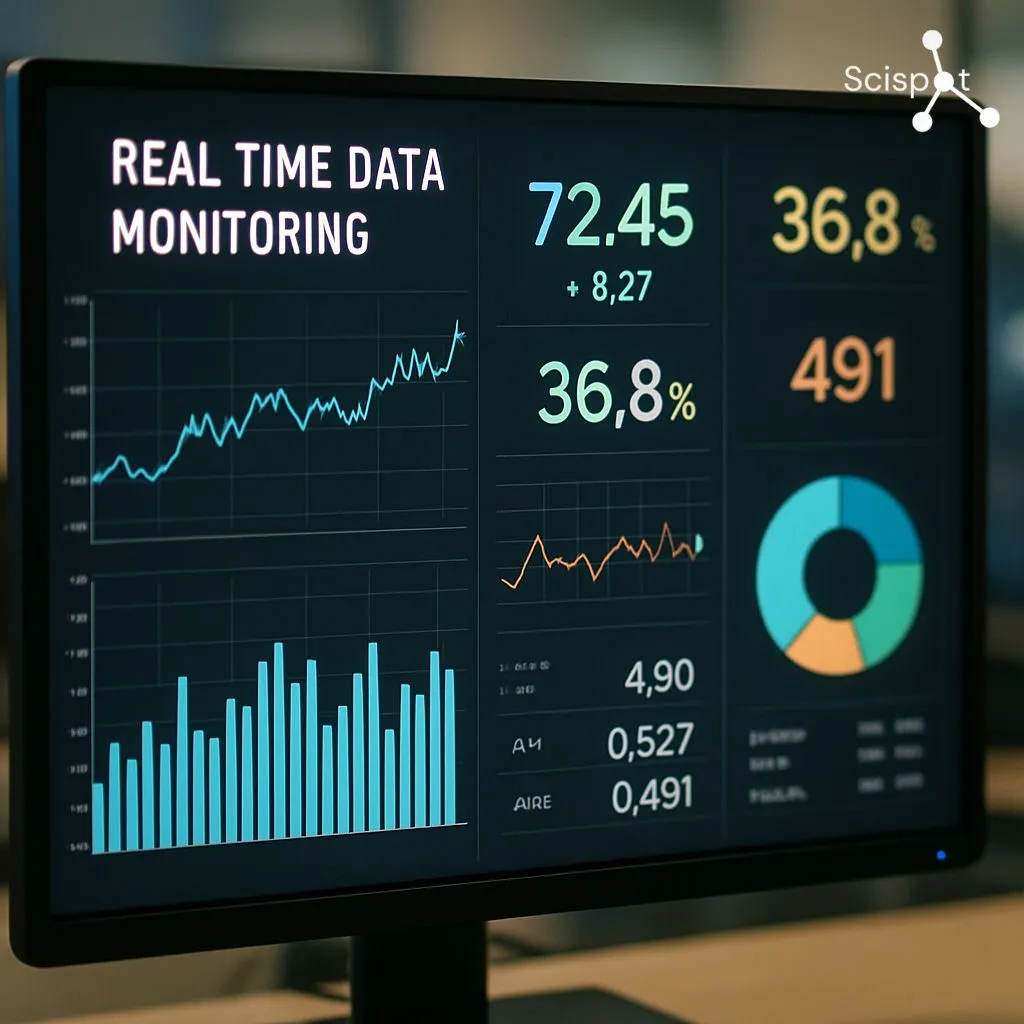
Real-time monitoring matters when experiments are time-sensitive. Think incubations, temperature-controlled runs, instrument drift, or reaction windows. You want to see signals live, not after the run is done.
Many basic logger setups stop at “capture and export.” They collect readings, but they don’t help you act fast. Scispot pairs real-time logging with workflow context, so teams can spot issues early and route follow-ups without breaking the chain of custody.
3. High Data Accuracy
Accuracy is non-negotiable. Your logger should capture data at the right sampling rate and preserve raw values without silent rounding or formatting loss.
A common gap with manual or semi-manual systems is “human accuracy.” When results get typed into spreadsheets or copied across tools, small mistakes stack up. Scispot reduces that risk by keeping experiment data structured and consistent, so the system stores what the instrument produced and links it to the right sample and protocol.
4. Data Security and Backup
Lab data is sensitive. It can be IP, clinical-adjacent, or tied to regulated work. You want encryption, access controls, and reliable backups by default.
Some older setups rely on shared drives or scattered cloud folders. That looks fine until you need to prove who accessed what and when. Scispot supports secure data handling with role-based access and audit trails, which makes security feel like a built-in property, not a separate project.
5. Compatibility with Lab Equipment
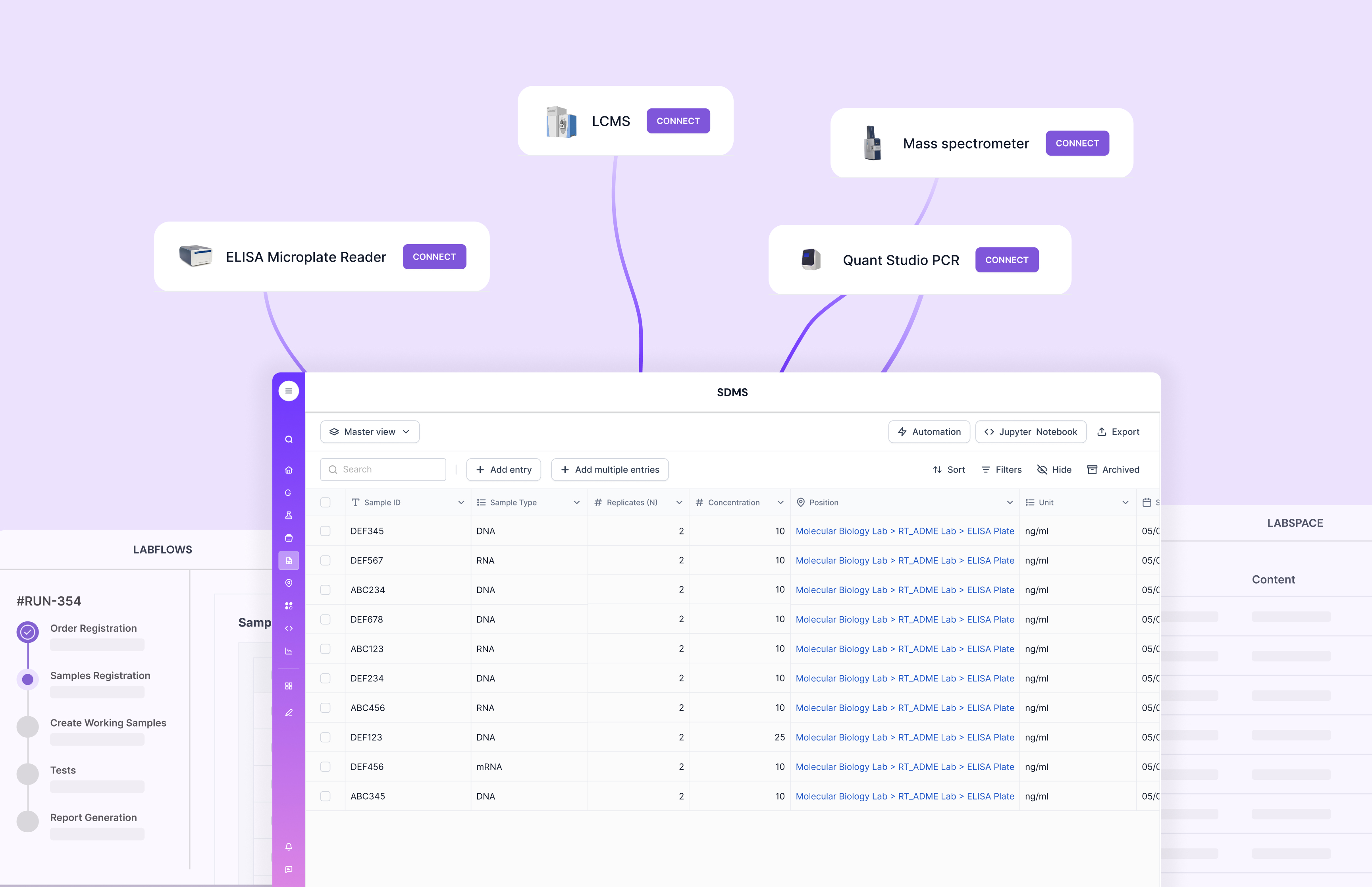
A logger that can’t connect to your equipment becomes a manual entry tool. That’s where friction starts. You want compatibility with common lab instruments, file formats, and workflows.
Many labs end up with “integration islands.” One tool talks to one instrument. Another tool manages samples. Then people glue it together with exports and emails. Scispot avoids this trap with GLUE, so labs can bring instrument outputs into a consistent structure and keep the experiment record intact from start to finish.
6. Customizable Logging Parameters
No two experiments log data the same way. You may need different sampling rates, different metadata fields, different thresholds, and different validation rules.
This is where older or rigid tools often struggle. Some systems need configuration changes through admins, consultants, or long change cycles. Scispot is built for configurable workflows, so labs can adjust how they log without turning every improvement into a long IT queue.
7. Data Visualization Tools
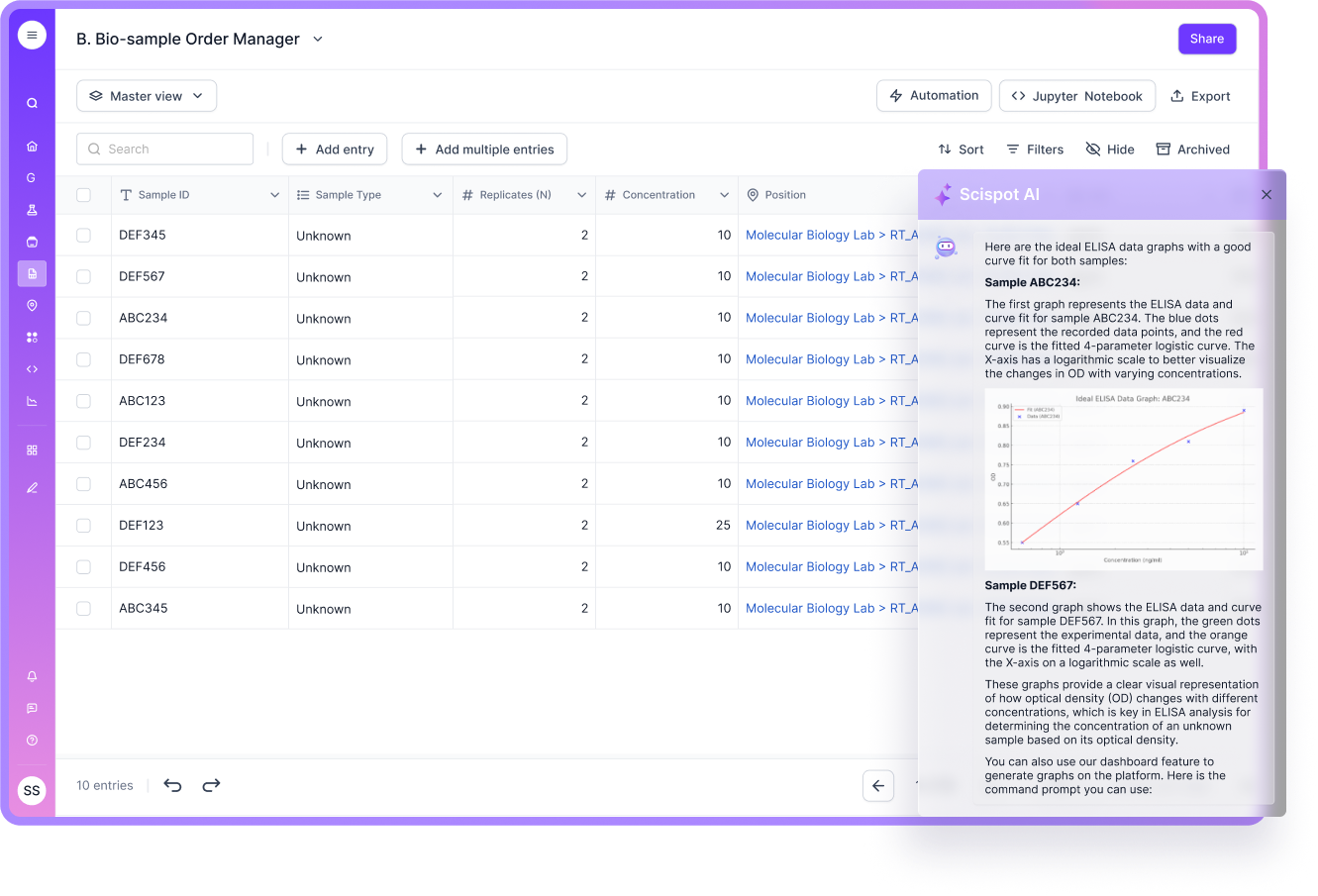
Raw data is only step one. You also want charts, trends, and quick comparisons. Visualization makes anomalies obvious and helps teams make decisions faster.
Many logging tools treat visualization as an “export step.” You download, then chart somewhere else. That breaks traceability. Scispot keeps data connected to dashboards and structured views, so results are easier to review, compare, and share internally without losing the original context.
8. Remote Access and Control
Remote access is no longer optional. Teams are distributed. Reviews happen outside lab hours. And decision-makers still need visibility.
Some legacy systems were designed around on-prem setups and internal networks. That can slow collaboration and create access bottlenecks. Scispot’s cloud-first setup supports modern lab operations, where data and review can move faster without weakening controls.
Why Scispot Is the Best Lab Logger When You Need More Than Just Data Capture
Most lab loggers do a solid job capturing raw signals, but they usually stop there. Scispot takes the same “log the data” foundation and turns it into a connected workflow, where every reading is automatically linked to the right sample, experiment, protocol, instrument, and technician.
Instead of pushing files into scattered folders or spreadsheets, Scispot keeps data structured inside Labsheets, so it stays searchable, consistent, and reusable. You still get real-time visibility, customizable parameters, and clean charts, but now it’s paired with collaboration controls, role-based access, and full traceability that makes reviews and rework feel lighter.
If your lab also needs compliance-ready logging, Scispot adds the missing layer with audit trails, e-signatures, and secure approvals without slowing down the science. And when you’re ready to scale, GLUE helps you connect instruments and standardize incoming data, so analysis and dashboards don’t break every time a format changes.
Advanced Features to Consider
9. Machine Learning Integration
Pattern detection is becoming a real advantage. ML can flag drift, detect outliers, and highlight repeatability issues before they become expensive failures.
A lot of tools claim “AI-ready,” but they don’t store data in a structure that makes it easy to analyze. Scispot keeps experimental data organized and workflow-linked, which makes it easier to build meaningful analytics without spending months cleaning datasets.
10. Multi-User Collaboration
Modern science is team science. You want multiple people to view, contribute, and review at the same time, without stepping on each other’s work.
Some systems still behave like single-user notebooks with sharing layered on top. That creates delays and duplicate work. Scispot supports collaborative workflows with controlled permissions, so teams can move in parallel while keeping ownership and traceability clear.
11. Environmental Monitoring
For sensitive experiments, environment is part of the result. Temperature, humidity, CO₂, and storage conditions can explain success or failure.
A “logger” that captures only instrument output can miss the hidden drivers. Scispot can log these signals alongside sample metadata and protocol steps, so you don’t have to dig across multiple tools to understand why a run shifted.
.jpg.webp)
12. Compliance with Industry Standards
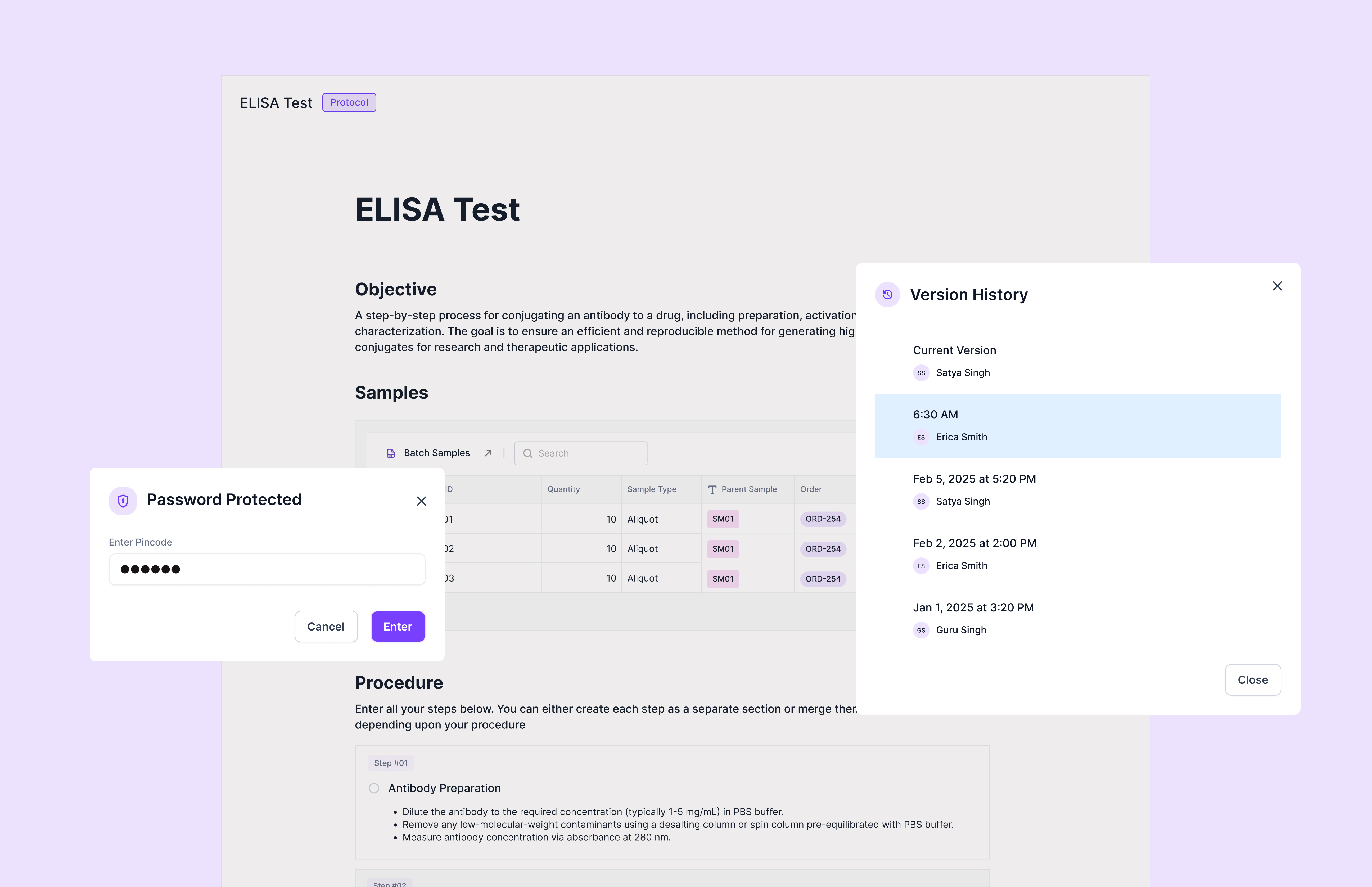
If your work touches regulated environments, compliance features become core features. GLP expectations, ISO-aligned processes, and audit readiness are not “later upgrades.” They shape how you log data from day one.
A big weakness in lightweight loggers is that they don’t capture the compliance layer well. They store values, but they don’t store signatures, approvals, version history, or traceable changes in a review-ready way. Scispot is designed to support audit trails, controlled access, and structured records, so compliance becomes a daily habit instead of a painful scramble before inspections.
Choosing the Right Lab Logger for Your Needs
Start by mapping your workflow, not by comparing feature lists. The best lab logger is the one that fits how your lab actually runs. Consider how samples enter the system, how experiments are executed, how results are reviewed, and how reports are produced.
It’s also smart to think long-term. Many labs buy a “simple logger” first. Then they grow. Then they end up buying a LIMS later anyway, after struggling with disconnected tools. Choosing a platform like Scispot early often saves that future migration pain, because logging, workflows, and data structure are already unified.
Practical Tips for Selection
Assess your needs clearly before you shop. Identify what must be logged, what must be linked, and what must be reviewed.
Read reviews and case studies with a skeptical lens. Look for signals like ease of adoption, integration effort, and reporting strength.
Request demos and test your real workflow. A polished UI demo is not the same as handling your real samples and real instruments.
Consider scalability early. The best logger is the one that won’t break when you go from 10 experiments a week to 200.
Conclusion
A lab logger is essential for managing scientific work with accuracy and repeatability. The right features help you log data cleanly, monitor in real time, protect integrity, and collaborate without confusion.
But the best labs don’t just “log data.” They connect it. That’s why a modern LIMS like Scispot is such a strong choice. It works as a lab logger, an experiment system, and a compliance-ready data backbone, all in one place. So your records stay reliable, searchable, and useful as your lab scales.
.gif)
Your experiments deserve more than stored numbers. They deserve a system that keeps the full story intact.