.webp)
Top Laboratory Efficiency Tips: Boost Productivity
Running a laboratory comes with its own set of challenges. Efficiency is what keeps work moving without cutting corners. It helps experiments stay consistent. It keeps results reliable. It also helps you avoid “hidden” time drains like rework, mislabels, missing data, and last-minute stockouts.
Whether you’re managing a small lab or overseeing a larger facility, improving efficiency usually comes down to one thing. Make daily work feel repeatable. Like a checklist that runs itself. That’s exactly where strong processes + the right system (like Scispot) create a noticeable shift in output and confidence.
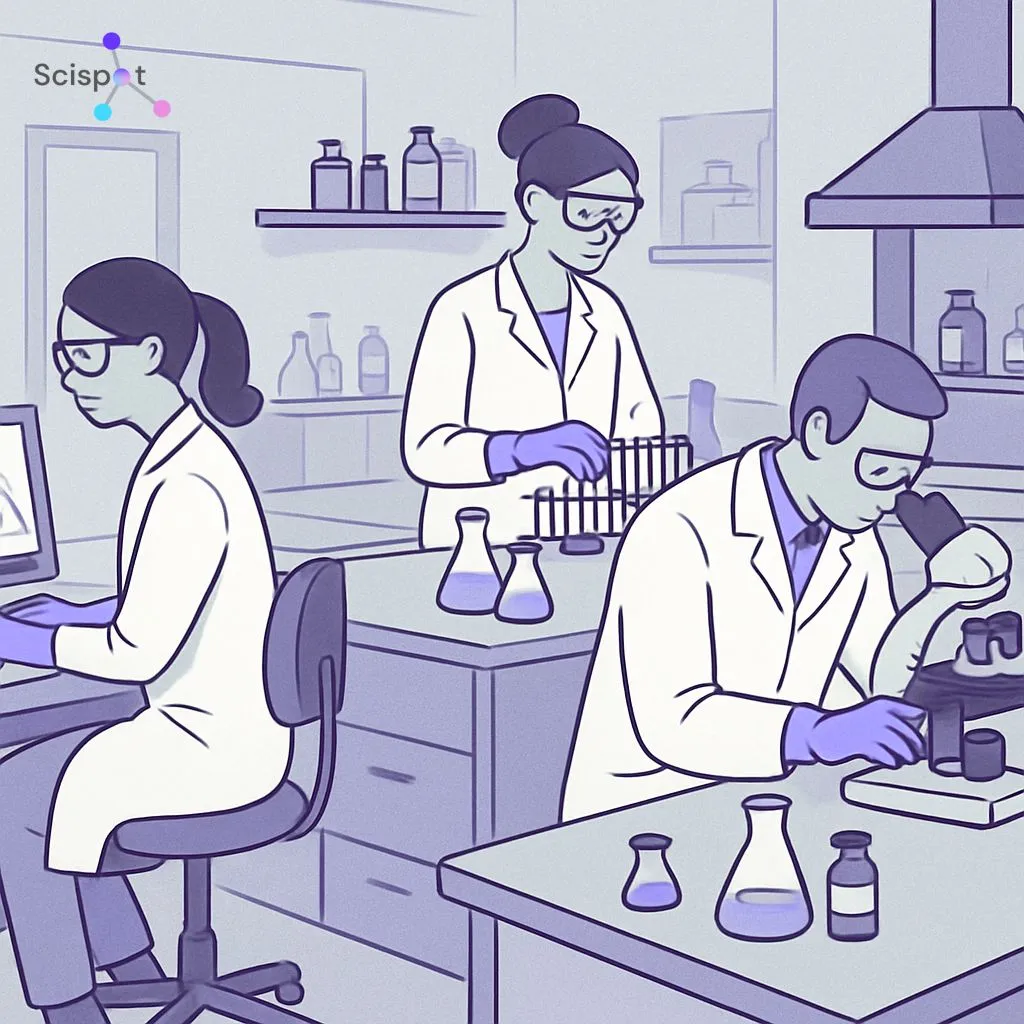
An efficient workflow is the backbone of a productive laboratory. Here's how you can achieve a streamlined workflow:
Evaluate Current Processes
Start by mapping your workflows from start to finish. Track how samples enter the lab, how they move between benches, and where data gets recorded. The best bottleneck clues are usually boring ones. People switching tools. Copy-pasting values. Repeating the same checks in three places.
This is also where modern LIMS workflows matter. Many labs still run on a mix of spreadsheets, shared drives, and disconnected software. That makes “the real workflow” live in people’s heads. A LIMS like Scispot makes the workflow visible. And once it’s visible, you can improve it without breaking the lab’s rhythm.
Implement Standard Operating Procedures (SOPs)
Clear SOPs reduce confusion. They also reduce variation between users, shifts, and sites. The difference between a smooth lab and a chaotic one is often not skill. It’s consistency. SOPs are how you get there.
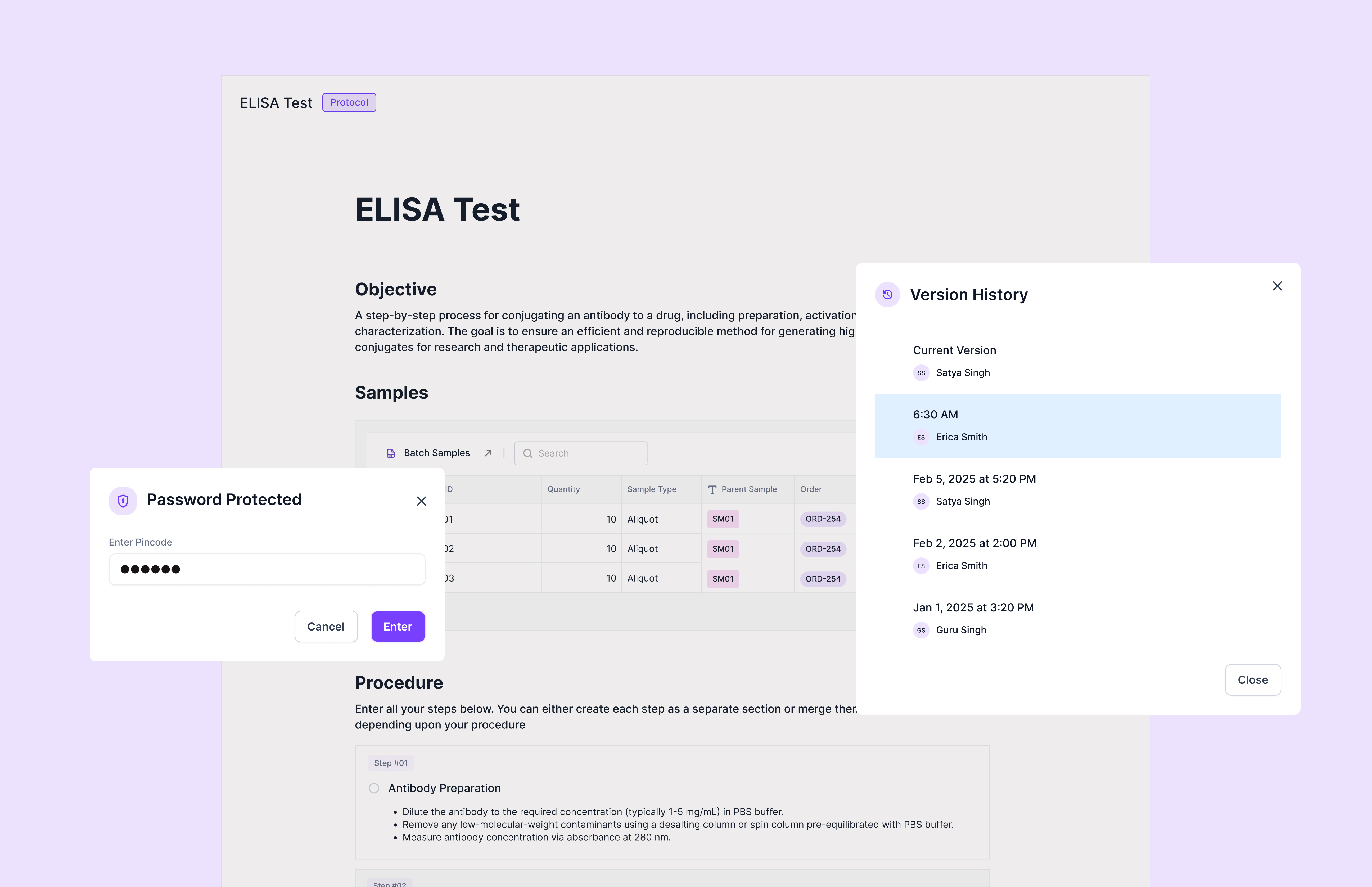
What slows labs down is when SOPs drift. Teams end up with multiple versions. Or training proof lives in email threads. Modern systems solve this by keeping SOPs versioned, searchable, and linked to the work being performed. Scispot helps by tying SOP steps directly to day-to-day lab execution, so the “right way” stays attached to the actual run.

Optimize Equipment Usage
Equipment downtime is silent efficiency loss. Calibration delays create reschedules. Shared instruments cause conflicts. Maintenance logs get lost. And suddenly you’re losing days to something that looks small on paper.
A clean fix is structured equipment tracking and clear visibility on what’s available. Some labs try to manage this through shared calendars and manual logs. It works until volume increases. Scispot helps by keeping equipment usage, maintenance history, and run context connected to samples and results, so work stays predictable.
Enhancing Lab Management Strategies
Foster a Culture of Communication
Fast labs are not just “busy labs.” They are aligned labs. People know what matters today. They know what’s blocked. They know who owns what. That clarity prevents duplication and reduces “waiting time” between steps.
Digital workflows also make communication easier. Not as chat spam. More like shared truth. When your team sees the same real-time status of samples, approvals, and next steps, meetings become shorter and decisions become faster.

Allocate Resources Wisely
Consumables and reagent tracking is one of the easiest places to lose time. You don’t notice the leak until it turns into a shortage mid-run. Overstocking is also common. Especially when no one trusts inventory counts.
A system that tracks what was used, by whom, and for which run makes purchasing cleaner and planning calmer. Scispot supports structured inventory and traceability workflows, which helps labs reduce waste without making scientists feel like they are doing “extra admin.”
Invest in Training and Development
Training is one of the highest ROI efficiency levers. Skilled people make fewer errors. They troubleshoot faster. They also build better habits, which compounds over time.
The problem is training records often end up scattered. Or onboarding happens informally. Scispot makes it easier to standardize onboarding checklists, connect training evidence to SOPs, and keep the lab audit-ready without chasing down proof later.
Leveraging Technology and Automation
Utilize Laboratory Information Management Systems (LIMS)
A LIMS is one of the most practical efficiency upgrades a lab can make. It reduces manual data entry. It makes sample handoffs cleaner. It helps you find results fast. And it protects data integrity when volume grows.
Where many labs get stuck is picking a system that feels “heavy.” A common issue with older or legacy lab software is rigid workflows that are hard to change, plus integration work that becomes slow and expensive when your stack evolves. Many teams also struggle with clunky interfaces in traditional systems, which turns simple tasks into multi-step clicks.
This is where Scispot stands out in day-to-day use. It’s built to feel modern. It’s designed for workflows that evolve. And it connects LIMS and ELN-style documentation in one experience, so teams don’t end up managing separate systems that don’t stay in sync.
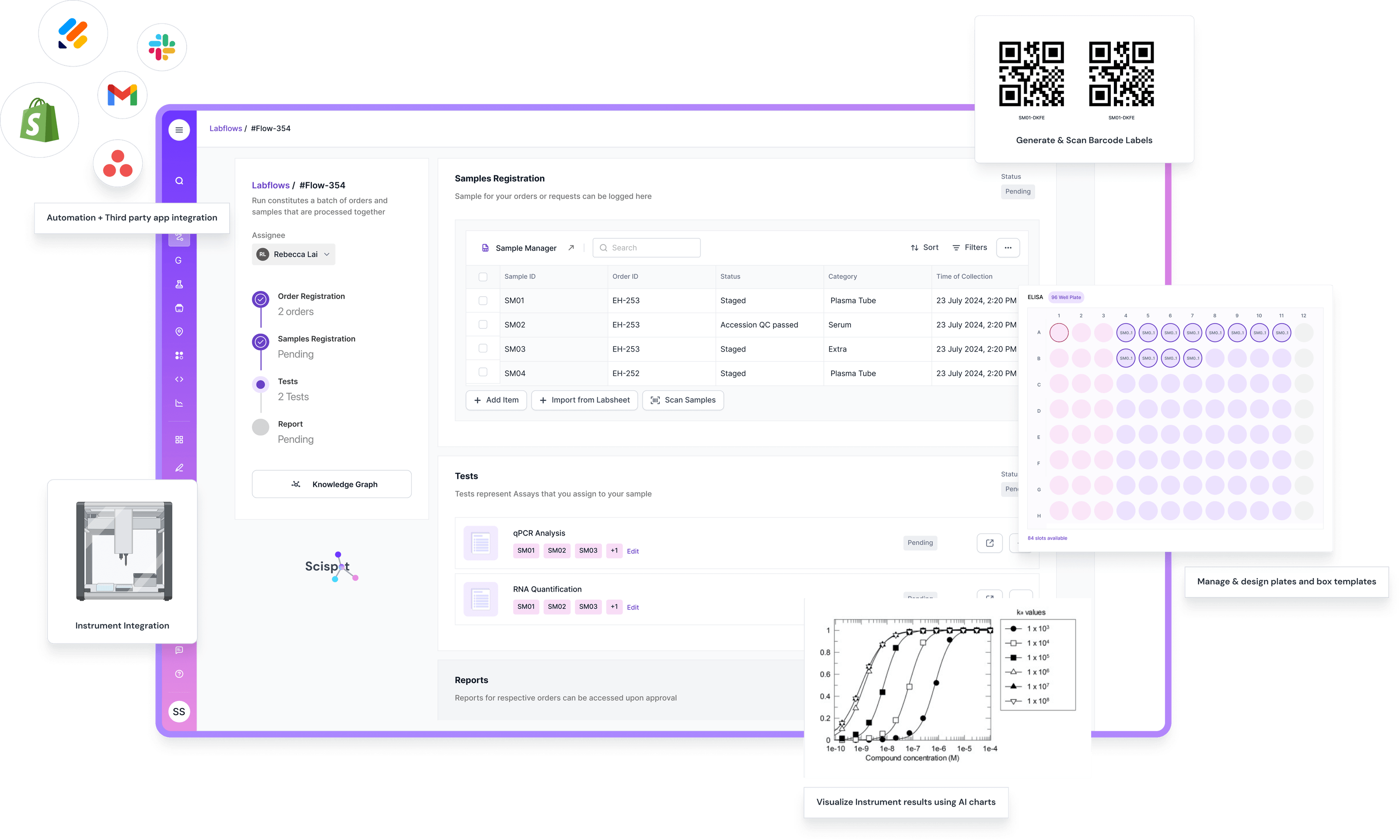
Incorporate Automation Where Possible
Automation is the lab equivalent of moving from hand-washing dishes to using a dishwasher. The work still matters. You just stop spending human attention on repetitive steps.
Routine tasks like sample prep steps, QC checks, data normalization, and report assembly are strong candidates for automation. The goal is not “replace people.” The goal is “reduce rework.” Scispot supports automation-friendly workflows because structured data is captured consistently, making downstream steps easier to standardize.
Embrace Digital Tools
Digital tools help labs move faster with fewer misunderstandings. Project tracking improves handoffs. ELNs reduce “where is the latest file?” problems. Shared dashboards reduce status meetings.
The biggest efficiency gain comes when these tools are connected, not scattered. A common failure mode in labs is tool sprawl. People log samples in one place, results in another, notes in a third, and approvals in email. Scispot helps by acting as a single workspace for data + workflow + collaboration, so the lab runs like one system instead of five separate ones.
How Scispot Helps Labs Improve Efficiency
Most labs don’t struggle because scientists work slow. They struggle because work is scattered. Data sits in spreadsheets, SOPs live in folders, approvals happen in email, and inventory gets tracked “when someone remembers.” Scispot brings all of this into one connected system, so your workflow stops depending on manual follow-ups. It helps labs standardize how work gets done, while still staying flexible enough for real-world research that changes often.
Scispot improves efficiency by connecting day-to-day execution with clean data capture. You can log samples, track test steps, record results, and store supporting files in a structured way, without forcing teams into rigid templates. SOPs stay version-controlled, training becomes trackable, and audit trails remain automatically captured as work happens. That means fewer repeat errors, less time spent “fixing missing info later,” and smoother handoffs between teams.
Where Scispot stands out is how well it supports automation and scale. Instead of relying on tools that require heavy setup, constant admin effort, or separate modules that don’t talk to each other, Scispot keeps lab operations, data, and reporting connected end-to-end. It also integrates with instruments and external systems when needed, so labs can reduce manual entry and move faster without losing traceability. The result is a lab that feels calmer, more predictable, and easier to run as volume grows.
Prioritizing Safety and Compliance
Maintain a Safe Working Environment
Safety and speed are not enemies. In fact, unsafe labs are slower labs. Accidents cause disruptions. Unclear protocols cause errors. Missing documentation causes rework and stress.
Regular checks, proper PPE, and clear hazard processes keep the lab stable. Scispot supports this by keeping procedural records, audit trails, and process history easy to trace when something needs review.
Ensure Regulatory Compliance
Compliance becomes much easier when it’s built into the workflow. Not bolted on after. Audits get painful when evidence is scattered and validation becomes a scavenger hunt.
Older systems can make this harder when workflows are deeply customized or hard-coded, because changes become slow to maintain. A modern system reduces the burden by keeping logs, approvals, and records connected. That’s where Scispot helps labs stay audit-ready while still moving fast.
Continuous Improvement and Feedback
Conduct Regular Reviews
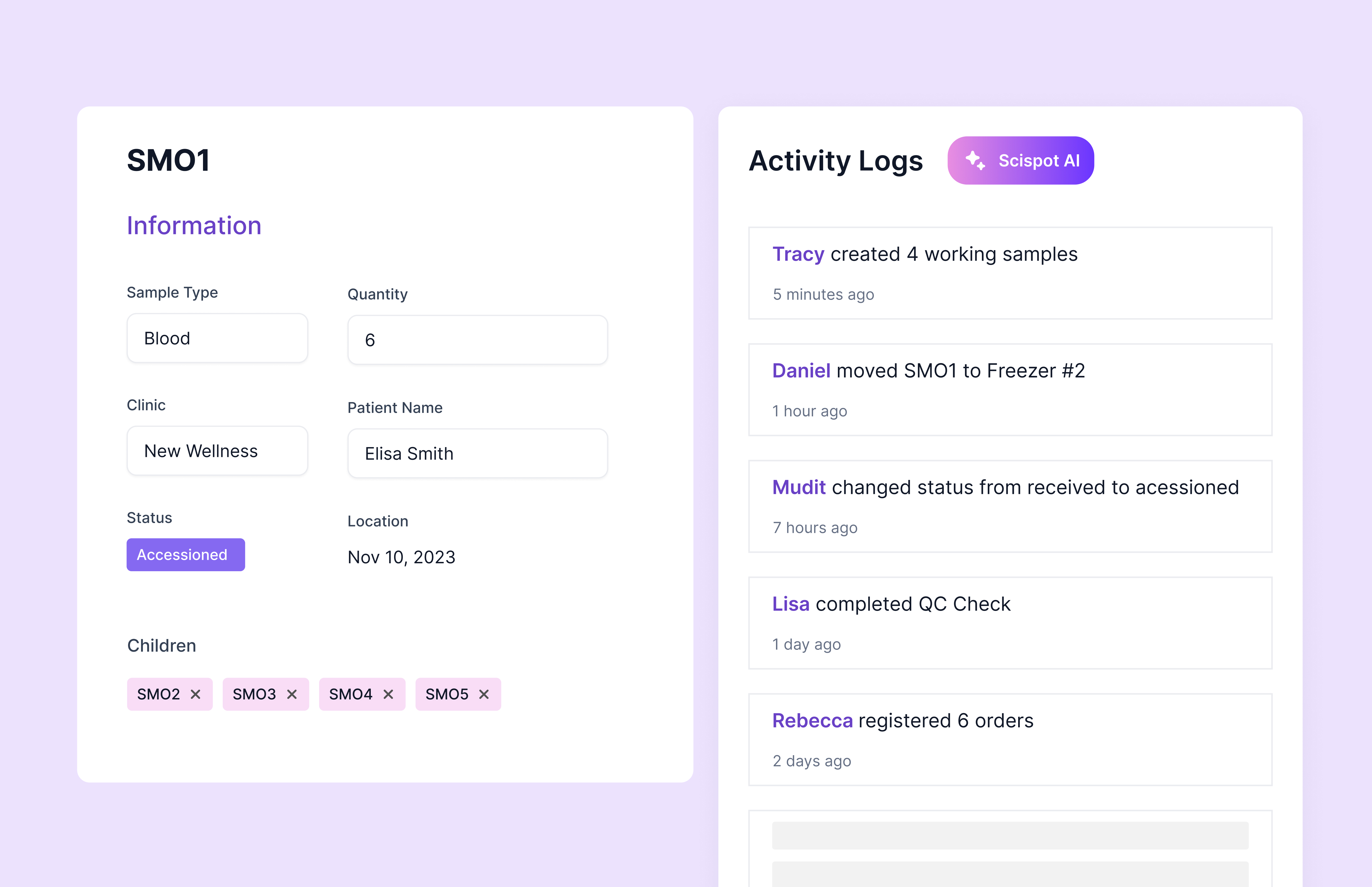
Efficiency improves most when you measure it like a process, not a vibe. Track turnaround times. Track reruns. Track where work piles up. Even simple KPIs will reveal patterns fast.
A key advantage of using Scispot is that structured workflows make it easier to pull useful metrics. When data is consistently captured, performance trends become visible. That visibility is what fuels improvement.
Encourage Innovation
High-performing labs behave like product teams. They iterate. They try small changes. They keep what works. They drop what doesn’t.
Innovation becomes much easier when the system supports change. Legacy software often struggles here because adapting workflows can be difficult and time-consuming. Scispot is designed for evolving processes, so teams can improve workflows without feeling locked in.
Value Feedback from Lab Members
Your best process fixes usually come from the people doing the work. They know where time gets lost. They know what breaks in real conditions. Their feedback is the fastest path to better efficiency.
The best thing you can do is make it easy to act on that feedback quickly. Scispot helps by letting labs adjust workflows and templates without turning every improvement into a long software project.
Conclusion
Improving efficiency in a laboratory setting involves a combination of streamlining workflow processes, enhancing lab management strategies, leveraging technology, prioritizing safety and compliance, and fostering a culture of continuous improvement.
If you want efficiency that lasts, build it into the system your lab uses daily. That’s where Scispot earns its place. It helps labs reduce manual work, connect workflows end-to-end, and keep data clean and audit-ready as they scale.
Remember, efficiency is a journey, not a destination. Regularly assess and adapt your practices so your lab keeps getting faster, cleaner, and easier to run.