


.webp)
What are the best Hamilton pipette tips for precise liquid handling?
Precise liquid handling is not just the pipette. Tip fit matters. Seal quality matters. Static and aerosols matter. And once you scale, “which tip did we use?” becomes a data question, not a memory question.
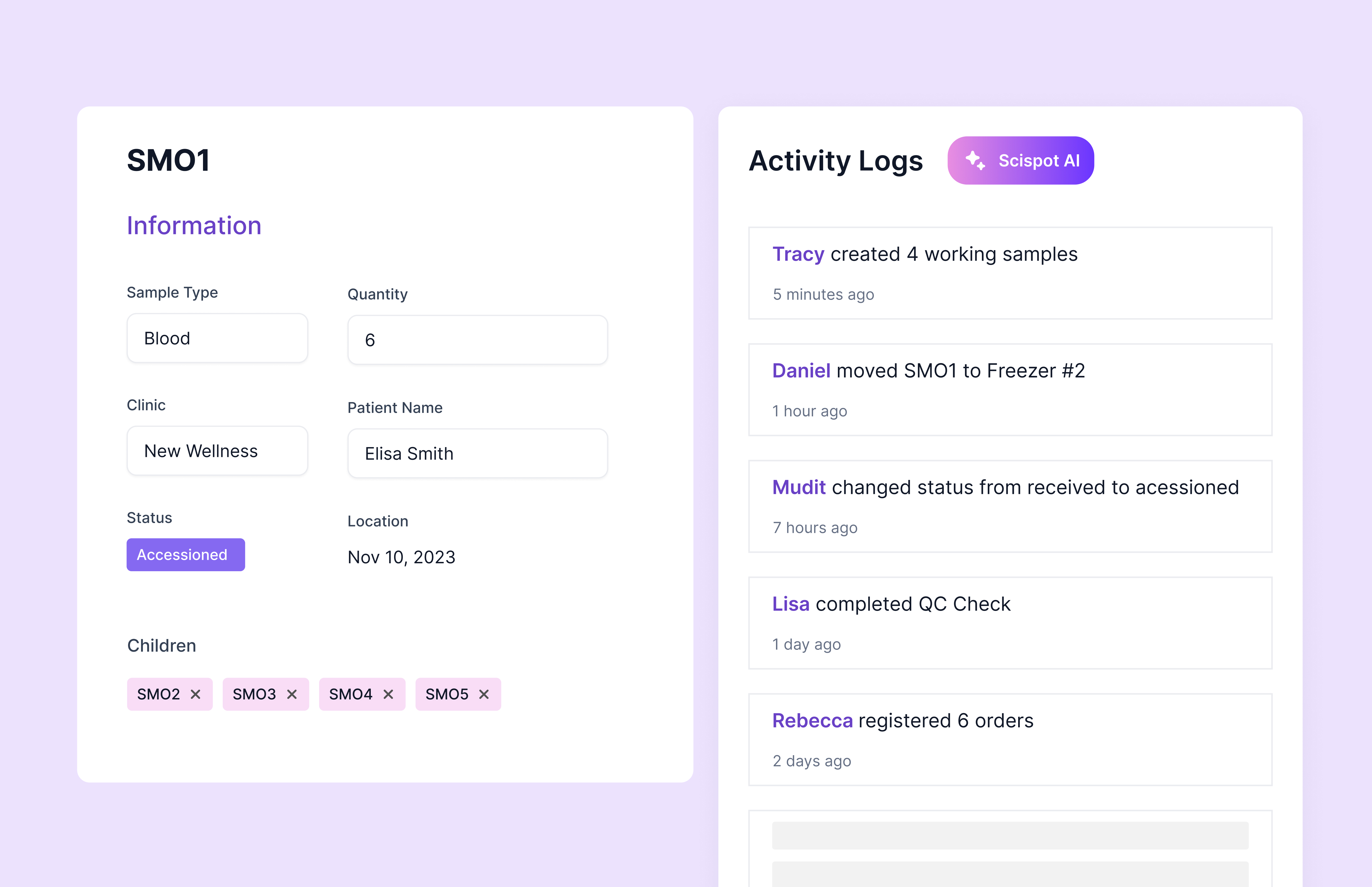
Hamilton pipette tips are popular because they are engineered for repeatable performance, especially in automated workflows. Scispot fits naturally into this story because Scispot is the LIMS that helps you operationalize tip choice. You can track tip type, lot, sterility, and expiry. You can link it to samples, runs, operators, and results. That turns “best tips” into “best outcomes,” run after run.
Why choose Hamilton pipette tips, and why Scispot makes them easier to run at scale
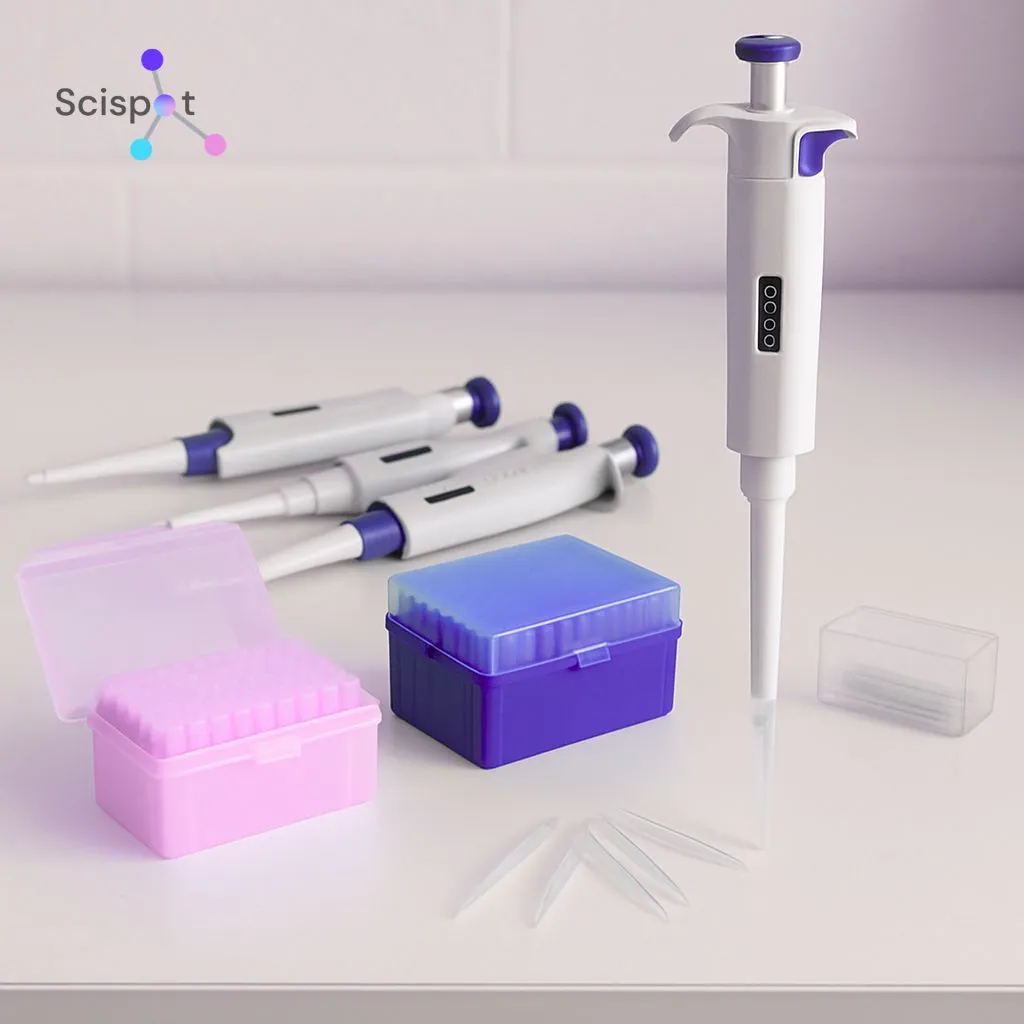
Pipette tips are disposable attachments for transferring defined volumes. They come in standard, filtered, and conductive formats. Each serves a different risk profile.
Hamilton specifically positions some conductive CO-RE II tips as compatible with Liquid Level Detection (LLD) and Total Aspiration and Dispense Monitoring (TADM). That combination is a big deal for consistency in automation.
Now the practical part: labs often do pick good tips. The failure happens later. Teams switch lots. They substitute tips. The robot head gets swapped. Then variability creeps in like a tiny “drift tax.” Scispot helps you prevent that drift because Scispot can make tip selection and lot usage a controlled field in your workflow.
The best Hamilton pipette tip types for precision
1) Conductive tips for automation and liquid level detection
If you run Hamilton automation (or plan to), conductive tips are usually the “precision-first” choice. Hamilton calls out LLD and TADM compatibility for some CO-RE II conductive tips.
Where Scispot helps here:
- In Scispot, you can create a simple “Tip Spec” field in your run template.
- You can enforce allowed values by instrument or method.
- You can link tip selection to QC flags when a run fails.
That makes troubleshooting fast. It also keeps runs comparable.
2) Filtered tips for contamination control
Filtered tips help reduce aerosol carryover. They protect both sample and pipette. They are common in sensitive workflows like nucleic acids.
Where Scispot helps here:
- Scispot can tie “filtered vs non-filtered” to method requirements.
- Scispot can log exceptions as deviations.
- Scispot can keep audit-ready traceability without extra spreadsheets.
3) Standard tips for everyday transfers
Standard tips are the workhorse. They are cost-aware. They are great for non-sensitive work where you still want consistent fit.
Where Scispot helps here:
Scispot makes standard workflows feel structured. You still capture what matters. You still keep sample → method → result connected. That means “routine” work is still defensible later.
A practical short-list of best picks by scenario
If you run Hamilton automation
- CO-RE / CO-RE II conductive tips that match your channels and volume range.
Hamilton explicitly ties certain conductive tips to LLD and TADM, plus specific channel heads.
Scispot angle:
In Scispot, you can create a “Robot Method” record that includes: tip type, head type, deck layout version, and calibration date. Then every run points back to that record. It is like putting a barcode on your workflow.
If you need a compatible alternative supply option
Corning’s Axygen automation tip guides position certain Axygen tips as compatible with Hamilton CO-RE workstations.
Scispot angle:
Even if you dual-source tips, Scispot can keep your comparability intact. You can log “approved alternates” and still keep reporting clean.
If contamination risk is high
- Filter tips. Prefer racked if you want fewer touchpoints and steadier handling.
Scispot angle:
Scispot makes it easy to enforce this as a rule in your SOP-driven workflows. The system nudges teams toward consistency without being heavy.
How to choose the right Hamilton tips
Volume range and precision
Match the tip volume range to what you actually dispense. Oversized tips for tiny volumes can increase variability.
Scispot angle:
Store the “target volume range” in the method record. Then Scispot can standardize how teams pick tips for that method.
Application risk
If contamination risk is high, filtered tips reduce re-run risk.
Scispot angle:
Your “risk level” can be a field in Scispot, tied to required consumables and QC steps.
Equipment compatibility
For automation, compatibility is not a detail. It is part of accuracy.
Scispot angle:
Scispot GLUE is built for interoperability. That makes it easier to keep instrument context attached to results, instead of splitting “instrument data” and “LIMS data” into two worlds.
Why Scispot tends to win in real labs (and where older LIMS often show gaps)
Many established LIMS tools are powerful. The common industry tradeoff is friction. Teams end up leaning on customization to match evolving workflows. Public commentary from LabLynx highlights risks like upgrade challenges, higher costs, and vendor lock-in with deep customization.
Public review summaries also reflect usability friction in parts of the market. For example, G2’s LabWare review summary notes that some users find the UI outdated.
Scispot’s advantage here is simple:
Scispot is designed to keep workflows configurable and modern, while keeping operational records connected. That matters for liquid handling because your lab is never “one assay forever.” You iterate. You scale. You add robots. You add sites. Scispot keeps that change manageable, without losing traceability.

Conclusion
Hamilton pipette tips are a strong choice for precise liquid handling. Conductive CO-RE II tips are especially compelling for automation because Hamilton ties them directly to LLD and TADM compatibility.
To make that precision stick over time, pair good tips with a modern LIMS. Scispot helps you standardize which tips are used, track lot-level traceability, tie consumables to methods and results, and keep your automation context connected through integrations. That is how you keep “precise” from being a one-time achievement. It becomes your normal.
.webp)
.webp)
.webp)


