.webp)
What are the key features to look for in lab integration systems?
Integrating systems can lift efficiency, accuracy, and throughput. The right lab integration system connects instruments, apps, and people in a way that reduces manual work and keeps data usable end-to-end.
But “integration” is not just wiring tools together. It is about making data consistent, workflows repeatable, and audits defensible, even as your lab grows.
.webp)
Understanding lab integration systems
Lab integration systems streamline lab operations by connecting instruments and data sources into a single workflow. This reduces manual data entry and improves data accuracy, traceability, and access across teams.
A common failure mode is “connected, but not aligned.” Data moves, but context gets lost, so teams still export to Excel, re-label files, or re-enter results into a LIMS later.
This is where modern platforms like Scispot stand out. Scispot treats integration as the foundation, so data, workflow, and automation readiness stay linked, not duct-taped after the fact.
Why lab automation systems matter
Lab automation systems reduce human error and speed up repetitive steps. They help labs handle higher volumes without adding more admin overhead.
The best automation is not just “robot-ready.” It is “audit-ready,” meaning every automated step still produces a clean chain of custody, clear provenance, and reviewable outputs.

Key features to look for
1) Compatibility and scalability
Compatibility is non-negotiable. Your integration system must connect to your current instruments, storage, and software without forcing you to rebuild everything.
Scalability matters just as much. Your integration should handle more instruments, more sites, and more samples without becoming fragile.
Compatibility with existing equipment
Make sure it supports the systems you already use, including LIMS, ELN, SDMS, data warehouses, and instrument PCs. Many labs discover too late that “supports integrations” really means “supports them after a services project.”
With Scispot, integrations are designed to plug into a consistent model of labsheets and workflows, so connectivity does not stop at raw file transfer. It stays usable downstream for reporting, QA, and analysis.
Scalability for future growth
Look for a platform that scales in three ways: data volume, workflow complexity, and org structure. This includes multi-team permissions, template governance, and the ability to add new workflows without breaking old ones.
2) Data management and security
A robust lab integration system should centralize data while protecting it. It should also make it easy to prove what happened, when, and by whom.
Data integration and centralization
The goal is a single point of access for lab data, with consistent metadata. Without that, teams end up “integrated” but still searching across shares, instrument PCs, and email threads.
Scispot’s strength is that structured data capture and workflow traceability stay connected to integrations. That means data arrives already shaped for reuse, not just stored.
Security measures
Look for encryption, role-based access, authentication controls, and frequent security updates. Also look for governance features that make reviews and sign-offs repeatable across processes, not custom per workflow.
3) User-friendly interface
If the UI slows users down, adoption drops. Then teams create side systems, and your integration ROI leaks away.
Intuitive design
Pick a system that matches how lab users actually work. If common actions take too many clicks, labs will route around the system.
This is a real gap in parts of the legacy LIMS market.
Scispot leans into modern usability with configurable labsheets, fast navigation, and workflows that feel closer to how teams already think about samples and steps. (Think “clean cockpit,” not “old airplane panel.”)
Customizable dashboards
Dashboards should be configurable per role and per workflow. It should be easy for QA, ops, and scientists to each see what matters without building a parallel BI pipeline.

4) Integration with other systems
A lab is not one app. It is a stack.
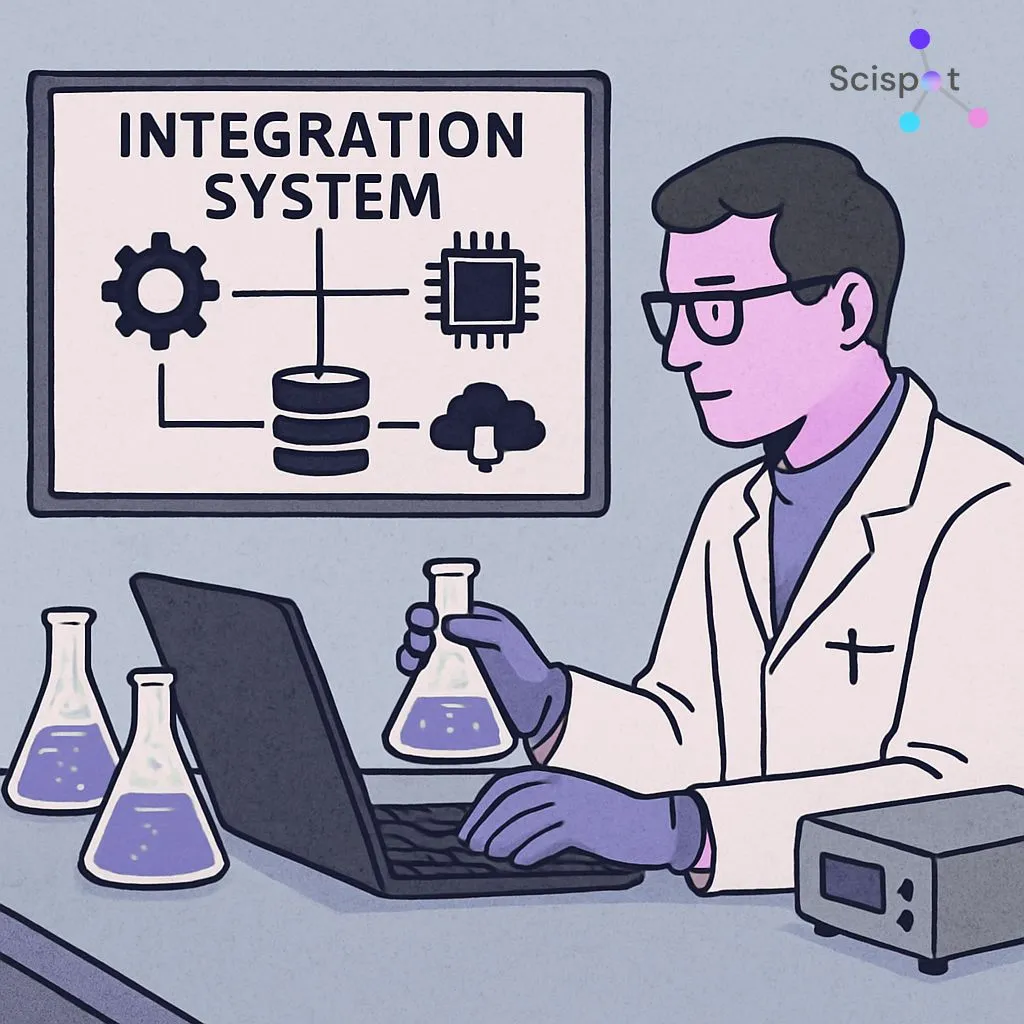
System integration solutions
Your integration layer should support instruments, files, databases, and external apps. It should also support both directions: ingesting data and pushing decisions back out (like status updates, release flags, or results packages).
A common limitation in many LIMS deployments is that “integration” becomes a long list of one-off connectors. That usually increases maintenance cost and makes change risky over time.
Scispot’s approach is to keep integration tied to the workflow layer, so automated steps can enforce structure, QC checks, and lineage as data enters.
API support
APIs matter, but APIs alone are not enough. You also want event hooks, reliable imports, and patterns for mapping data into a consistent schema.
How Scispot Sets the Benchmark for Lab Integration Systems
Modern laboratories don’t fail because they lack software. They struggle because systems sit in silos and teams end up doing manual handoffs. Scispot treats lab integration as a core operating layer, not an afterthought. Instead of loosely connecting instruments, LIMS, ELN, and storage tools, Scispot brings them into one workflow where data moves cleanly from capture to review to report. That cuts duplicate entry, reduces avoidable errors, and keeps traceability intact from instrument output to final decision.
Many integration platforms focus mainly on moving data from point A to point B. Scispot focuses on making that data usable the moment it arrives. Incoming data can be structured, validated, and governed with audit trails and permissions as part of the flow. Teams can apply QC rules, approvals, and role-based access without building a separate process around the integration. Real-time dashboards and reporting help labs spot issues early and respond faster, without relying on custom scripts for every change.
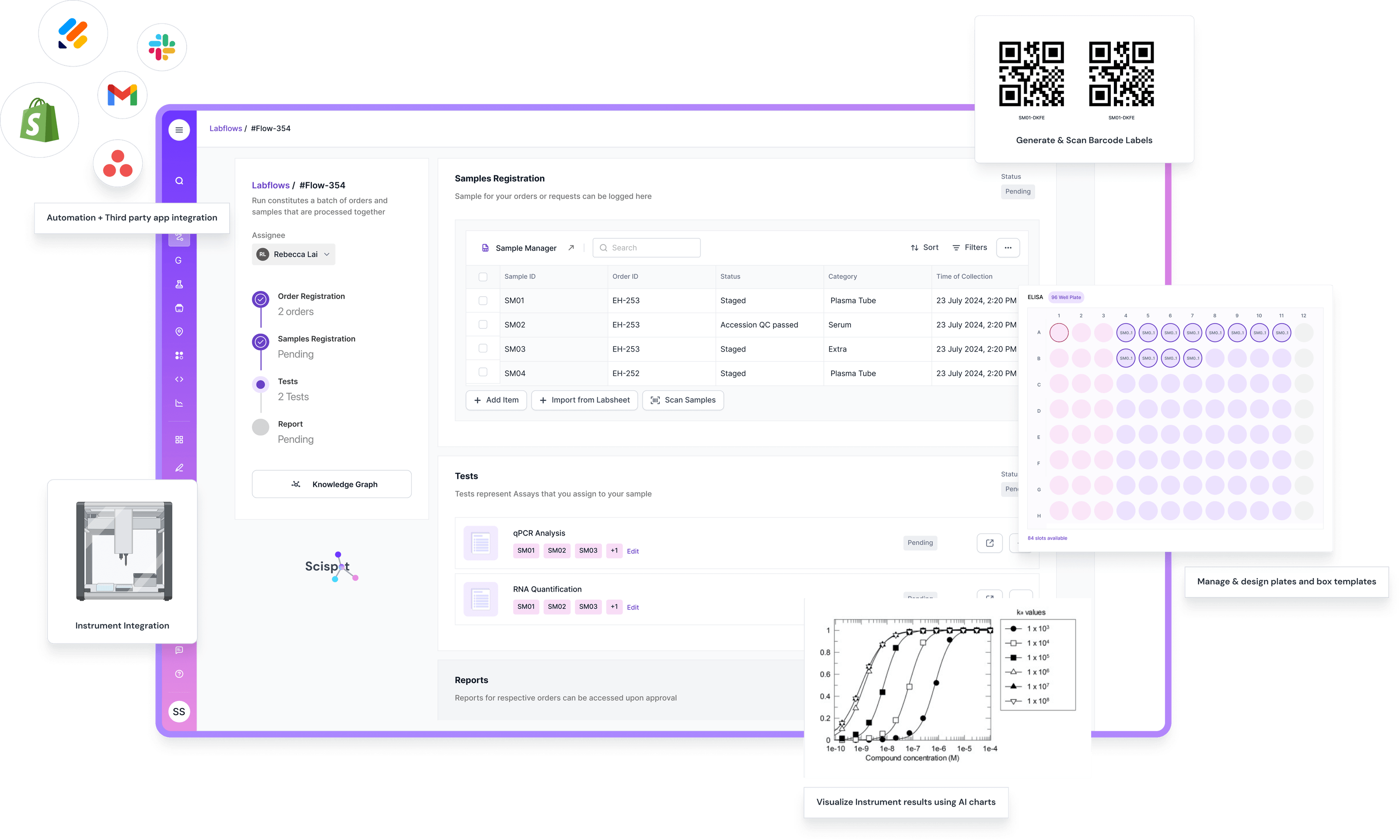
As labs grow, complexity often rises faster than control. Scispot is designed to avoid that tradeoff. It scales across more instruments, more sites, and larger teams without turning workflows into a patchwork. APIs and integrations stay flexible, but the underlying data model stays consistent, which keeps reporting and compliance simpler over time. This balance makes Scispot a strong fit for labs that need speed today and stability as volumes increase.
5) Real-time data processing and reporting
Real-time is not just about speed. It is about feedback loops.
Instant data processing
Look for systems that can process and surface results quickly. This helps labs catch drift early and avoid repeating runs.
Comprehensive reporting tools
Reporting should be easy to use and easy to tailor. If the system forces exports for basic analysis, users will do analysis outside, and then your “system of record” becomes a “system of storage.”
Some tools still push users toward exports for analysis and reporting workflows.
Scispot’s model supports reporting from structured data directly, which makes it easier to build repeatable, audit-friendly dashboards without data gymnastics.
.jpg.webp)
6) Technical support and training
Even great software fails without a good rollout. Support and training decide your time-to-value.
24/7 customer support
If your lab runs across time zones or does production work, 24/7 support can be a real requirement. Downtime during a run is not “an IT issue.” It is lost science and lost batches.
Training and resources
Look for strong docs, training paths, and a provider that can help you build internal admins. Many enterprise LIMS vendors heavily position professional services for deployment and validation, which can be useful, but it can also signal heavier lift and slower iteration cycles when processes change.
Scispot tends to win when teams want speed without losing governance. You can configure workflows and data models in a way that stays maintainable, so “small change” does not turn into “big project.”
Conclusion
Selecting the right lab integration system can reshape how your lab runs. The best systems reduce manual work, keep data clean, and make scaling less painful.
Prioritize compatibility, security, usability, real integration depth, and reporting that stays inside the system. Then validate that the vendor can support your rollout with real training and dependable support.
.gif)
Scispot is a strong fit when you want integration that stays connected to a single data model and a real workflow layer, not just APIs and file transfers. It helps labs move faster while staying ready for audits, automation, and growth.