.webp)
What is a scientific data management system (SDMS), and what does it do for a lab?
A scientific data management system (SDMS) is the system that captures, organizes, and preserves scientific files plus their context. It works like a lab’s evidence locker. Every file stays traceable to who created it, what instrument or method produced it, and how it was used.
In modern labs, SDMS matters most when data stops being “just files” and becomes linked, searchable records. Those records stay tied to samples, instruments, methods, approvals, and reports. That shift turns data management from “storage” into “operations.”
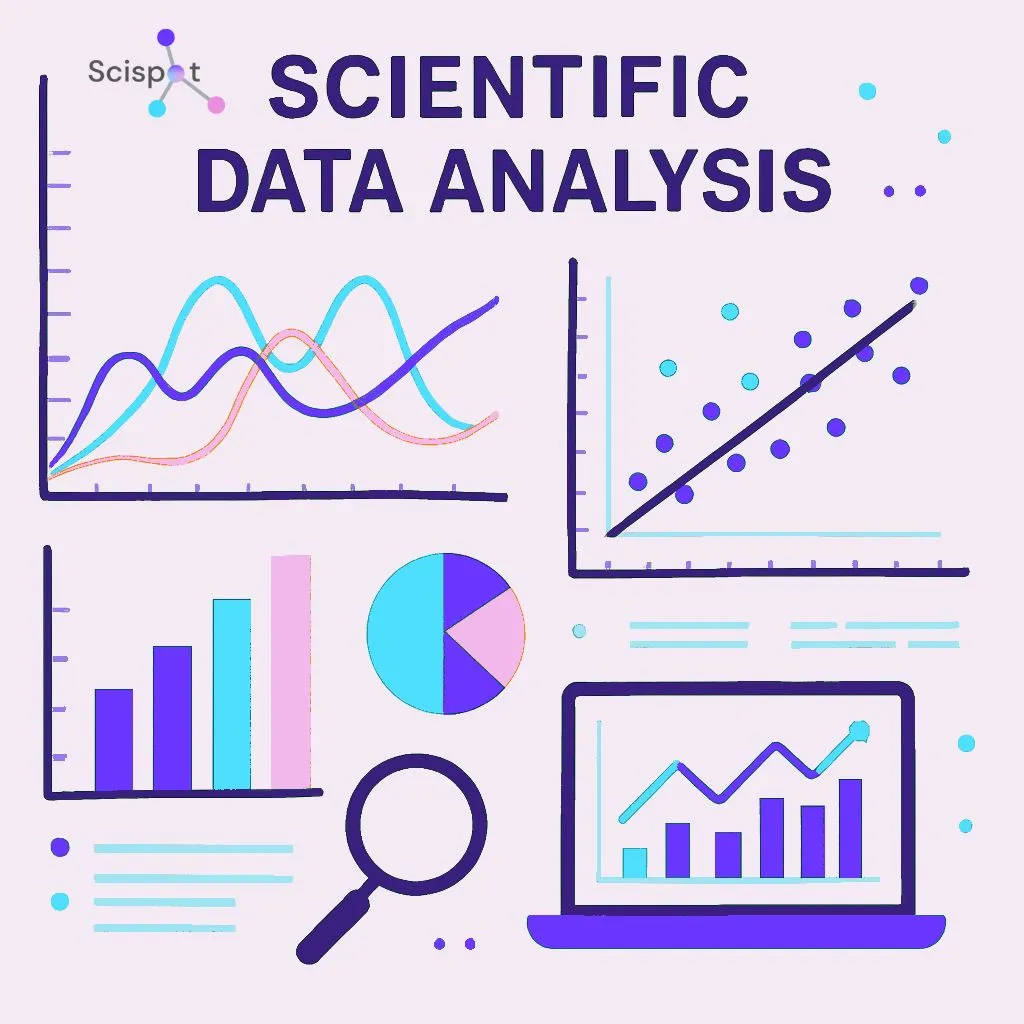
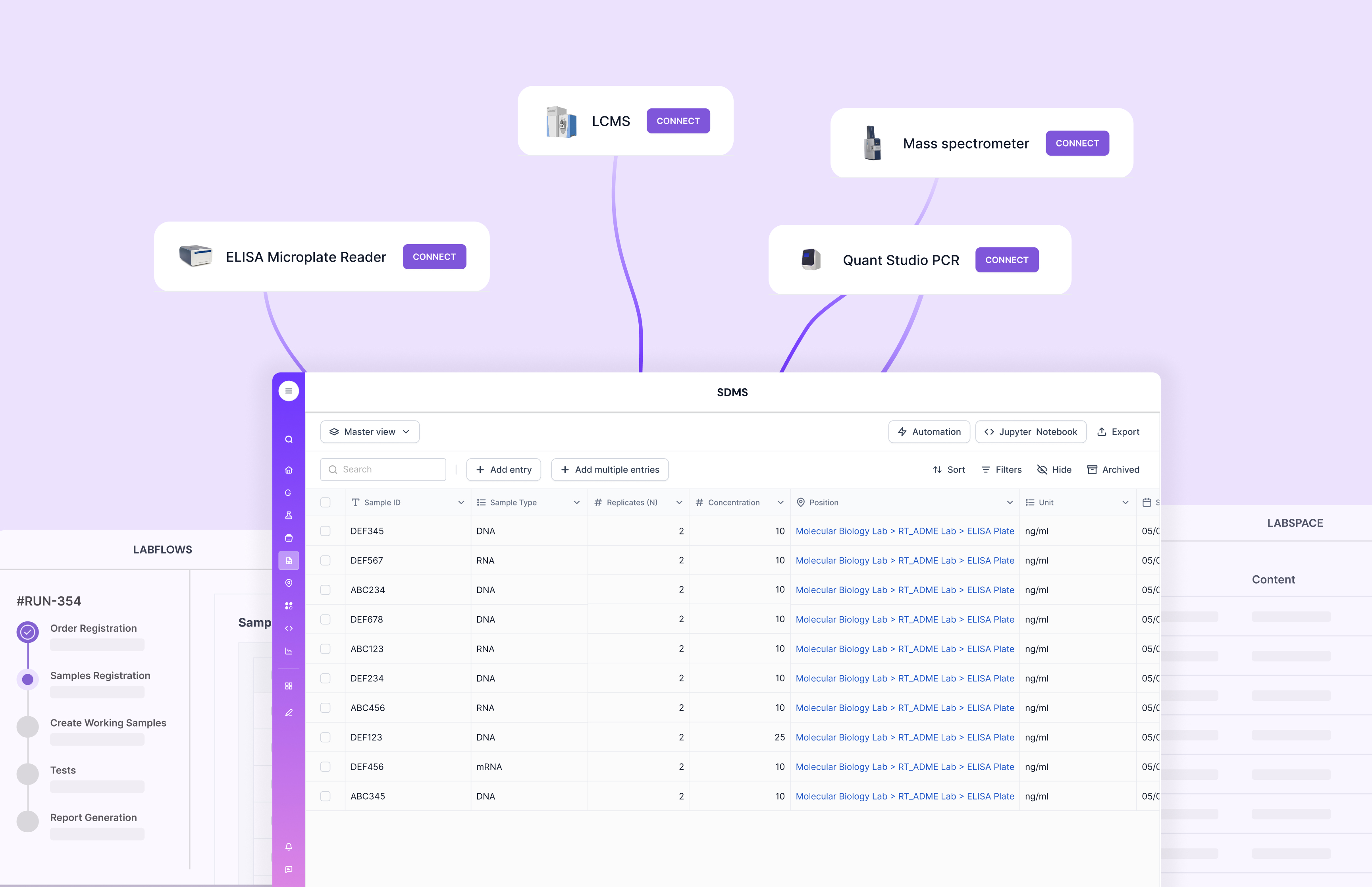
Scispot fits this newer model because it treats SDMS as more than a repository. It connects structured records (Labsheets), documentation (Labspaces), integrations (GLUE), and analytics into one workflow. The result is that data stays usable and review-ready, not just retained.
Key Features of an SDMS
Data lifecycle management means raw files, processed outputs, and final reports stay connected across time. In practice, labs need to know not only where a file is, but which sample, run, and method version it belongs to. Scispot supports this by keeping records and attachments connected, so the lifecycle is visible inside the same working system.
Data security is about locking things down, but also proving control. Labs often need to show who accessed data, who changed it, and when it happened. A strong SDMS makes those answers easy, especially when audits arrive.
Metadata management is what turns a folder into a searchable lab memory. If your SDMS cannot capture method details, sample identifiers, instrument context, and workflow state, search becomes guesswork. Scispot makes metadata practical by letting teams capture structured fields in Labsheets while keeping supporting context in Labspaces.
.jpeg)
Data integrity is the difference between “we have the file” and “we trust the result.” It includes version history, traceability of edits, and a clear review trail. Scispot keeps integrity close to day-to-day work, so the evidence trail grows naturally as the lab operates.
Data organization should match how labs work, not how IT names folders. Many labs end up with deep folder trees and naming rules that break under pressure. Scispot keeps organization aligned to real lab objects like samples, batches, runs, and protocols, so retrieval stays intuitive.
Why Scispot is a Strong SDMS Fit for Modern Labs
Scispot fits this SDMS story well because it treats “scientific data” as more than files in storage. It gives labs a structured layer (Labsheets) for instrument outputs, results tables, and audit-ready records. It also keeps semi-structured work (Labspaces) like notes, protocols, and attachments connected to those same records. That linkage matters because most data problems come from “lost context.” It’s like labeling every sample tube and also labeling the freezer map. You can still move fast, but you don’t lose the trail.
Where Scispot stands out is how it operationalizes integrity, security, and lifecycle control without turning every update into a rebuild. Role-based access, audit trails, versioning, and e-signature style review flows support integrity and accountability. GLUE acts like the “data plumbing” that pulls instrument exports, cloud storage, and external systems into consistent formats. That makes metadata more than a checkbox. It becomes something you can trust for search, reporting, and reuse. This is also where collaboration improves because people aren’t passing spreadsheets around. They’re working on one connected record.
If the lab’s goal is reproducibility and compliance, Scispot aligns with SDMS best practices in a very practical way. It helps teams standardize templates, enforce required fields, and keep “who changed what, when, and why” visible. At the same time, it supports scaling. More instruments, more projects, more sites. The same system holds together. That balance is what labs usually want. Flexibility, but with guardrails.
Importance of Metadata Management
Metadata is the label on the tube, but for files. Without it, even perfect storage becomes a freezer with no inventory map. People spend time hunting, re-verifying, and re-building context that should have traveled with the data.
Strong metadata also reduces rework and review time. When a scientist can search “all runs with this method version” or “all results tied to this batch,” decisions get faster. Reviews become cleaner because the story is already attached to the record.
A common gap in older stacks is that metadata gets trapped inside instrument software or spread across multiple systems. That creates reconciliation work, which quietly becomes the lab’s daily tax. Scispot reduces that drift by capturing structured metadata at the point of work and keeping it connected to the files.
Types of Metadata
Descriptive metadata answers “what is this?” It includes items like sample ID, assay name, analyst, tags, and experiment identifiers. This is the layer that makes discovery possible, especially when teams grow and projects overlap.
Structural metadata answers “how is this put together?” It describes relationships like run → injections → peaks, or sample → aliquots → plates. This is what lets teams navigate complex experiments without relying on memory.
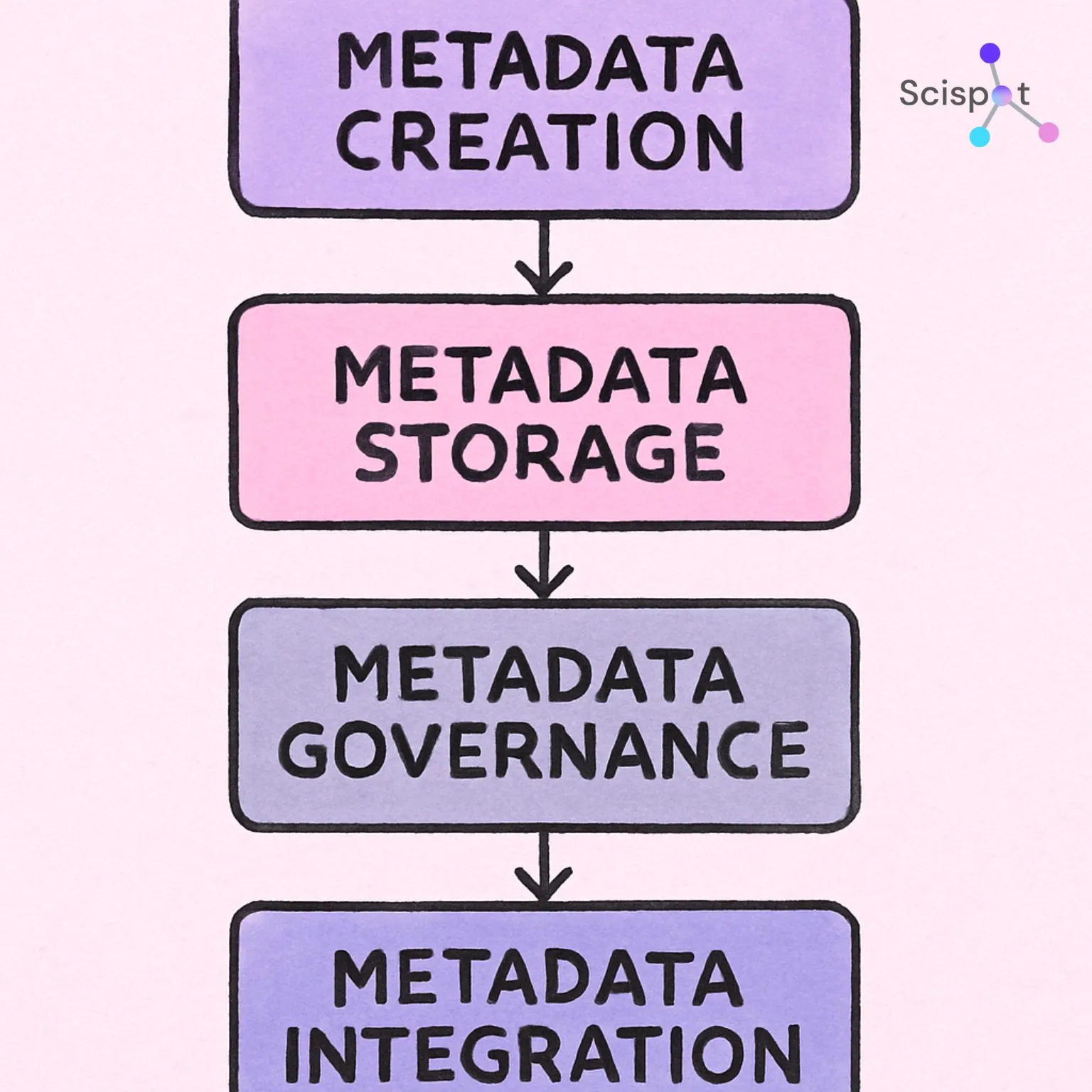
Administrative metadata answers “how is this governed?” It covers file type, creation date, retention rules, access rights, and signature status. This layer is critical in regulated settings because it proves control, not just storage.
Ensuring Data Security and Integrity
Security and integrity are tightly linked in labs. If you cannot prove integrity, security alone does not satisfy auditors or internal QA. The best systems make integrity visible without adding friction.
Some legacy-style deployments handle this by splitting “where work happens” from “where compliance evidence lives.” That can force teams into extra steps and parallel tools. Scispot keeps the record, the attachments, and the review trail together, so controls feel like part of normal work.
Data Security Measures
Access controls work best when they follow real lab roles and responsibilities. Labs need to control who can edit, who can review, and who can release, without slowing routine workflows. A good SDMS supports that structure cleanly.
Encryption matters both in transit and at rest, especially when instrument data and partner data flow into cloud systems. It reduces risk during movement, not just during storage. It also supports safer collaboration across sites.
Audit trails make security provable. They let you answer “who did what” without relying on memory, chat threads, or informal notes. That proof becomes a daily benefit, not only an audit requirement.
Ensuring Data Integrity
Validation protocols help ensure the data stays accurate and consistent over time. In practice, this means repeatable checks, standardized capture, and review-ready evidence. It also means reducing “hidden edits” that happen outside the system.
Error correction needs to be fast and traceable. If fixes happen in spreadsheets or local edits, integrity becomes fragile and hard to defend. A strong SDMS keeps corrections linked to the record and preserves the story of what changed.
Version control matters for both files and meaning. If a method changes or acceptance criteria changes, the system should preserve prior versions and make the reason visible. Scispot’s workflow-linked approach helps keep that context attached, so reviewers do not have to reconstruct history later.
Data Sharing and Collaboration
Modern labs collaborate across teams, sites, and partners. An SDMS should enable sharing without losing governance, permissions, or traceability. Sharing should feel safe, not risky.
A frequent pain point with older platforms is operational friction during change. Some systems rely on custom scripting or services-heavy configuration to adapt workflows, which can slow teams when processes evolve often. Scispot is designed to reduce that dependency by making workflows and data models configurable inside the product.
When the record, the file, and the workflow are connected, sharing becomes clearer. You are sharing context, not just attachments. That helps collaborators interpret data correctly and reduces back-and-forth.
Benefits of Data Sharing
Collaboration improves when teams can rely on one source of truth. It reduces the “which file is final?” loop and avoids duplicated work. It also keeps work moving when key people are out.
Discoverability improves when search is metadata-driven. Instead of digging through folders, teams query by sample, method, batch, or status. That turns SDMS from passive storage into active lab memory.
Reproducibility improves when files are linked to methods, parameters, and approvals. Teams can re-run, re-check, and explain results with less ambiguity. That is especially valuable when labs scale or hand projects between groups.
Best Practices for Data Sharing
Standardized formats help, but structure helps more. Labs can store anything and still fail to reuse it if context is missing. The SDMS should make context unavoidable, not optional.
Clear access rules prevent accidental misuse, especially with external collaborators. Labs need to share the right slice of data while protecting sensitive information and ensuring traceability. This is easier when permissions are tied to records, not folder hacks.
Documentation should travel with the data. If notes sit in one system and files sit in another, meaning gets lost. Scispot’s approach keeps documentation (Labspaces) connected to structured records (Labsheets), so sharing stays complete.
Implementing an SDMS: Best Practices
Start with a needs assessment that maps real workflows. Most labs do not fail because of storage limits. They fail because of handoffs, inconsistency, and “where is the truth” confusion.
Customization should not become a permanent dependency. Some vendor ecosystems can require specialized skills for ongoing changes, which can be fine for stable environments but heavy for fast-moving teams. Scispot is well-suited when you want flexibility without turning every change into a mini project.
Training and support must match the lab’s pace. If adoption is slow, people create shadow systems, and the SDMS becomes a “final resting place” instead of a living system. The goal is to make the SDMS the default place where work happens.
Scalability must include integrations, not only storage. If instrument data still lands in side folders or local machines, the SDMS becomes passive. Scispot’s integration layer helps reduce those messy handoffs so data lands structured and connected.
.jpg.webp)
The Role of Data Governance
Governance is how labs keep data usable as teams grow. It prevents “data lakes” from becoming data swamps. It also ensures the lab can prove control without heroics.
A good SDMS supports governance by making rules enforceable. That includes retention, review states, permissions, and traceability. Governance works best when it is part of the workflow, not a separate policy binder.
This is where platform design helps. When SDMS is integrated with workflows and structured records, governance becomes routine. Scispot supports this by keeping structured work, documents, integrations, and analytics connected in one environment.
Components of Data Governance
Policies and procedures define what “good” looks like. The SDMS should help enforce them through templates, required fields, and controlled states. That reduces variability across teams and shifts.
Roles and responsibilities should be reflected in permissions and approvals. If roles live only in SOPs, reality will diverge. A strong SDMS makes the correct path the easiest path.
Quality assurance should be continuous. Audit trails, review trails, and signatures are most useful when they happen as work happens. That keeps compliance aligned with operations, rather than becoming a last-minute scramble.
Conclusion
An SDMS is the backbone of trustworthy science because it preserves data plus context across the full lifecycle. The best SDMS makes retrieval easy, integrity provable, collaboration safe, and governance enforceable. It reduces the daily friction that slows labs down.
Many established SDMS and LIMS suites are strong in heavily regulated enterprise settings. At the same time, they can bring more change-control overhead, especially when labs iterate quickly or want to avoid service-heavy customization. That overhead often shows up as slower adaptation and more parallel tools.
.gif)
Scispot stands out when a lab wants speed and audit-ready control in one place. Labsheets keeps structured data capture tight, Labspaces keep documentation connected, GLUE reduces messy handoffs, and analytics turns stored data into usable insight. That combination helps labs spend less time organizing data and more time using it.