

.webp)
What is EBR software used for?
Think about trying to bake 10,000 loaves of bread with instructions scattered across loose scraps of paper in a busy kitchen. One lost note or coffee spill could throw off the whole run.
Most people do not think much about the records behind the medicine they take or the baby formula they buy. But those products depend on strict, required documentation called a batch record.
Manufacturing experts have long pointed out the risk of using paper notebooks for this kind of work. Today, many of those fragile logs are being replaced with EBR software that guides workers through each step of a production recipe.
Instead of hoping someone remembers to verify a temperature gauge, modern EBR software requires that check before work can move on. That helps cut human error in batch processing and supports safer, more consistent products.
.webp)
Replacing the Coffee-Stained Notebook: Why a Digital Recipe Is Safer Than Paper
Picture a baker making thousands of cakes from a recipe written on a greasy notepad. If they forget the baking powder, the paper does nothing. It cannot stop them. Factories face the same problem when they rely on paper records.
Electronic batch record software turns that static document into an active guide. It can enforce a lock-step workflow, which means a worker cannot start step two until step one is done and verified.
This move from passive tracking to active error prevention depends on four core tools in modern EBR systems:
Interactive checklists: Required fields that stop production when key safety data is missing.
Real-time alerts: Warnings that appear right away if a weight or temperature is off.
Digital signatures: Secure, password-protected sign-offs that show exactly who completed a task.
Automatic time-stamping: Built-in time records that capture the exact second an action happens.
These systems act like guardrails. They catch human mistakes before they spoil a product. That means fewer missed approvals on critical quality checks for life-saving medicine. When every action is tracked in real time, the factory has a much stronger base for safe, modern manufacturing.
How Digital Integration Turns Factory Floors into Smart Safety Zones
Have you ever tried to remember exactly when you turned off the oven, then doubted yourself later? That same problem shows up in factories when workers write down temperatures or weights at the end of a long shift. Memory slips. People may guess. They may write what they think happened instead of what actually happened.
Smart software fixes that by connecting directly to factory equipment. With EBR integration, a digital scale or mixing vat can send measurements straight to the system without anyone typing them in.
That removes simple but costly mistakes, like adding an extra zero or missing a decimal point in a batch of baby formula. It also strengthens real-time data integrity in life sciences because each measurement is captured at the exact moment it happens.
The result is a permanent, unchangeable record of how a product was made. Manufacturers call this an automated audit trail for manufacturing. It works like a digital passport that shows each safety rule was followed.
When that history is complete and clean, teams do not need to spend weeks checking messy paperwork before releasing a product. That helps move medicine faster and supports safer food production.

Why EBR Systems Mean Faster Medicine and Safer Food for Everyone
Think of an airport gate where one worker has to hand-check every bag before anyone can board. In a traditional factory, batch release can feel a lot like that. Quality teams may spend weeks reviewing thousands of paper pages just to confirm one batch is safe to ship.
Modern systems speed this up through review by exception. Since the software already tracked the process in real time, reviewers only need to look at the few moments where something unusual happened.
That can improve batch release cycle times and help treatments reach pharmacies faster. But speed does not mean less safety.
With FDA 21 CFR Part 11 compliance software, factories can keep electronic signatures secure and tamper-proof. One major benefit of paperless manufacturing in pharma is that this digital proof helps protect consumers from hidden human error.
The good part is that companies do not need to rebuild everything at once. They can shift from paper to digital through a phased rollout without stopping production.
Moving from Paper to Digital: The 3-Step Strategy for a Paperless Workflow
Upgrading a large factory can feel like changing a tire on a moving car. Production cannot just stop while new software goes in. That is why the move from paper to EBR usually works best as a phased process, not a sudden switch.
A practical digital batch records implementation often follows three steps:
Standardize the recipe: Clean up paper instructions before entering them into the system.
Pilot one small production line: Start with one product and catch early issues.
Scale to the whole factory: Roll out the proven process step by step across other areas.
This kind of rollout helps avoid one of the biggest upgrade risks, overwhelming the people who use the system every day. Good EBR management is not only about software. It is also about helping teams adjust to a new way of working.
Starting with a pilot gives workers time to build confidence. It also gives the company time to fix usability issues before the stakes get too high. If teams skip that process, frustration grows fast. If they do it well, they lower the risk of hidden manufacturing errors and costly recalls.
The Real Cost of a Scribble: How Digital Production Records Prevent Multi-Million Dollar Recalls
A single bad signature can have huge consequences. In a regulated factory, an unreadable scribble on a paper checklist can mean a required safety step never legally happened. If inspectors cannot trust the paperwork, a whole shipment may need to be scrapped or pulled from shelves.
That is one reason the hidden cost of manual data entry is so high. It is not just about time. It is about waste, risk, and public safety.
Modern EBR solutions reduce that risk by preventing workers from moving forward until every required digital signature is recorded correctly. A simple cost-benefit analysis of digital production records often shows that avoiding even one major recall can justify the software investment.
Today, these checks often sit in secure cloud-based batch management platforms instead of filing cabinets. That shift helps protect consumers and businesses at the same time. When the stakes are this high, the choice of platform matters.
Choosing Your Digital Shield: What to Look for in Modern EBR Services
Not every digital system does the same job. Scanning a paper checklist gives you a file, but it does not stop someone from skipping a step. True EBR services do more than store data. They guide work and block errors.
In any MES vs EBR systems comparison, that is worth remembering. A strong EBR system does not just record the recipe. It helps enforce it.
To build solid electronic documentation workflows, manufacturers should ask software providers five simple questions:
Can workers use the system easily on tablets?
Will production continue offline during internet outages?
Is the interface simple for non-technical staff?
Does the platform support government digital compliance rules automatically?
How secure is the cloud system that stores this data?
Cloud-based platforms also remove the need for expensive local servers in factory back rooms. They keep safety data backed up and protected, which makes digital records a more reliable standard for trust.
Why Scispot Is a Strong Fit for Modern EBR Workflows
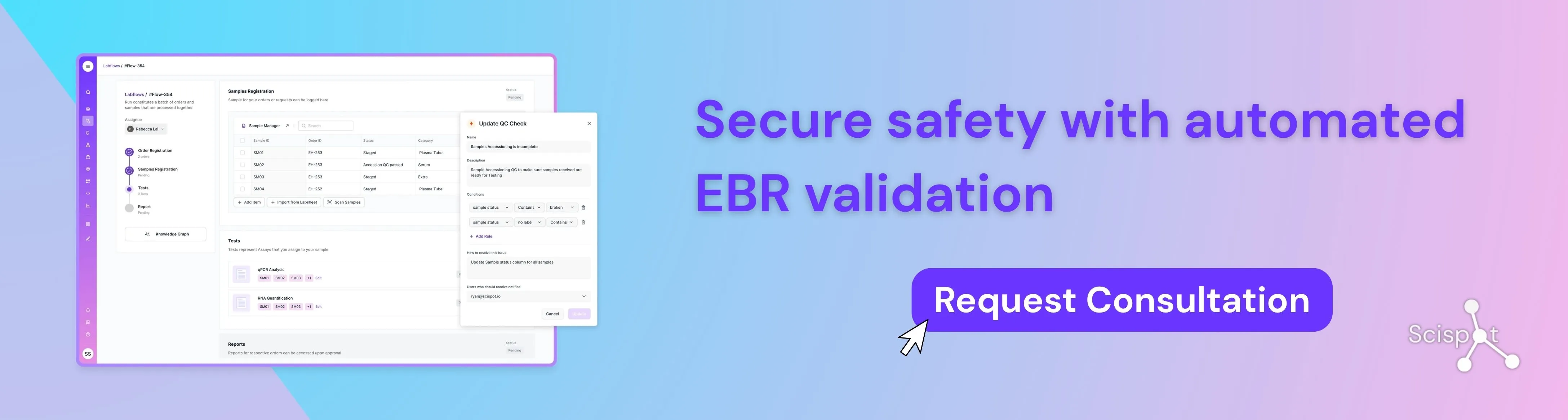
Scispot is a strong option for teams that want to move past static records and build a more connected EBR workflow. Instead of treating batch records like standalone documents, Scispot helps manufacturers connect batch execution with samples, inventory, workflows, quality checks, instrument data, and sign-offs in one system.
That means operators are not just filling in forms. They are working inside a guided digital process with traceability built in. For regulated teams, that creates a stronger base for audit readiness, data integrity, and controlled execution. It also makes daily work easier for the people running production.
Your Future in a Paperless World: Why Digital Records Are the New Standard for Trust
Consistent product safety does not happen by accident. When manufacturers move from paper trails to modern EBR software, they replace reactive recordkeeping with systems that help prevent mistakes before they happen.
That shift changes how medicines and essential goods are made. Digital batch records implementation can support more transparency on the factory floor, better consumer safety, faster release times, and business growth without giving up quality.
The next time you use an important medication, it is worth thinking about the record behind it. Beyond the packaging, there is a long trail of data that shows how that product was made and checked. As manufacturing keeps changing, digital batch records help make sure the products people rely on stay safe and dependable.