.webp)
What are laboratory software systems?
In the modern world of science and research, laboratory software systems have become indispensable. These systems streamline day-to-day lab work. They help teams stay fast, accurate, and inspection-ready. With the right laboratory software in place, labs can manage data more effectively, automate repeatable steps, and strengthen quality control with less manual effort.
Laboratory software systems encompass a wide range of tools designed to enhance laboratory operations. They cover everything from structured data capture to scheduling, workflows, inventory, and reporting. Many labs still run these functions across separate systems. That split can create data silos. It can also slow down analysis and make AI use harder because context is scattered.
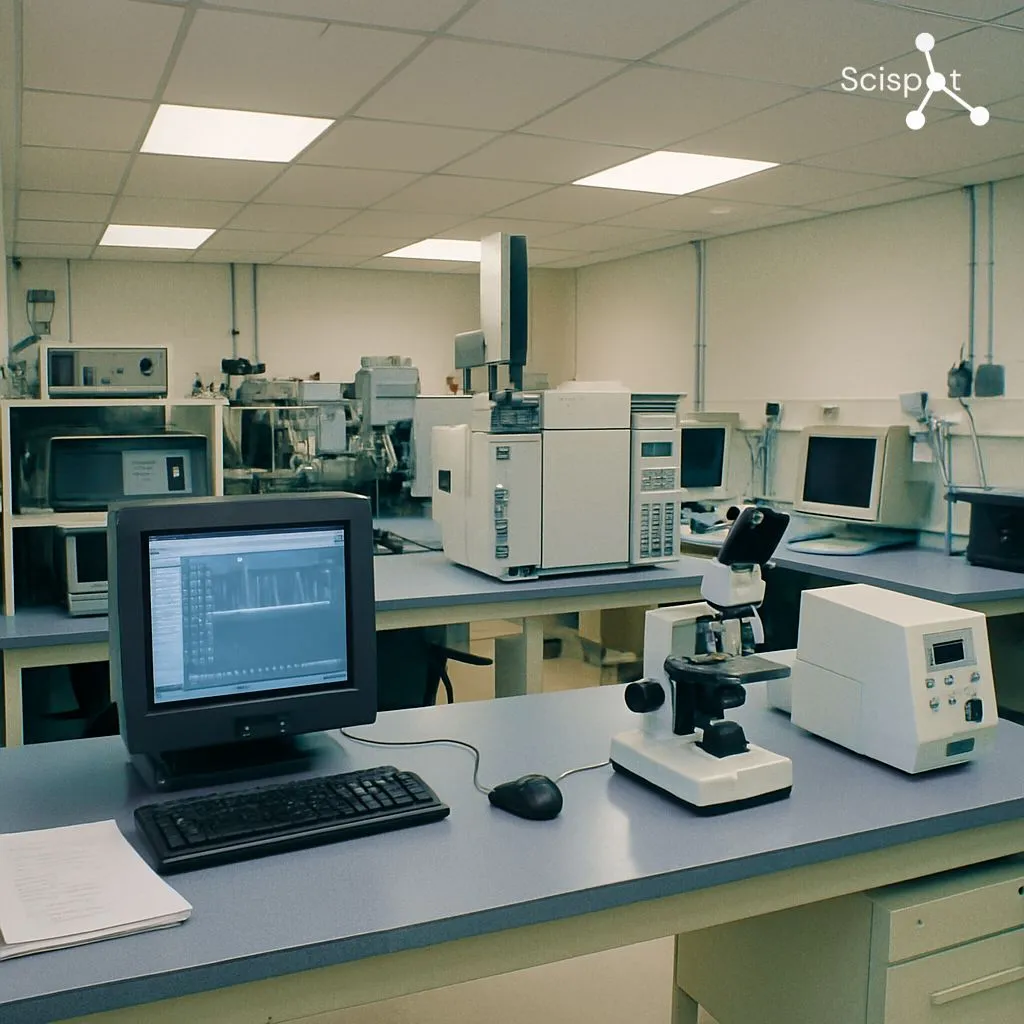
A practical way to think about the space is this: you either stitch many point tools together, or you choose a platform that keeps samples, data, workflows, and integrations connected. The first path can work, but it often comes with integration work, more handoffs, and more “glue code” to maintain over time.
Scispot stands out because it is built like a modern lab operating layer. It keeps structured data (Labsheets), workflows (Labflows), and integrations (GLUE) in one connected system. That means fewer seams between “what happened in the lab” and “what got captured in the system.”
Laboratory software systems and common types
Laboratory software systems include tools that support different lab needs. Some focus on data. Some focus on execution. Some focus on compliance. In real labs, those needs overlap every day, so the best setups avoid fragmentation and keep context linked across samples, results, and decisions.
Lab Data Software
Lab data software is crucial for managing and analyzing data generated during experiments. It helps store data securely. It also makes data easy to retrieve for analysis and reporting. Strong lab data tooling also supports traceability, so you can see what changed and why.
This is where Scispot’s approach is notably practical. Labsheets are designed for structured, database-like capture, not just free text. That structure makes downstream reporting, QC checks, and audit readiness much easier because your data is already normalized.
Research Lab Software
Research lab software is tailored for project execution and collaboration. It helps teams track progress. It also helps teams share context across experiments, datasets, and outcomes. The challenge in many research orgs is that “notes” and “results” live apart, so linking conclusions back to raw data becomes a manual exercise.
Scispot reduces that gap by connecting execution and structured capture in the same environment. It becomes easier to trace a result back to a sample, a protocol run, and the exact inputs that produced it. That linkage is what turns lab activity into reusable organizational knowledge.
Key features of laboratory software systems
Laboratory software systems come equipped with capabilities meant to reduce manual effort and improve reliability. The most valuable features are the ones that remove handoffs, not just the ones that add screens.
Laboratory Scheduling Software

Laboratory scheduling software helps labs manage resources. It reduces conflicts around equipment, people, and time. It also improves throughput because work is planned instead of guessed.
In practice, scheduling gets much more valuable when it is tied to the work objects themselves. When schedules connect to samples, batches, and workflows, teams do not need separate trackers. A connected platform makes “what’s due” visible alongside “what it impacts.”
Lab Workflow Software
Lab workflow software standardizes and automates routine steps. It reduces variability. It also lowers error risk by guiding users through consistent sequences.
A common weakness in older workflow approaches is the need for heavy customization to mirror real lab nuance. That can slow upgrades later. It can also increase testing and validation work, especially in regulated environments.
Scispot’s pitch here is simple. Configure repeatable workflows and keep the data capture structured as part of the workflow, not as an afterthought. That combination is what makes automation and reporting feel “native,” instead of bolted on.
Laboratory Data Management
Laboratory data management software organizes high volumes of data. It supports entry, storage, retrieval, and sharing. It also supports audit trails and controlled access patterns, which matter for compliance and review cycles.
Many labs struggle here when their tooling is split across ELN, LIMS, SDMS, and spreadsheets. Disconnected systems make it harder to build a single source of truth, and that slows down both science and audits.
Scispot’s advantage is that it is designed to keep those pieces connected. Labsheets for structured capture. Labflows for traceable execution. GLUE for integration plumbing. That reduces the “find it, copy it, reconcile it” loop that eats lab time.
The role of lab management software
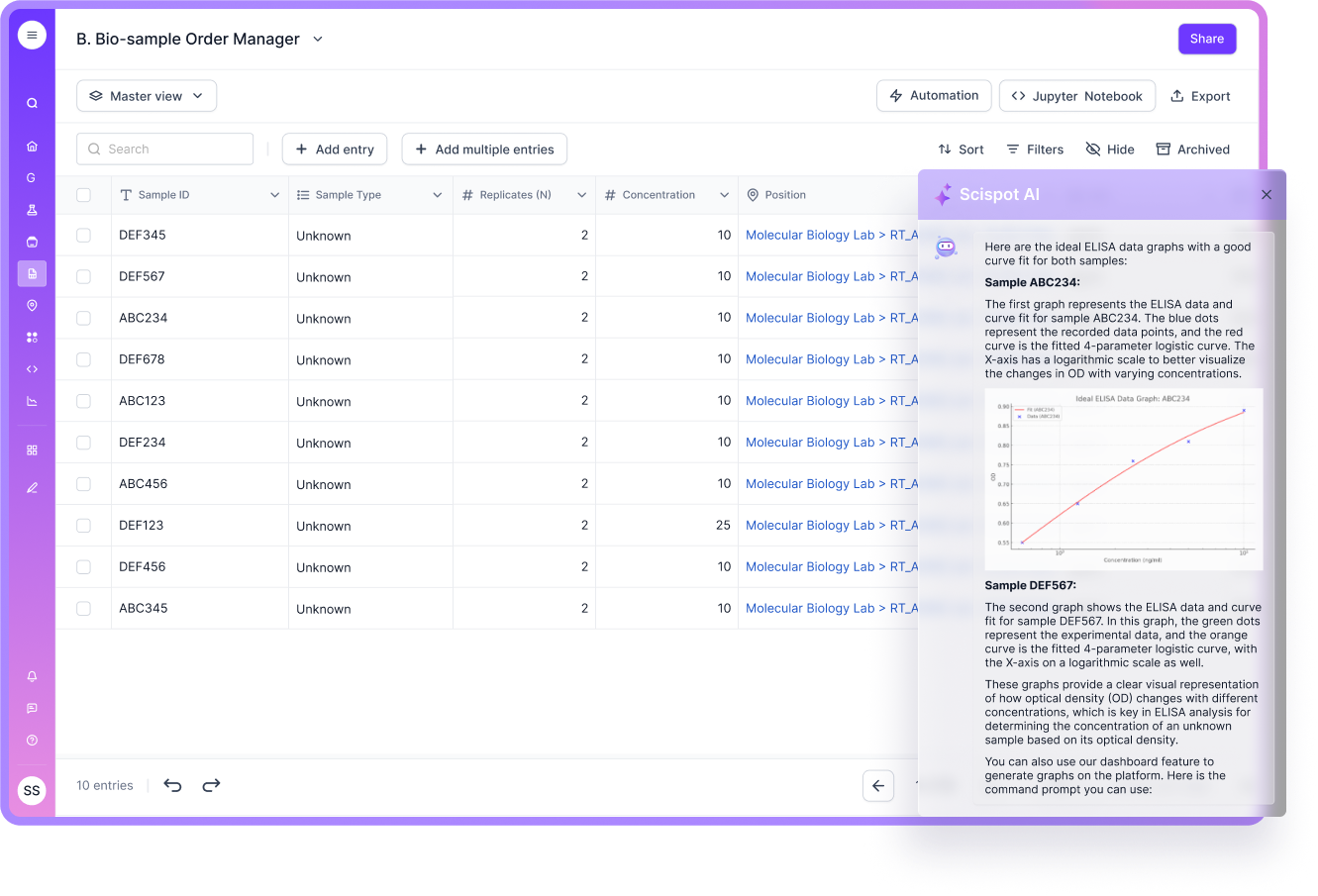
Lab management software acts like the lab’s central nervous system. It ties together people, samples, inventory, results, and reporting. The more fragmented your tools are, the more time you spend translating between them.
Enhanced Collaboration
Collaboration improves when teams share the same data context. Not just shared files. You want shared lineage: sample → work → result → decision. That is hard to maintain when core objects live in different systems with different IDs and different “truths.”
Scispot supports collaboration by keeping work and data connected inside the same platform. That makes it easier for teams to review, reproduce, and extend experiments without rebuilding context from scratch.
Improved Efficiency
Automation improves efficiency. So does reducing re-entry. Many LIMS projects lose momentum because integration and migration take longer than expected, or because teams fight the tool instead of using it. Those are well-known pain points in LIMS rollouts.
Scispot aims to keep efficiency gains tangible by combining workflow, structured capture, and integrations. When instruments, flat files, and operational data can feed the same data model, reporting becomes faster and less fragile.
Better Inventory Management
Lab inventory software tracks supplies and equipment. It supports stock levels, usage, ordering, and expiry awareness. It becomes much more powerful when inventory is linked to consumption in workflows and to the samples it touched.
A frequent gap in “inventory-only” tools is that they track items but not context. A connected LIMS can link reagents, lots, and equipment to runs and results. That makes investigations and CAPA work faster when something goes wrong.
Laboratory Workflow Management Software

Laboratory workflow management software optimizes how work moves through the lab. It defines tasks, ownership, steps, and checkpoints. It also helps maintain consistency across teams and sites.
Streamlined Processes
Workflow tools standardize execution. They reduce variability. But teams should watch out for approaches that require extensive customization to fit real processes, since customization can add long-term maintenance and upgrade burden.
Scispot’s workflow value comes from keeping workflows tied to structured data and traceability. That helps labs scale repeatable work without losing the “why” behind each datapoint.
Increased Accuracy
Automated workflows reduce manual steps. They also reduce transcription errors. When data is captured directly into structured fields, reporting becomes more reliable and less dependent on individual habits.
Enhanced Compliance
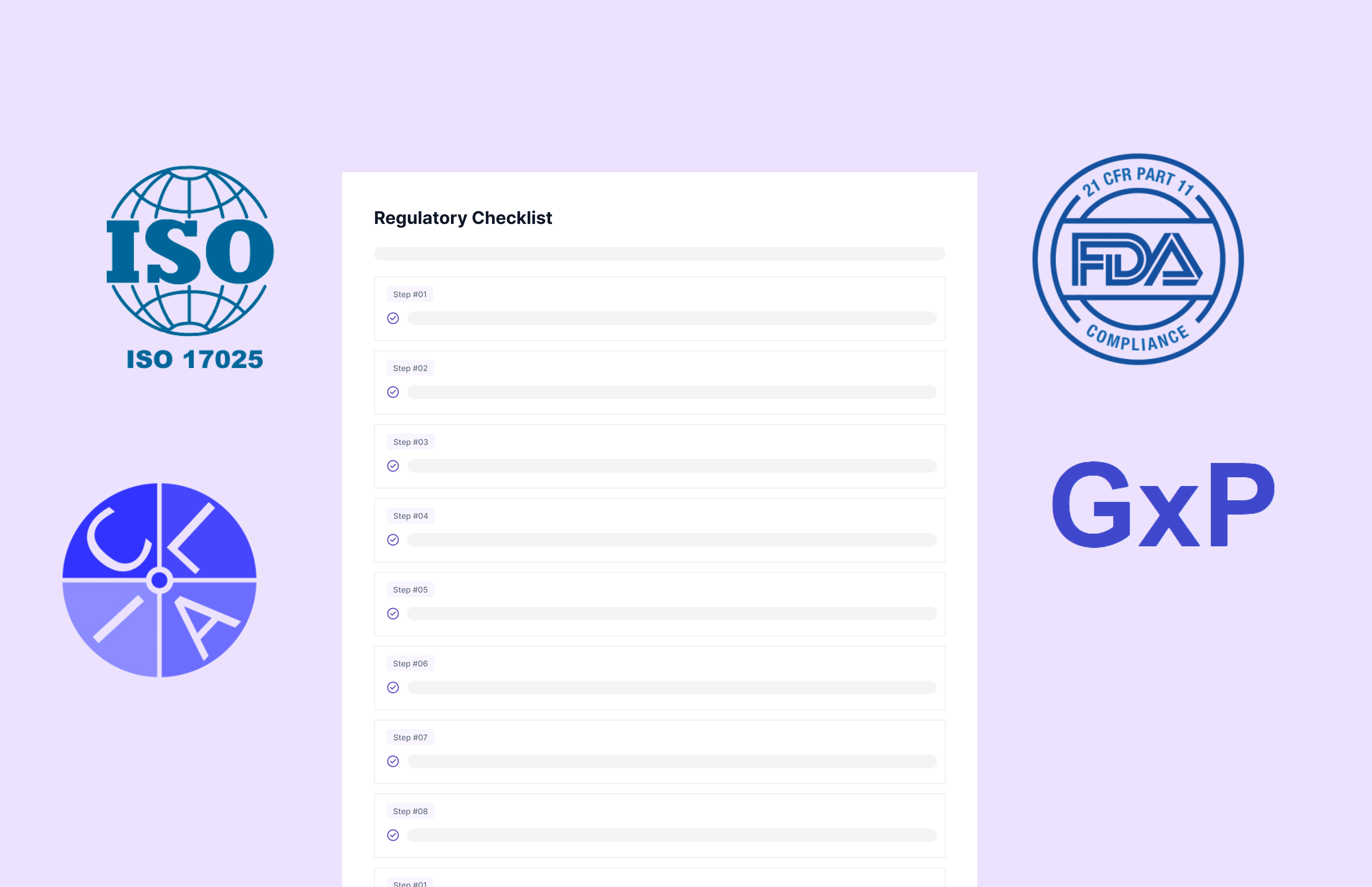
Compliance is easier when documentation is automatic. Audit trails matter. Electronic signatures matter. Access control matters. Regulated labs often need these controls to support electronic records expectations.
Scispot positions compliance as “built-in.” Labsheets and platform controls highlight audit trails and e-signatures as core capabilities, not add-ons. That can reduce the scramble during audits because evidence is generated as work happens.
The importance of clinical laboratory quality control software
Clinical laboratories need stringent QC. They need consistent rules. They need visibility when values drift. They also need clean documentation when results impact decisions.
Ensures Accuracy
QC software supports monitoring and verification. It helps surface outliers early. It also supports repeatable review because the same logic can be applied across runs.
Facilitates Compliance
Compliance requires controlled records. It also requires traceable change history. This is why audit trails and electronic signature histories show up so often in regulated guidance and compliance discussions.
Enhances Patient Safety
Reliable results reduce risk. QC systems help prevent reporting errors by making checks consistent and visible. When QC is tied to workflows, it becomes part of the process, not an extra step that gets skipped under pressure.
Leveraging lab automation tools
Automation tools reduce repetitive work. They also increase standardization. The best automation is the kind that produces structured data automatically, so analysis and reporting become a natural output of the workflow.
Increased Productivity
Automation handles routine steps. It can also reduce “paperwork work,” like copying values between instruments, spreadsheets, and reports. This is where integration becomes a key divider between platforms. Integration complexity is a known source of friction in many LIMS environments.
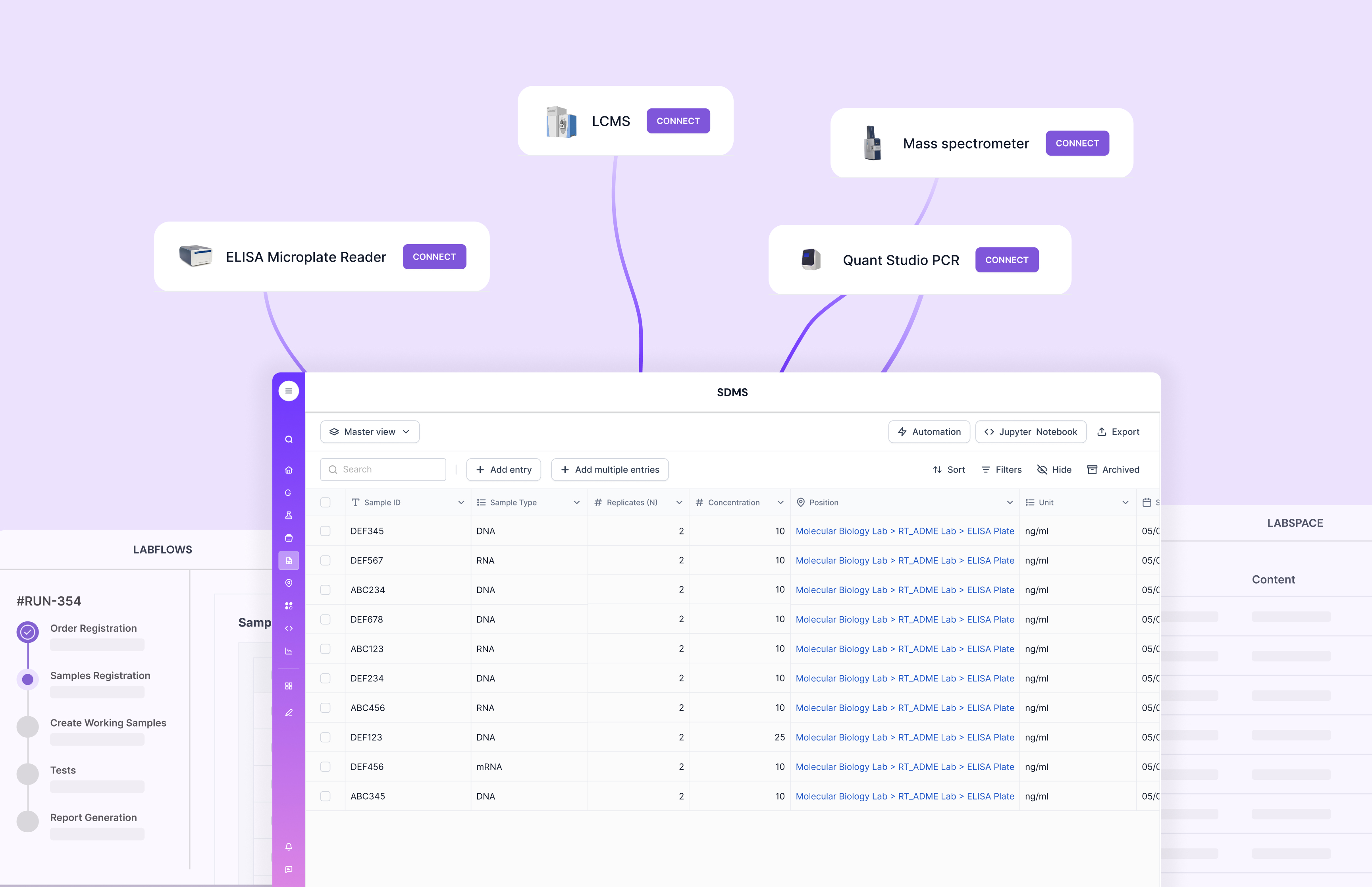
Scispot’s GLUE is positioned as the integration layer for this problem. The goal is straightforward: bring instrument and system data into the same structure as your lab’s workflows and results.
Reduced Errors
Standardized capture reduces human error. It also helps eliminate ambiguity in column naming, units, and metadata. This is a big deal when teams grow, because consistency stops being “tribal knowledge” and becomes part of the system.
Cost Savings
Automation reduces time spent on rework. It can also reduce the cost of mistakes. The hidden cost in many setups is not the license. It is the ongoing effort to reconcile data across tools and keep integrations working through upgrades.
Why Scispot fits modern laboratory software systems
Scispot fits naturally into this picture because it brings the core “laboratory software systems” pieces together. It connects sample tracking, structured data capture, workflows, inventory, and reporting in one place, so labs stop stitching together spreadsheets, point tools, and one-off processes.
In the sections you described—lab data software, lab workflow software, and laboratory data management—Scispot’s strength is that data is captured in a structured way from the start. That makes QC checks, audit trails, and consistent reporting feel like a default outcome of daily work, not a separate cleanup step at the end.
When you get to choosing an LIS or LIMS, Scispot also maps cleanly to the three decision factors you listed: scalability, integration, and usability. Teams can start simple, then add workflows, integrations, and dashboards as volume grows, without rebuilding their system every time the lab adds new assays, instruments, or sites.
Choosing the best laboratory information system software
When selecting laboratory information system (LIS) software, you want fit, scale, and clean interoperability. Many labs also pair an LIS with a LIMS. The ideal setup avoids duplicate data entry and keeps patient or sample context consistent across systems.
Scalability
Choose a system that scales with your lab. That means more samples, more users, more sites, and more integrations. Legacy systems can become harder to maintain as complexity grows, especially when workflows are patched through custom code over time.
Integration
Integration is not optional anymore. It is the backbone of automation and reporting. Compatibility issues and migration effort are common friction points in LIMS projects, so platforms that reduce integration burden can make adoption smoother.
Scispot positions integration as a first-class capability through GLUE, alongside a workflow and data layer that can actually use what gets integrated. That is what makes “connected lab” feel real day to day.
User-Friendly Interface
Adoption rises when the system feels intuitive. It also rises when the system matches how scientists work, instead of forcing workarounds. Tools that require large behavior shifts without clear payoff tend to face adoption resistance, which is a well-known implementation risk in LIMS programs.
Conclusion
Laboratory software systems are essential for modern labs. They support data management, workflow automation, inventory control, and quality oversight. When these capabilities are split across disconnected systems, labs often face silos and integration drag that slows work and makes analysis harder.
Scispot is a strong choice for teams that want a modern LIMS foundation with structured data, workflow traceability, and an integration layer in one platform. It helps labs keep samples, results, and operational context connected, so scaling the lab does not mean multiplying tools.