.webp)
What is a laboratory sample management system?
Laboratories handle an ever-increasing volume of samples. Managing these samples efficiently is crucial for maintaining data integrity, ensuring compliance, and optimizing lab operations.
A Laboratory Sample Management System (LSMS) is the system that keeps each sample identifiable, traceable, and connected to its data from the moment it enters the lab. It helps labs reduce mix-ups, avoid rework, and move faster with confidence.
In most modern labs, an LSMS works best when it is not a standalone tool. It should sit inside a LIMS that also handles workflows, results, audit trails, and integrations. Scispot is built for this “connected” approach, so sample tracking, structured results, and workflow steps stay tied together as one story, not scattered across tools.
This matters because many teams start with spreadsheets and shared folders. That can work at small scale. It tends to break when volumes grow and audits get serious.
Understanding Laboratory Sample Management Systems
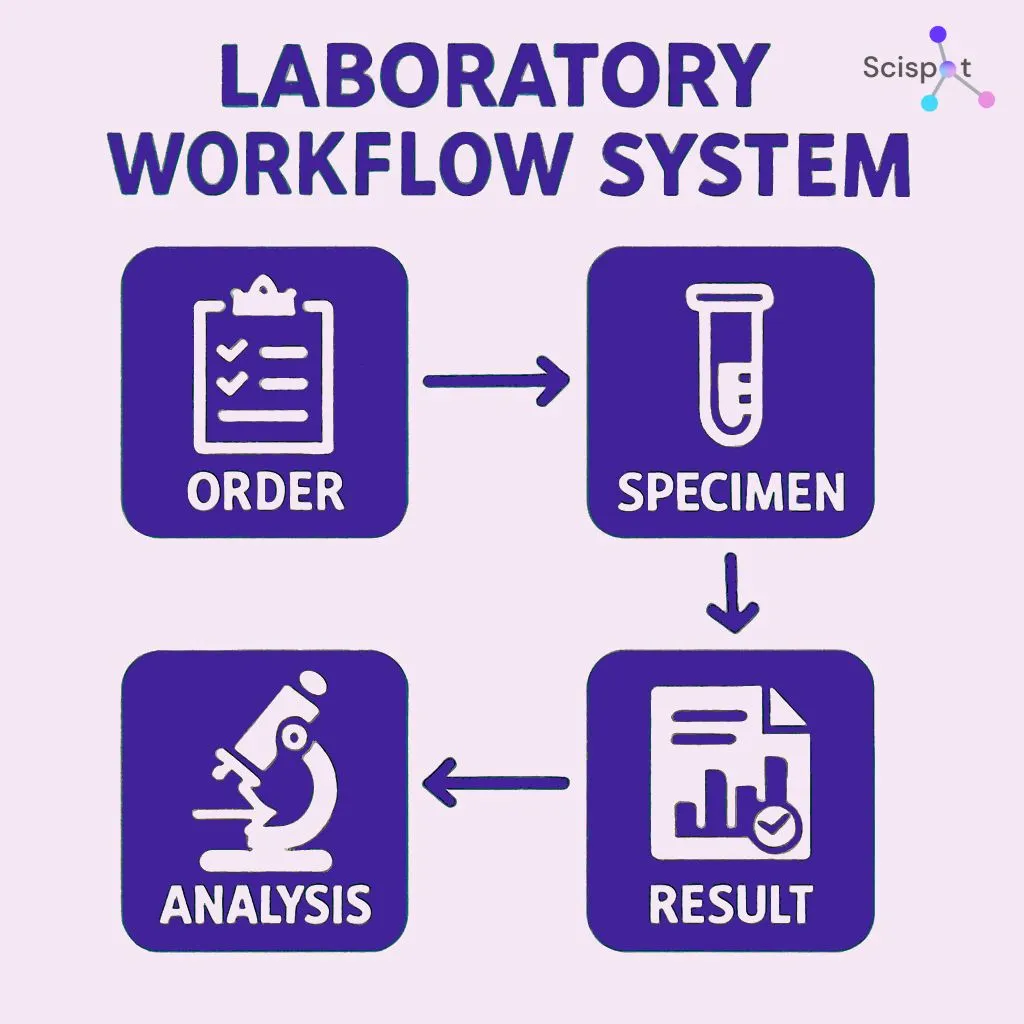
A Laboratory Sample Management System is a software solution designed to manage the flow of samples and data within a laboratory. It acts as the backbone of laboratory operations by streamlining processes, from sample collection to data analysis and storage.
A strong LSMS does more than store records. It keeps chain-of-custody clear. It keeps timestamps reliable. It keeps locations and sample states accurate.
Scispot supports this by pairing sample tracking with structured databases (Labsheets) and sample-centric workflow execution (Labflows). That combination reduces the “where did this come from” moments during investigations and audits.
Key Features of a Laboratory Sample Management System
An effective LSMS encompasses several key features that support laboratory operations:
1. Sample Tracking: The system provides end-to-end tracking of samples, ensuring that each sample is accounted for throughout its lifecycle.
2. Data Management: It facilitates the management of lab data, ensuring that all information is stored securely and can be accessed easily when needed.
3. Inventory Management: An LSMS keeps track of laboratory supplies and reagents, helping to maintain optimal inventory levels.
4. Compliance Support: The system helps ensure that laboratory operations comply with industry standards and regulations.
5. Automation: By automating routine tasks, an LSMS frees up valuable time for laboratory staff to focus on more complex tasks.
In practice, the differentiator is how well these features stay connected. In many setups, sample tracking lives in one place, results live in another, and approvals live in email. That creates gaps during handoffs.
Scispot is designed to keep these pieces together in one system. You can track samples with metadata and barcoding, capture results in structured formats, and run sample-centric workflows without losing traceability.
Benefits of Implementing a Laboratory Sample Management System
.webp)
Enhanced Efficiency and Productivity
One of the primary benefits of implementing a Laboratory Sample Management System is the significant boost in efficiency and productivity. By automating routine tasks and streamlining workflows, an LSMS reduces the time spent on manual data entry and sample tracking.
This is also where “older-style” LIMS deployments can feel heavy for growing teams. Public user-review aggregates show longer implementation averages for some traditional systems, which can delay time-to-value.
Scispot leans toward faster operational setup by focusing on configurable, structured data capture and workflow templates. That helps smaller teams scale without turning every change into a long services project.
Improved Data Accuracy and Integrity
Data accuracy is paramount in any laboratory setting. An LSMS minimizes the risk of human error by automating data entry and ensuring that all information is consistently recorded and stored.
The biggest accuracy gains come when results are captured in structured fields, not free text and attachments. Scispot’s Labsheets are positioned for exactly this, so analysis and reporting start from clean, consistent data.
Streamlined Sample Tracking
A robust sample tracking system is essential for maintaining control over laboratory samples. An LSMS provides real-time tracking of samples, ensuring that each sample's status and location are known at all times.
The practical outcome is fewer “lost sample” incidents and fewer stalled runs. When sample tracking stays tied to workflow steps, you also reduce handoff confusion between teams.
Scispot emphasizes centralized sample management with metadata and barcoding, with workflow automation layered on top. This keeps the physical sample journey aligned with the digital record.
Enhanced Compliance and Reporting
Compliance with industry standards and regulations is crucial for laboratory operations. An LSMS helps laboratories maintain compliance by providing the necessary documentation and reporting tools.
A common gap in fragmented systems is that audit documentation becomes an afterthought. That adds stress during inspections. A connected LIMS-style LSMS reduces this by logging actions as work happens.
Scispot highlights audit readiness and controlled workflows as part of its core platform positioning. This supports consistent reporting and review cycles without stitching together multiple tools.
Scispot as a Modern Laboratory Sample Management System
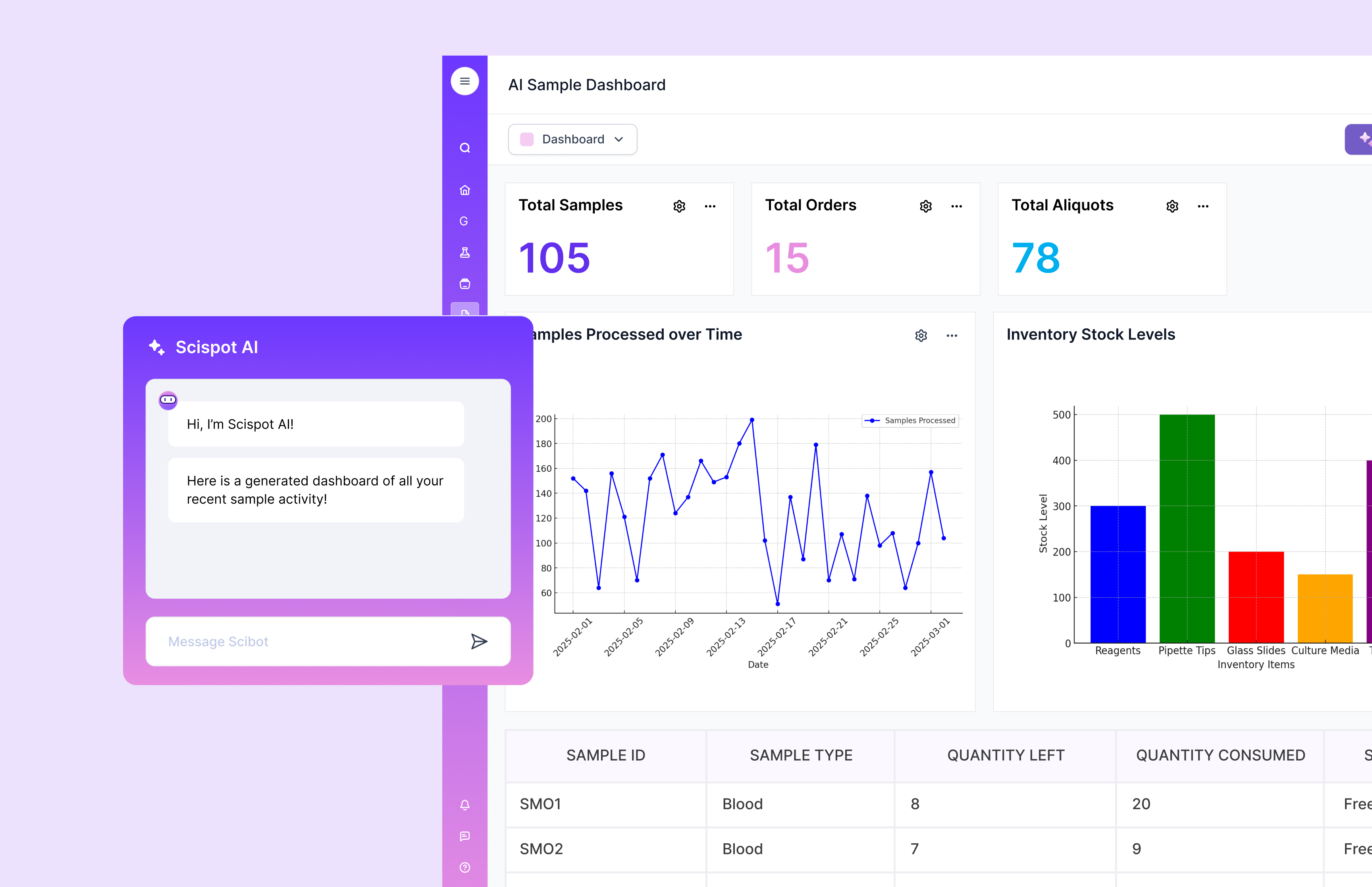
Scispot is a strong fit for labs that want a laboratory sample management system without stitching together too many tools. It combines sample tracking, structured data capture, and workflow execution in one place, so a sample’s story stays intact from intake to results. Instead of relying on free-text notes and scattered spreadsheets, teams can standardize how samples, aliquots, and test results are logged, while still keeping the system flexible as methods evolve. That balance matters when you are scaling sample volume and cannot afford “tribal knowledge” to be the process.
Where Scispot stands out is how it ties sample tracking + data management + inventory + compliance together as one connected model. Samples can link to requests, protocols, assay runs, QC checks, and final reports, with full traceability and audit-ready history. Teams can also set role-based access, so only the right people can edit sensitive records, while everyone else can safely view what they need. And because integrations are built in, Scispot can pull in instrument outputs and push clean data forward, which helps reduce rework and “copy-paste science.”
Scispot also maps cleanly to the future trends you already describe. It supports cloud-first collaboration for distributed teams, and it can layer AI-driven assistance on top of clean, structured lab data to speed up analysis and reporting. Think of it like upgrading from a pile of sticky notes to a single, shared operating system for the lab. You still do the science, but the system keeps the chain of custody, context, and compliance tight as you grow.
Choosing the Right Laboratory Sample Management System
When selecting a Laboratory Sample Management System, it’s essential to consider several factors to ensure that the chosen solution meets your laboratory's specific needs.
Assess Your Laboratory's Needs
Begin by assessing your laboratory's unique requirements, such as sample volume, data management needs, and compliance obligations. Understanding these factors will help you choose an LSMS that aligns with your laboratory's objectives.
If your lab expects growth, plan for what breaks first. It is usually sample handoffs, storage traceability, and reporting consistency.
Scispot is a strong fit for teams that want flexibility without losing structure. It is designed to support both operational workflows and clean data foundations for analytics.
.jpeg)
Evaluate Software Features
Examine the features offered by different LSMS solutions. Ensure that the system you choose provides comprehensive sample tracking, data management, inventory management, and compliance support.
Also evaluate how hard it is to adapt the system when your workflows change. Some platforms are powerful but can become rigid in day-to-day changes, especially when customization depends on specialized tooling or long vendor cycles.
Scispot’s positioning centers on configurable workflows plus API-first data structures, which helps labs adjust templates, fields, and workflows as they evolve.
Consider Integration Capabilities
A good LSMS should seamlessly integrate with existing laboratory systems, such as Laboratory Information Management Systems (LIMS) and other data management tools. This ensures that data flows smoothly between systems, reducing the risk of data silos and improving overall efficiency.
Integration is also where many labs feel pain with legacy setups. Even a LIMS vendor like LabVantage notes that instrument interfaces often get skipped due to time and budget limits, proprietary instrument formats, and available resources.
Scispot approaches integrations as a first-class layer through GLUE, aiming to reduce manual transfers and keep instrument data tied to the right sample record.
Implementing a Laboratory Sample Management System
.jpg.webp)
Planning and Preparation
Successful implementation of an LSMS begins with careful planning and preparation. Engage stakeholders from various departments to ensure that the system meets the needs of all users.
Define your sample lifecycle clearly. Map the stages. Map the approvals. Map the handoffs.
If you are moving off spreadsheets, plan your IDs, your barcode rules, and your storage model early. That avoids messy migrations later.
Training and Support
Proper training is essential to ensure that laboratory personnel can effectively use the new system. Provide comprehensive training sessions and resources to help staff become familiar with the LSMS.
Adoption often fails when the system feels like “extra admin.” Training should focus on how it saves time in the daily flow.
Choose a vendor that supports both setup and ongoing iteration. That matters when assays and teams change.
Continuous Improvement
After implementation, continuously assess the system's performance and gather feedback from users. Use this information to make necessary adjustments and improvements, ensuring that the LSMS continues to meet the evolving needs of the laboratory.
Continuous improvement works best when the system is easy to configure without risky rewrites. That is how you keep pace with growth.
Scispot’s model of reusable templates and connected data structures supports this kind of iteration without breaking traceability.
Future Trends in Laboratory Sample Management Systems
As technology continues to evolve, so too do Laboratory Sample Management Systems. Some emerging trends in this area include:
Artificial Intelligence and Machine Learning
AI and machine learning technologies are becoming increasingly integrated into LSMS solutions. These technologies can enhance data analysis capabilities, automate routine tasks, and improve overall system efficiency.
AI only works well when your data is structured. If your results are inconsistent, AI becomes guesswork. This is why structured capture matters long before you “add AI.”
Scispot frames its platform around structured, AI-ready foundations rather than treating AI as a layer on top of messy data.

Cloud-Based Solutions
Cloud-based LSMS solutions offer greater flexibility and scalability compared to traditional on-premises systems. By leveraging cloud technology, laboratories can access their data from anywhere, facilitating remote work and collaboration.
Cloud also supports faster updates and easier collaboration across sites. This is increasingly important for distributed teams and partner-heavy workflows.
Enhanced Data Security
As data breaches become more common, data security is a top priority for laboratories. Modern LSMS solutions incorporate advanced security features, such as encryption and access controls, to protect sensitive data.
Security is not only about blocking access. It is also about proving what happened. Audit trails and controlled sign-offs reduce risk during inspections.
Scispot highlights audit trails and compliance-oriented controls as core capabilities for audit-ready operations.

Conclusion
A Laboratory Sample Management System is an invaluable tool for modern laboratories seeking to optimize their operations. By streamlining workflows, enhancing data accuracy, and ensuring compliance, an LSMS can significantly improve laboratory efficiency and productivity.
The best LSMS solutions keep samples, workflows, and results connected. That is how labs scale without losing trust in their data. Scispot is built around that connected approach, pairing sample tracking with structured data capture, workflow traceability, and integrations that reduce manual effort.

.webp)
.webp)