

.webp)
What are the key market trends and future outlook for molecular diagnostics?
The molecular diagnostics market is changing fast. New technology and growing demand for personalized medicine are pushing it forward. It now plays a major role in modern healthcare.
Molecular diagnostics help doctors detect and manage disease with more precision. They matter in infectious disease, cancer, and genetic disorders. The market is set to keep growing.
PCR and real-time PCR still lead the field. They give fast, accurate results, which matter in patient care. The COVID-19 pandemic pushed adoption even further.
Growth varies by region. North America still leads, but Asia-Pacific is closing the gap fast. Better healthcare systems and rising awareness are helping drive that growth.
The outlook is strong. New products and strategic partnerships are creating fresh opportunities. The market is likely to keep changing how healthcare is delivered around the world.
Overview of the molecular diagnostics market
The molecular diagnostics market is an important part of healthcare. It focuses on the analysis of biological markers in the genome and proteome. These tools help guide diagnosis and treatment decisions.
Several factors are driving market growth. Better technology, higher demand for personalized care, and the need for faster answers all matter. Molecular diagnostics often deliver results faster and with more accuracy than traditional methods.
Key market segments include:
- Infectious disease testing
- Cancer diagnostics
- Genetic and genomic testing
- Transplant diagnostics
Current trends point to a move toward non-invasive methods. Demand for early and accurate diagnosis continues to grow. Ongoing innovation will stay important as those needs change.
The market is on track for strong growth, with an expected CAGR of over 9% from 2020 to 2025. Developing countries with expanding healthcare systems still hold a lot of untapped opportunity. As this market evolves, it is likely to shape treatment decisions and patient care in a big way.

Key molecular diagnostics market trends and outlook
The molecular diagnostics market is going through major change. These shifts are changing how disease is detected and managed. Two big drivers are better technology and rising demand for personalized medicine.
The COVID-19 pandemic sped up adoption. Fast and accurate testing became essential during that time. It also made clear how important molecular diagnostics had become in healthcare.
Molecular diagnostics now reach beyond their traditional use cases. A few trends stand out:
- More use of artificial intelligence
- Growth in point-of-care testing
- Rising use of companion diagnostics, especially in oncology
There are still challenges, including regulatory barriers and high costs. Even so, innovation and strategic partnerships are helping address them. The goal is to make diagnostics easier to access and more affordable.
Predictive analytics and next-generation sequencing are changing the field. They support earlier detection and more tailored treatment plans. As the market develops, it will keep opening new paths for growth and value.
The outlook remains strong. Technology gains and collaboration will shape what comes next. Stakeholders should expect more growth and more change ahead.
PCR and real-time PCR molecular diagnostics market trends
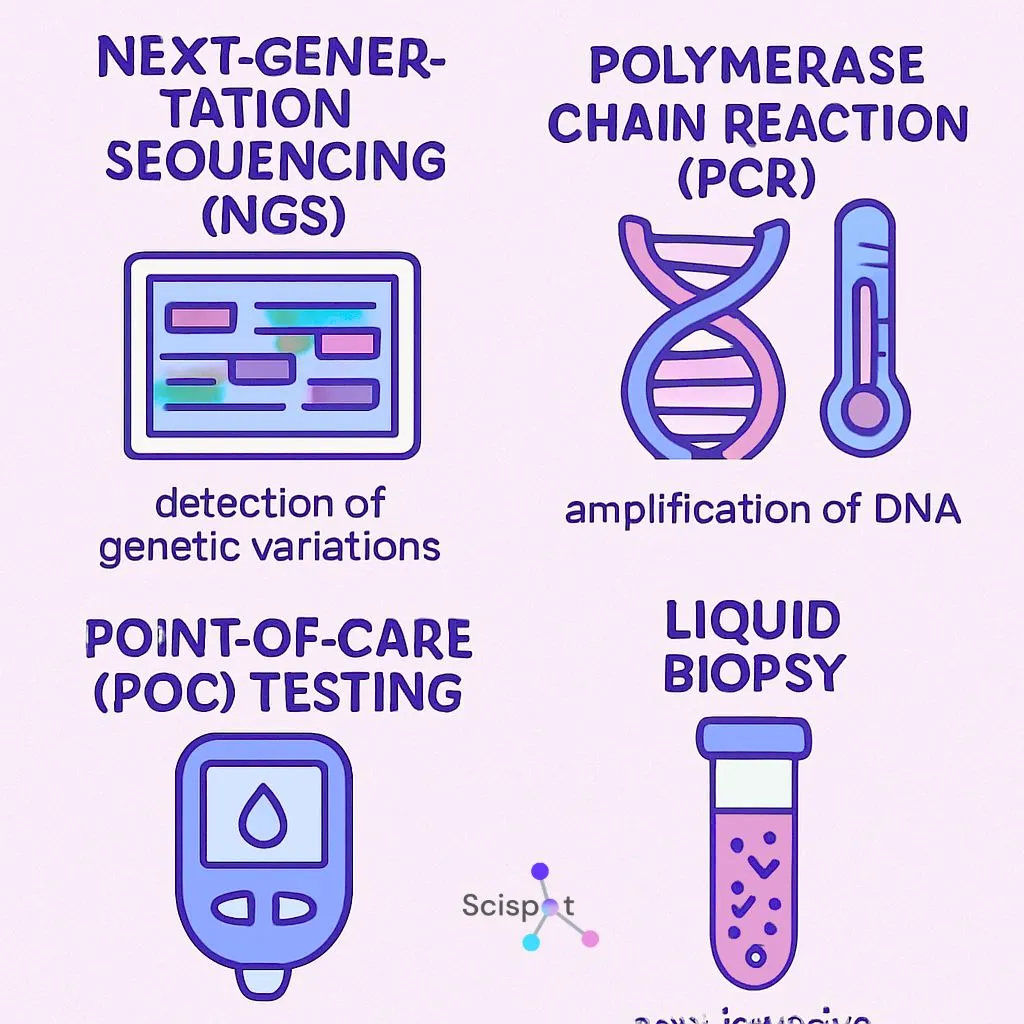
PCR and real-time PCR remain central to molecular diagnostics. Labs favor them for their speed and precision. They are especially important in infectious disease testing, but their use goes beyond that.
Real-time PCR adds another advantage. It can measure DNA and RNA targets, which helps track infections and understand how they spread. That is one reason demand for these tools keeps rising.
A few factors are driving adoption:
- Stronger need for fast, accurate testing
- Advances in automation and high-throughput systems
- Lower testing costs
These improvements help labs run more tests with better accuracy. That becomes especially important during pandemics and other health emergencies. PCR keeps evolving, and new uses continue to emerge in both diagnostics and research.
Partnerships between diagnostic companies and research groups are also pushing the field forward. These collaborations help expand what PCR technology can do. As the technology improves, PCR will stay a core part of molecular diagnostics.
Growth drivers and opportunities in molecular diagnostics
The molecular diagnostics market continues to grow for several reasons. One major factor is the rising rate of chronic disease. That creates more demand for precise diagnostic tools.
Personalized medicine is another key driver. As care becomes more tailored to the patient, molecular diagnostics become more useful. This creates room for products built around patient-specific needs.
Technology is also expanding what diagnostics can do. Tools like next-generation sequencing are improving precision while lowering costs. That opens the door to new uses across the market.
Key growth drivers and opportunities include:
- Rising demand for early and accurate disease detection
- Advances in non-invasive testing
- Integration with digital health tools
- Expansion of point-of-care testing
Together, these factors are pushing the market forward. Companies are putting more into R&D to build better solutions. That is creating strong opportunities for growth and innovation. The outlook remains positive, with a wide range of possibilities ahead.

Regional analysis: market trends by geography
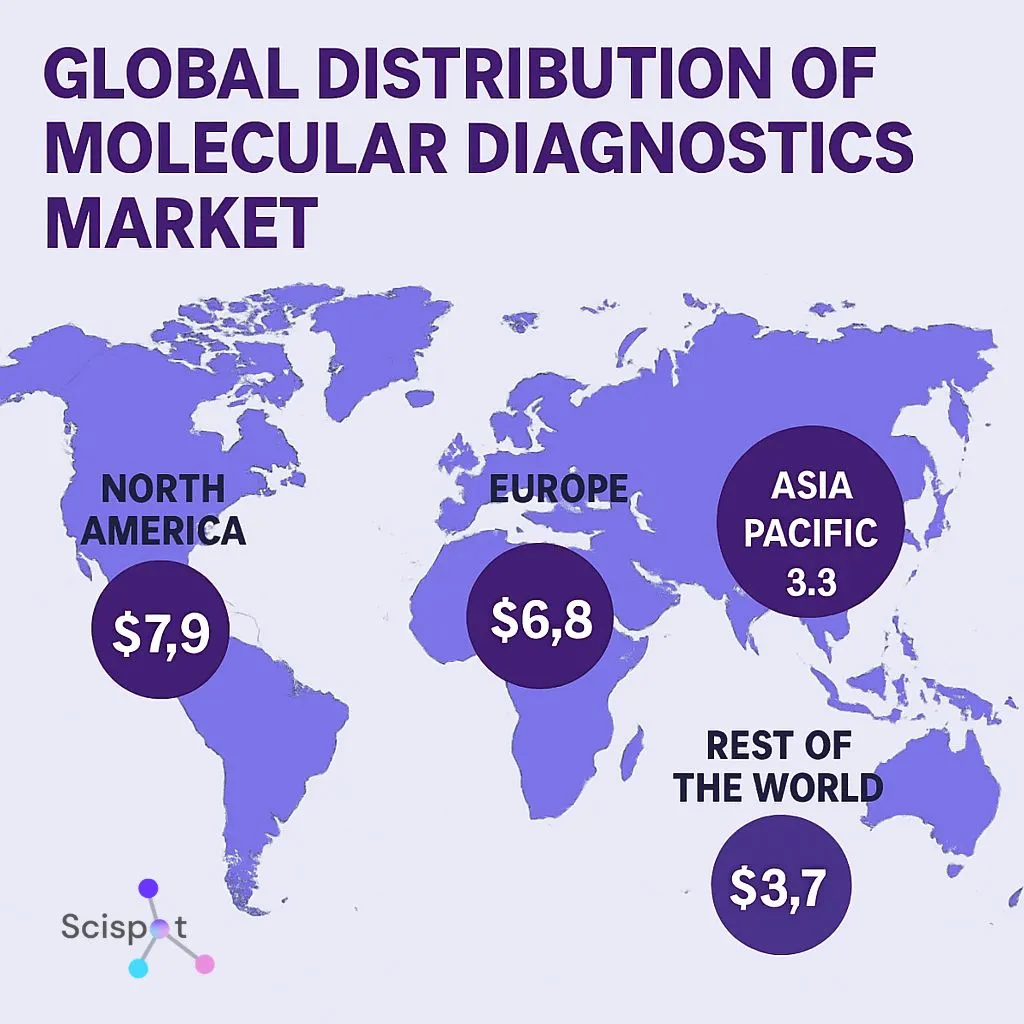
The molecular diagnostics market is not growing at the same pace everywhere. North America holds the largest share, backed by advanced healthcare systems, high R&D spending, and a strong focus on precision medicine.
Europe is the second-largest market. Supportive regulations and steady technology gains help the region grow. Efforts around early disease detection also support demand.
Asia-Pacific offers one of the biggest growth opportunities. Rising healthcare investment and growing awareness are expanding the market. China and India are leading much of that momentum.
In Latin America, growth is slower but moving forward. Better access to healthcare and government support are helping. Economic pressures, though, can still limit progress.
The Middle East and Africa show mixed potential. There are clear growth opportunities, but gaps in healthcare infrastructure remain a challenge. Collaboration will be important to move the market forward in these regions.
Key regional trends include:
- North America’s lead due to strong infrastructure
- Rapid growth in Asia-Pacific
- Europe’s steady market with ongoing innovation
- New opportunities in Latin America
- Ongoing challenges in the Middle East and Africa
Understanding these regional differences matters. Companies that adjust their strategy by market are better placed to capture growth and manage local barriers.
Molecular diagnostics for transplant: market trends and innovations
Molecular diagnostics for transplant is a fast-moving segment. It helps improve transplant success rates by supporting better matching and patient monitoring.
Recent innovation has focused on improving test accuracy and reliability. That can lead to better outcomes and longer transplant survival. Many companies are investing in next-generation sequencing to strengthen diagnostic performance.
Several trends are shaping this part of the market:
- Development of personalized monitoring tools
- Use of AI for predictive analytics
- Progress in non-invasive testing methods
These advances are helping make transplant procedures more effective. As the segment grows, it creates strong room for further innovation.
Diagnostics industry trends: technology, regulation, and competition
The diagnostics industry keeps changing, largely because of new technology. Tools like next-generation sequencing are expanding what molecular diagnostics can do. They also help deliver faster and more precise results.
Regulation remains a major force in the industry. Rules continue to evolve to support product safety and performance. At the same time, meeting those requirements can be difficult for companies.
Competition is intense. Companies keep pushing innovation to hold market share and stay ahead. Partnerships and mergers are common ways to grow.
Key industry trends include:
- Wider use of artificial intelligence and machine learning
- Higher demand for portable and point-of-care testing
- Greater focus on personalized and precision medicine
These shifts continue to shape the market. Companies that move well on these trends are likely to lead in the years ahead. Success will depend on steady innovation and the ability to adapt.

Future outlook: molecular diagnostics market trends 2025 and beyond
The molecular diagnostics market is set for strong growth through 2025 and beyond. A projected CAGR of over 9% points to continued expansion. Better technology and rising demand for personalized care are driving that growth.
Digital tools are expected to improve how diagnostics work. Cloud-based systems for data management and analysis are becoming more common. These tools can improve both speed and accuracy, which can help reshape patient care.
R&D investment is also rising. Companies are working on new products to stay competitive, including lower-cost tests and more non-invasive options.
Key future trends include:
- More focus on prevention and early disease detection
- A larger role for molecular diagnostics in global health work
- Expansion into emerging markets with growing healthcare systems
By 2025, the market will likely be defined by innovation and strategic partnerships. It will play an even bigger role in improving healthcare outcomes around the world. The outlook remains strong, with many growth opportunities ahead.
Leading companies and competitive landscape
The molecular diagnostics market is competitive and fast-moving. Several major companies lead through constant innovation. Many are expanding product lines and building stronger technical capabilities to stay ahead.
Leading names include Roche Diagnostics, Abbott Laboratories, and Thermo Fisher Scientific. These companies are known for strong research and development. Strategic partnerships and acquisitions also help strengthen their market position. Qiagen is another major player with a strong role in advancing diagnostic technology.
Common strategies include:
- Heavy investment in research and development
- Strategic partnerships and acquisitions
- Launch of new and cost-effective diagnostic solutions
This competitive pressure keeps the market moving. It pushes companies to find new openings in the molecular testing space. The result is steady growth and ongoing innovation across the industry.

Conclusion: the future of the molecular testing market
The molecular testing market is set to grow in a big way. Ongoing innovation and better technology will keep pushing it forward. Demand for accurate diagnostics and personalized medicine will continue to drive progress.
There is still a lot of room for new ideas, especially around lower costs and better access. Digital health tools will also improve efficiency and ease of use. Molecular diagnostics will keep shaping healthcare delivery and should play an even bigger role in improving patient outcomes worldwide.