

.webp)
What are the different types of molecular diagnostic tests?
Molecular diagnostic tests have changed how we detect and treat disease. They give more precise answers. They look at DNA, RNA, and proteins, not just broad signals.
DNA testing is a common example. It helps find genetic disorders and risk factors. Some tests run in labs. Others can be done at home.
Rapid tests return results fast. That matters in urgent care. Biomarker analysis adds another layer, helping spot disease earlier and more clearly.
The list keeps growing as tools improve. These tests now support cancer care, infection tracking, and more. They sit at the center of precision medicine and guide better decisions.

What are molecular diagnostic tests?
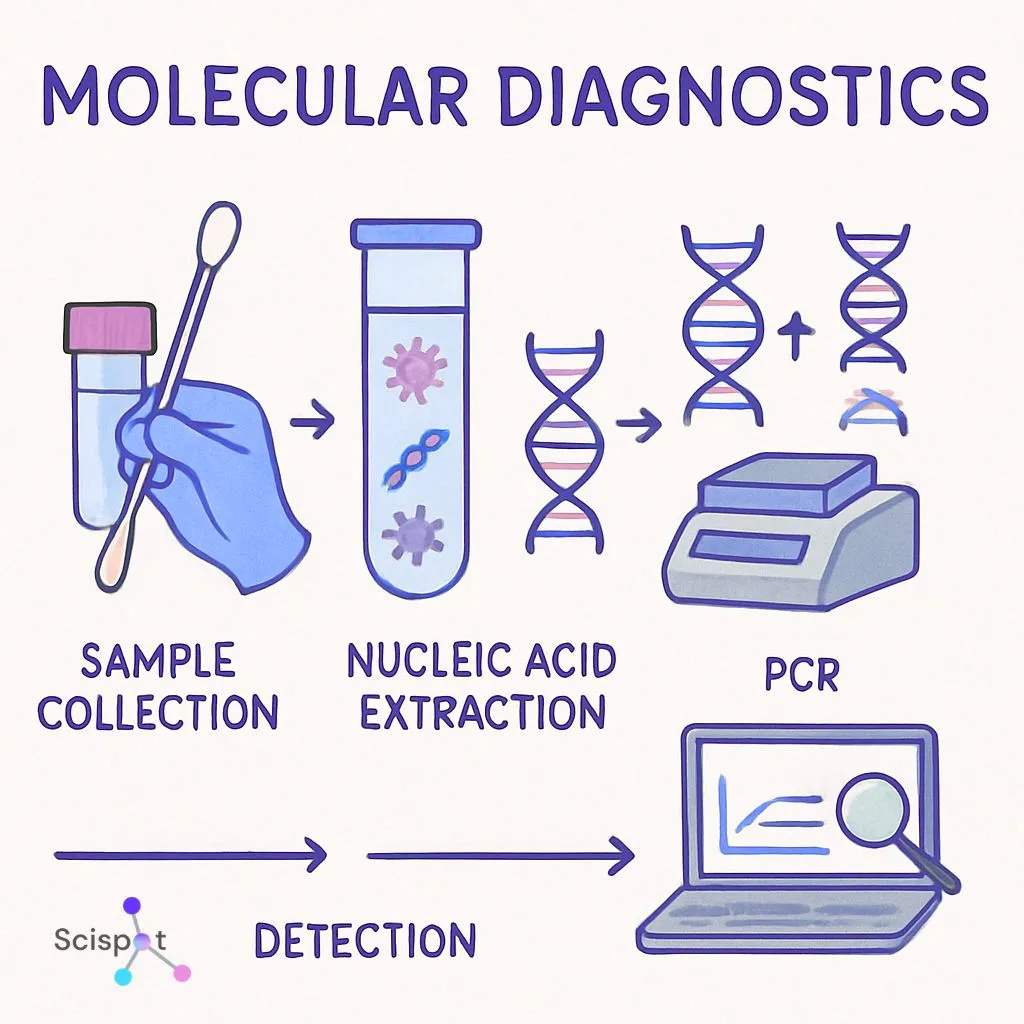
Molecular diagnostic tests study genetic material at a very detailed level. They focus on DNA, RNA, and proteins to understand disease.
They look for specific markers tied to disease or risk. That makes them more accurate than many older methods. Instead of guessing from symptoms, they point to the cause.
You can group them into a few main types:
- Genetic testing finds inherited mutations
- Biomarker analysis tracks disease-related proteins
- Pathogen detection identifies viruses and bacteria
These tests support clinical work, public health, and personalized care.
Why are molecular diagnostic tests important?
These tests improve how we detect disease. They find issues at a molecular level, which lowers the chance of misdiagnosis.
They also help tailor treatment. That means better outcomes and fewer unnecessary steps.
They are used for:
- Early detection before symptoms show
- Treatment monitoring to see if therapy works
- Prognosis to estimate disease progression
This level of insight was not possible before. Now it is part of routine care in many labs.
Types of molecular diagnostic tests
Molecular tests come in different forms. Each focuses on a specific type of data or use case.
Most analyze DNA, RNA, or proteins to find unique markers. That helps map what is happening inside the body.
Common types include:
- PCR (Polymerase Chain Reaction) – amplifies DNA to detect pathogens
- NGS (Next-Generation Sequencing) – reads genetic variations at scale
- Microarray analysis – studies gene expression patterns
These methods are sensitive and specific. They often outperform traditional tests. As tools improve, their use keeps expanding.
.webp)
Comprehensive list of molecular diagnostic tests
There are many techniques in use today. Each serves a different purpose across diagnostics and research.
A broader list includes:
- Polymerase Chain Reaction (PCR)
- Next-Generation Sequencing (NGS)
- Microarray Analysis
- Fluorescence In Situ Hybridization (FISH)
- Sanger Sequencing
- Quantitative PCR (qPCR)
- Digital Droplet PCR (ddPCR)
- Mass Spectrometry
These tests help detect disease, track progression, and guide treatment. Think of them as different lenses. Each one shows a different layer of the same problem.
New methods keep emerging. That makes testing more precise and more accessible over time.

Examples in clinical practice
These tests are already part of daily clinical work. They guide diagnosis and treatment across many fields.
In cancer care, they identify mutations that drive tumor growth. That helps doctors choose targeted therapies.
In infectious disease, they detect pathogens quickly. That speeds up treatment and limits spread.
Common examples include:
- Liquid biopsy – detects cancer DNA in blood
- HIV viral load test – measures virus levels
- BRCA1/BRCA2 testing – checks genetic cancer risk
They improve both diagnosis and treatment decisions.
Rapid and at-home molecular tests
Speed matters in diagnostics. Rapid tests give results in minutes or hours, not days.
At-home tests make access easier. People can collect samples without visiting a lab.
Examples include:
- COVID-19 rapid test kits
- At-home DNA ancestry kits
- Home genetic screening tests
This shift brings testing closer to the patient. It saves time and improves reach.
Applications: detection, screening, and precision medicine
These tests support three main areas.
First, disease detection. They find infections and mutations early. Early action often leads to better outcomes.
Second, health screening. They identify risk before disease develops. That helps guide prevention.
Third, precision medicine. Treatments are matched to a person’s genetics. It is like tailoring a suit instead of buying one off the rack.
Future trends in molecular diagnostics
The field is moving fast. AI and machine learning are starting to support analysis. That can speed up results and improve accuracy.
Point-of-care testing is also growing. More tests will happen closer to the patient.

These changes will make diagnostics faster, more accessible, and more personalized.