

.webp)
What are the standard procedures in a laboratory?
Handing over a vial of blood at the doctor’s office can feel like dropping a letter into a mailbox and not knowing what happens next. Once the clinic door closes, your sample moves into a part of medicine most people never see. What happens in the next few hours is not magic. It is a set of tightly controlled lab procedures.
Behind those doors, scientists follow protocols to get reliable answers. Public health data often shows that up to 70 percent of medical decisions rely on lab results. That is why accuracy matters so much. Every action, from using a pipette to spinning a centrifuge, follows a set method. The level of precision is unforgiving. One missed detail can ruin a test or invalidate an experiment.
Once you see how much control and care goes into each step, the lab feels less like a black box. It becomes easier to understand how strict procedures turn a small sample into a result a doctor can use.
The Three Layers of Protection: Why Lab Safety is Your First Line of Defense
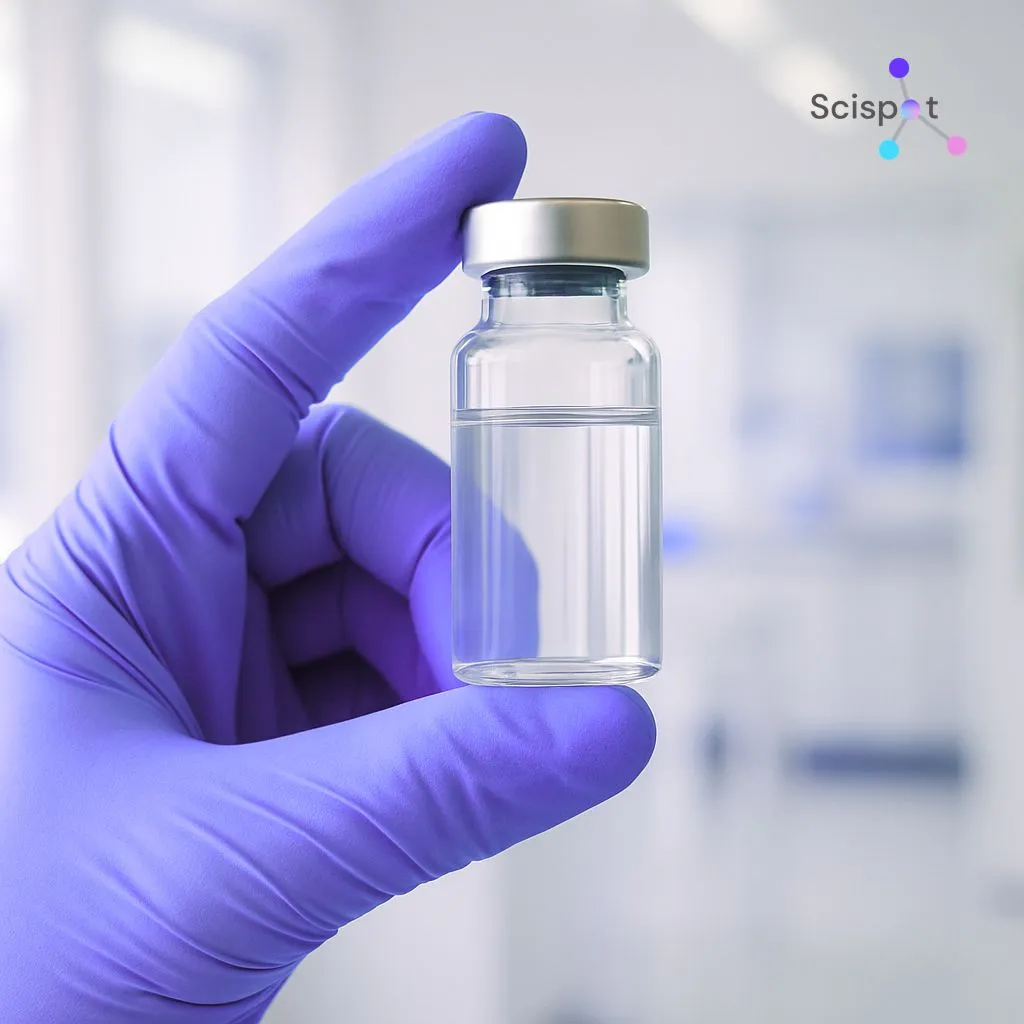
Think about a chef washing their hands before making food. In a lab, the idea goes further. Personal protective equipment like gloves, coats, and masks does protect the technician, but it also protects the sample from the technician. Humans constantly shed skin cells and carry microbes that can interfere with sensitive tests.
That is why labs put so much focus on preventing cross-contamination. It is a lot like using separate cutting boards for raw chicken and vegetables. The goal is to make sure material from one sample never ends up in another. A blood test should reflect the patient’s condition, not dust in the room or residue from a nearby tube.
Not every microbe carries the same risk, so labs also work within biosafety levels, or BSLs. These range from one to four based on hazard. BSL-1 covers low-risk organisms. BSL-4 is for dangerous pathogens that need the highest level of containment. Following these layers of protection takes more than putting on gloves. It depends on clear, repeatable procedures, which is why standard operating procedures matter so much.
Why Every Lab Procedure is a “Master Recipe”: The Power of Standard Operating Procedures
A good lab procedure is a lot like a recipe that has to work the same way every single time, no matter who follows it. That is the purpose of Standard Operating Procedures, or SOPs. They give staff one clear method so results stay consistent and personal habits do not affect the outcome.
This consistency is also part of Good Laboratory Practice. These rules help protect data quality and make errors less likely. Instead of relying on memory, labs rely on written steps that people can follow and review. A solid procedure usually includes four basic parts:
- Equipment list, with the exact tools required
- Step-by-step instructions, often timed and specific
- Expected observations, so staff know what they should see
- Safety warnings, including chemical or biological hazards
When people follow the same instructions each time, they reduce avoidable mistakes. But even a well-written SOP can fail if the environment is not clean. That is where aseptic technique comes in.

Scispot as the Digital Backbone for Laboratory Procedures
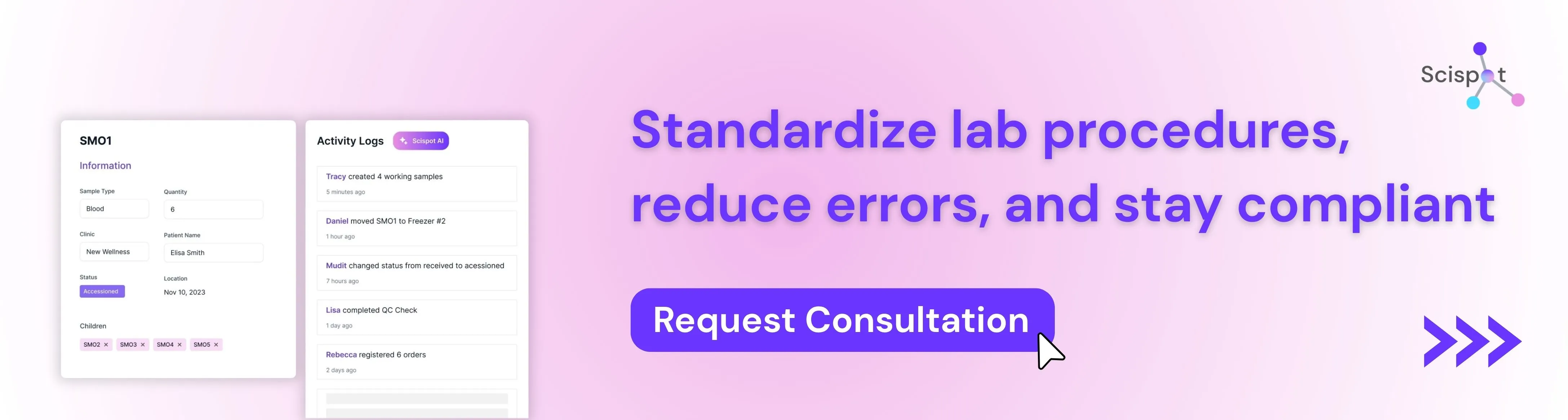
Scispot fits naturally into this work because modern laboratory procedures need more than paper SOPs and scattered spreadsheets. Labs need one digital system that can guide each step, track each sample, connect instruments, log actions, and keep records ready for review.
That is where Scispot stands out as a preferred digital solution for laboratory procedures. It helps teams turn standard procedures into structured, traceable workflows so nothing gets lost between sample intake, testing, review, and reporting. Instead of relying on memory, handwritten notes, or disconnected tools, labs can use Scispot to keep procedures consistent, reduce errors, strengthen chain of custody, and make daily work easier for scientists and technicians. It puts the discipline of a good laboratory procedure into the software itself.
Defeating the Invisible: How Aseptic Techniques Ensure Purity
At home, cleaning usually means making a space safe enough for daily life. In a lab, the standard is much higher. Scientists use sterilization and disinfection to control contamination. Disinfection removes most harmful microbes. Sterilization removes all of them.
That difference matters. In PCR, for example, even a tiny bit of stray biological material can get copied and distort the result. To prevent that, lab workers use aseptic techniques designed to keep samples pure. In some settings, they use the heat from a flame to create an upward flow of air that helps keep dust away from open containers. The result is a small protected work zone on the benchtop.
These methods protect the environment around the sample. The next step is protecting the sample itself as it moves through the lab.

The Journey of a Vial: Why Sample Handling Dictates Your Results
Once a sample is collected, it enters a process that depends on control and documentation. One of the most common problems in labs is not a dramatic chemical accident. It is something simple, like a labeling error. That is why labs use chain of custody procedures to track who handled a sample and when.
The sample itself also needs protection. Biological materials can break down quickly if they are stored the wrong way or left at the wrong temperature. In that sense, they are a bit like milk left out on a counter. Refrigeration or freezing slows that breakdown and helps preserve sample integrity until testing begins.
After that, the sample is mixed with reagents, which are chemicals used to reveal or measure what is in it. But even the right reagent cannot save a result if the instrument reading it is off. That is why calibration matters.
Tuning the Tools: Why Calibration is the Secret to Scientific Truth
A lab instrument can drift over time. Daily use, wear, and small environmental changes can all affect accuracy. That is why calibration is a routine part of lab work. Scientists compare an instrument against a known standard so they can trust the numbers it gives back.
This matters because an instrument can be consistent without being correct. It may give the same answer every time and still be wrong. Calibration helps catch that problem. Different tools need different reference standards:
- Microbalance, checked with precise standard weights
- Pipette, tested to confirm exact liquid volumes
- pH meter, adjusted with reference buffer solutions
When instruments are properly calibrated, staff can trust what they see. Then they can decide whether they need a simple yes-or-no answer or a precise measurement.
Qualitative vs. Quantitative: Choosing the Right Tool for the Truth
Some lab tests answer a simple question. Is something present or not? A home COVID test is a good example. A line appears or it does not. That is qualitative analysis.
Other tests go further and measure how much of something is present. That is quantitative analysis. Instead of a visual yes-or-no result, the lab produces a number. Both approaches matter. One tells you what is there. The other tells you how much.
No matter which method is used, the result has to be recorded properly. Good documentation protects the data and makes it possible to review, repeat, and trust the work later.
Beyond the Test: Closing the Loop with Quality Control and Safe Disposal
A lab does not accept a result just because a machine produced it. Quality control is there to check whether the system is working the way it should. Staff run controls, which are samples with known results, to confirm that the test setup is still accurate.
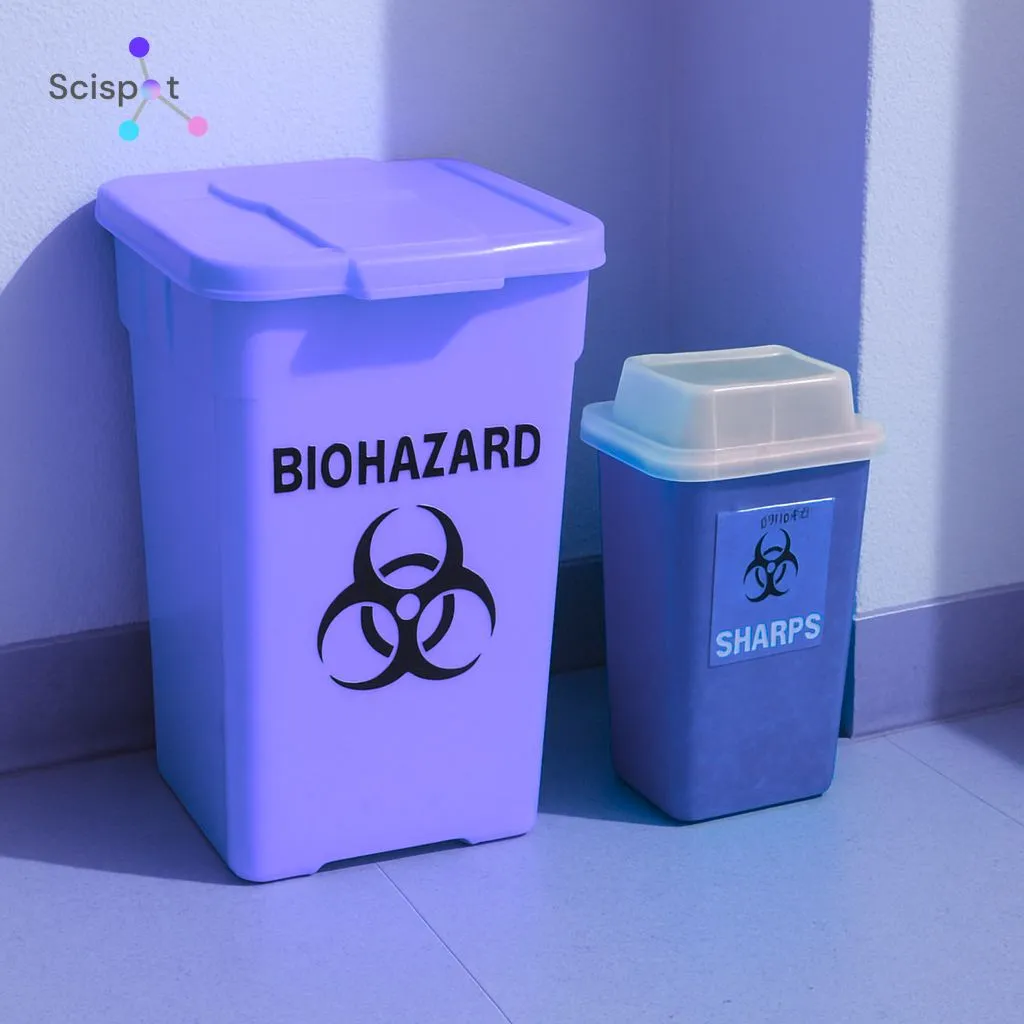
The work also does not end when the result is recorded. Cleanup matters too. Labs cannot treat all waste the same way. Biological material, chemical waste, and regular trash each need separate handling. Clear disposal rules protect staff, the public, and the environment.
This final step is part of the same mindset that shapes the whole lab. Check the work. Handle materials carefully. Leave a clear record behind.
From the Bench to the World: The Enduring Value of Precise Protocols
Laboratory results do not appear by chance. They come from people following strict procedures with care and consistency. Once you understand that, the lab stops feeling mysterious. You can see how many checks a sample goes through before it becomes a number on a report.
The next time you get a medical result or read about a scientific finding, it helps to remember the process behind it. Reliable science depends on routine done well. It depends on people who follow procedures closely, protect the sample, check the instruments, record the data, and dispose of waste safely.
That discipline is what turns lab work into evidence people can trust.