


.webp)
What are the advantages of laboratory automation?
A new life-saving drug reaching the pharmacy in two years instead of ten sounds extreme, but that is the kind of speed lab automation can make possible. Mapping a single human genome once took more than a decade. Today, with automated systems, the same job can happen overnight.
The gap between manual and automated sample prep is real. Instead of spending hours on repetitive physical work, scientists can hand that work to robots and focus on the thinking that matters more.
A good way to think about it is consistency. These systems do the same task the same way, again and again. According to industry data, that precision cuts the human errors that can derail delicate experiments. When machines handle the repetitive work, scientists get more time for analysis, decisions, and problem-solving.
That shift reaches beyond the lab. Faster development means treatments can move through testing and toward the clinic more quickly. In practice, faster science often means faster care.
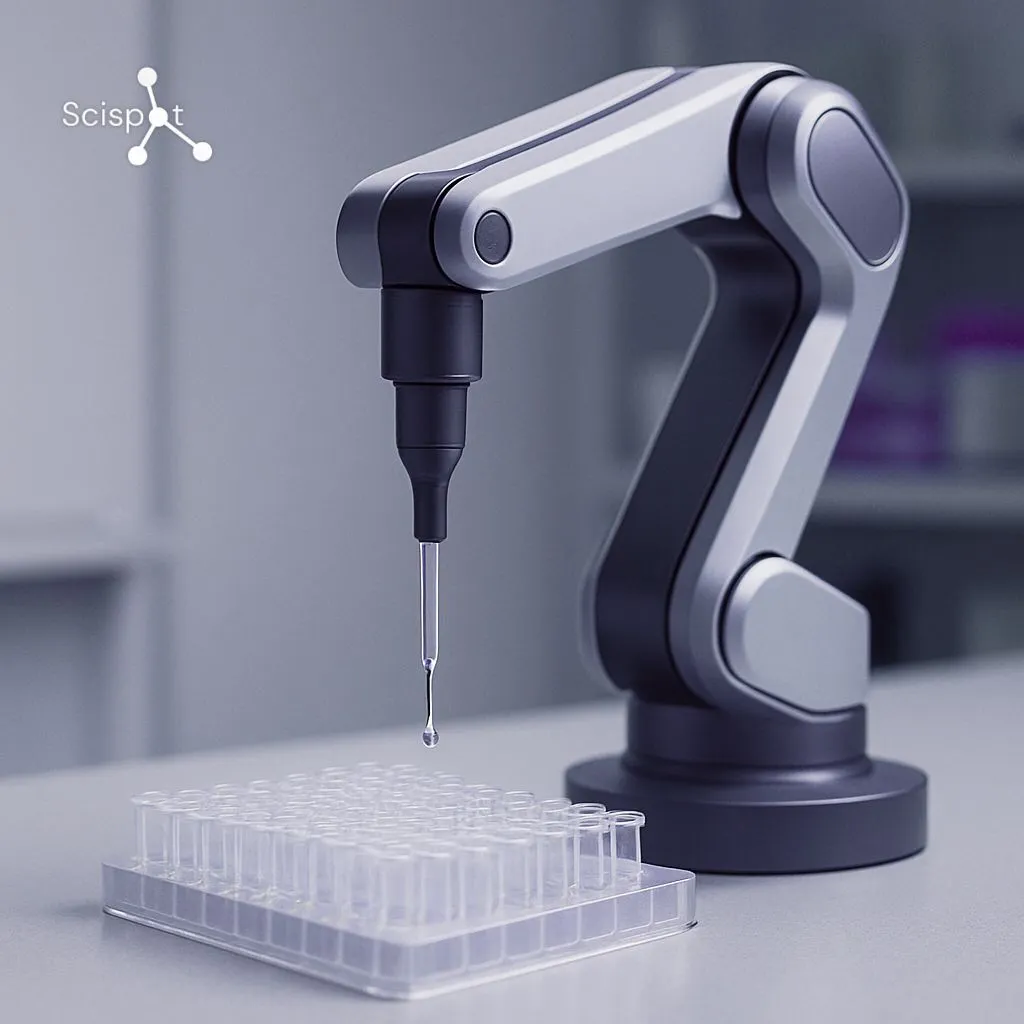
Cutting pipetting errors with robotic precision
Working with tiny liquid samples takes microliter precision. Scientists do this every day, often for hours at a time. When that work stays manual, strain builds up and mistakes follow.
Automation solves that with robotic systems that improve liquid handling. A person at the end of a long shift gets tired. A machine does not. These systems reduce three common problems:
- Tremors caused by fatigue that spill valuable material
- Inconsistent volume measurement that affects results
- Cross-contamination between samples
Cross-contamination is a serious problem. A tiny splash from one patient sample landing in another can ruin months of work. In biobanking facilities that store millions of samples, robots help prevent that loss and save research centers millions in wasted chemicals.
When manual pipetting errors go down, research moves faster and with less risk. Scientists can spend less time moving fluids and more time on the work that leads to new treatments. Reliable handling also sets up the next step, turning small amounts of data into large, usable datasets.

The lab that never sleeps
Getting one sample right is only part of the job. The harder part is doing it thousands or millions of times to find one useful result. Lab automation increases throughput for a simple reason. Robots keep working after people go home.
That constant operation drives high-throughput screening in drug discovery. The difference is scale:
- Manual work may process a few dozen samples a day
- Automated systems can process thousands in the same time
Speed is only part of the value. Automation also gives staff real walk-away time. In PCR workflows and similar processes, people can load the system, step back, and use their time on data review and new ideas instead of repetitive bench work.
That mix of speed and freed-up attention can shorten the path to new medicines. It does take investment up front, which is why cost is the next question most labs ask.

Where the money goes, and how automation cuts costs
Lab robots are expensive. That part is obvious. The better question is what they return over time.
The ROI of lab robotics comes from three main areas. First, machines make fewer mistakes, which means fewer failed experiments and less wasted work. Second, their precision uses smaller amounts of expensive reagents, so labs get more tests from the same supplies. Third, constant operation can cut the time it takes to finish a commercial discovery.
Labs also do not need to automate everything at once. Many systems are modular. A lab can start with one liquid handling arm and add a robotic freezer later as needs grow.
When daily lab work costs less, medicine can become more affordable too. Cost is one reason labs automate. Safety is another.

Protecting scientists from the dangerous work
Scientific work is not only mental. A lot of it is repetitive physical labor. Moving thousands of tiny drops by hand can cause serious strain, which is why workplace safety matters so much in labs.
Automation lowers that burden. It helps remove technicians from four common risks: repetitive motion injuries, toxic chemicals, infectious samples, and broken glassware. In PCR workflows, for example, robots can process large volumes of viral tests while staff stay protected behind glass.
Biohazards demand precision. Tired hands do not always give it. In clinical labs, the value of automation becomes especially clear during public health emergencies. Instead of asking staff to manually open vials that may contain infectious material, labs can rely on sealed robotic platforms to do that work.
This helps protect the people doing the science. It also improves how the lab records what happened, which matters just as much.

The lab’s digital memory
A vital test getting lost in paperwork is the kind of failure modern labs try to remove. Digital records make that easier by replacing handwritten notes with consistent, time-stamped data.
A person may forget when a sample moved or where it went next. A computer does not. It records every step, which helps labs repeat complex experiments and improve reproducibility.
That level of tracking usually depends on a Laboratory Information Management System, or LIMS. When a LIMS connects with automated workflows, the lab gets a full digital record of both the physical work and the data behind it. Robots move the tubes. The software tracks the process and stores the results so nothing gets misplaced.
That speed matters in clinical settings. When thousands of test results come in, organized digital systems help labs return accurate answers much faster. In some cases, that means hours instead of weeks.
Put together, automation and digital tracking raise the standard for how labs work. Most of that work stays out of sight, but patients feel the result.
.webp)
Why modern labs choose Scispot for automation
Scispot is a strong fit for lab automation because it connects the full workflow in one system. Instead of leaving teams stuck with spreadsheets, disconnected instruments, and scattered records, it brings sample tracking, workflow automation, instrument data capture, quality checks, reporting, and audit-ready traceability into one place.
That gives labs fewer manual handoffs, fewer data gaps, and a faster path from experiment to decision. It also treats automation as more than robotics. Scispot helps labs build the digital layer that makes automation practical, scalable, and reliable in day-to-day scientific work.
The real-world result of lab automation
The path from a blood draw to a diagnosis depends on more than human effort. Lab automation improves what happens inside the lab, and that shows up in patient care.
The benefits are clear:
- Faster progress on new treatments
- Lower costs for testing and development
- More reliable results with fewer manual errors
- Safer workplaces for lab staff
This will keep moving forward. Future lab robots may travel between rooms on their own and transport samples safely while scientists focus on harder problems.
Your test may one day move through a connected system before you even leave the clinic. When you wait for a result, a lot of that speed and accuracy may come from automation working quietly in the background.