

.webp)
What is ISO/IEC/EN 17025?
Every time you look at a nutrition label on a cereal box or review a medical blood test, you are trusting the lab behind it. According to global trade experts, billions of everyday decisions depend on the accuracy of those test results. That trust does not come from luck. It rests on globally recognized ISO 17025 standards.
How do we know those numbers are right? The answer is ISO/IEC 17025 certification, which shows a lab has the technical ability to do the work well. Think of an accredited lab like a tightly run kitchen where every ingredient is measured right and every cook follows the same recipe. That framework marks the line between a scientific fact and a guess.
True lab competence means a water quality sample tested in Tokyo should hold the same value as one tested in Toronto. Labs have to prove their equipment works and their scientists are trained. That is what builds trust across borders.

Why “Certified” Isn’t “Accredited,” and Why the Difference Matters for Your Business
Seeing an “ISO” logo on a lab’s website can feel reassuring, but that logo alone does not guarantee accurate test results. Many businesses hold ISO 9001 certification, which shows they have a sound quality system for things like customer service and record-keeping. That is very different from making precise scientific measurements.
To protect your products and your customers, you need to understand the difference between an accredited laboratory vs certified laboratory. A simple ISO 17025 vs ISO 9001 comparison makes it clear:
ISO 9001 (Business Quality): The lab is certified to be organized. It returns calls on time, tracks invoices properly, and keeps tidy records.
ISO 17025 (Technical Competence): The lab is accredited to be accurate. It has shown that its scientists are qualified, its equipment is calibrated, and its scientific data is reliable.
Choosing an accredited testing facility means your results rest on proven scientific rigor, not just good paperwork. That extra oversight can help you avoid costly recalls and false readings. A lab reaches that level by proving three basic things.

The Three Pillars of Trust: How the Standard Validates People, Gear, and Methods
Imagine a high-end restaurant kitchen. Great ovens do not guarantee a safe, good meal if the chef is untrained or the recipe is flawed. The same logic applies to scientific testing. Real ISO 17025 compliance means a lab has to prove it has control over three connected parts of the job.
These core requirements for testing and calibration laboratories work like a three-legged stool. Remove one, and trust falls apart:
Personnel Competence: Even the best machine is useless without a skilled operator. Labs must show their scientists are trained and regularly assessed.
Accurate Equipment: Instruments must be maintained and checked closely to avoid false readings.
Validated Methods: These are the scientific recipes. Proven, standard methods help make sure a water safety test run at night gives the same reliable result as one run the next morning.
Basic laboratory certification may only check office records. ISO 17025 goes further. It looks at people, gear, and methods to make sure an accredited lab can give the right answer every time. Keeping equipment in line depends on strict metrological traceability.

Why Metrological Traceability Matters
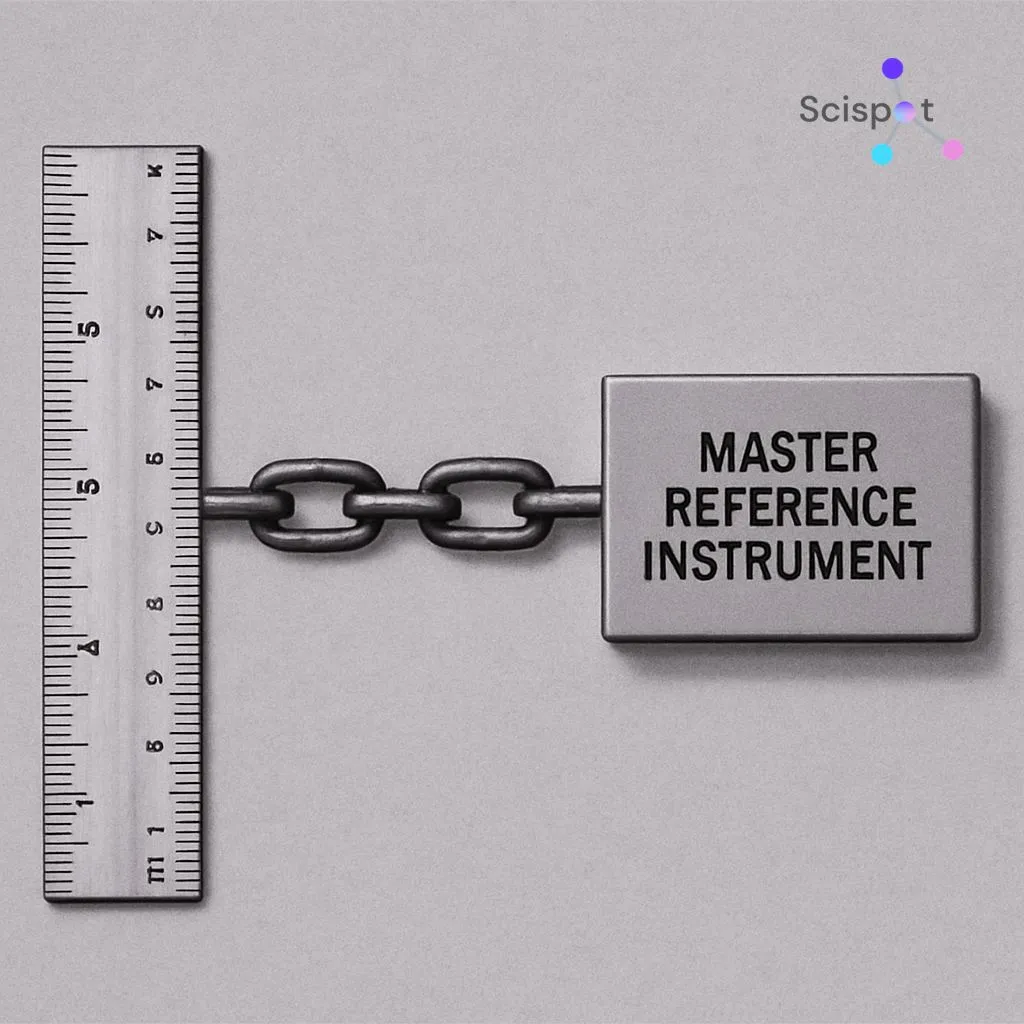
Imagine tuning a piano perfectly to itself, then finding out the first note was wrong. That is why labs pursuing IEC 17025 accreditation must show that their instruments line up with universal standards through an unbroken chain of comparisons. This is metrological traceability. It gives labs a shared yardstick, so a pound measured in Tokyo matches a pound weighed in Toronto.
The difference between calibration and verification matters here. Verification checks whether a tool seems to work today. Calibration adjusts that tool against a controlled, higher-level reference. Each time a lab calibrates its gear, it adds one more link in the chain back to official international standards.
Global trade depends on that consistency, especially in safety testing. Without metrological traceability in chemical analysis, a medicine might pass in one country and fail in another. Still, even perfect calibration does not make any measurement flawless. Good labs also have to calculate and manage measurement uncertainty.
Mastering the “Wiggle Room”: Why Measuring Uncertainty Prevents Costly Product Recalls
If a lab promises 100 percent perfect accuracy, take your business elsewhere. No measurement is perfect. Every test has a margin of error, and managing measurement uncertainty in testing is how good labs deal with that fact. Instead of giving one absolute number, accredited labs provide a calculated range that shows how close the result is likely to be.
That range matters in daily quality control. Here is what it can look like in practice:
Blood sugar: A glucose reading of 100 with an uncertainty of ±5 means the true value likely falls between 95 and 105.
Environmental pollutants: A water test showing lead at 8 parts per billion with a ±2 margin means the sample still sits within legal safety limits.
Ignore that variation, and you can end up with legal risk or safety failures. ISO 17025 guidelines require labs to calculate this uncertainty so businesses can define safety limits clearly and avoid recalls. That level of precision takes trained staff and specialized tools, which brings us to cost.
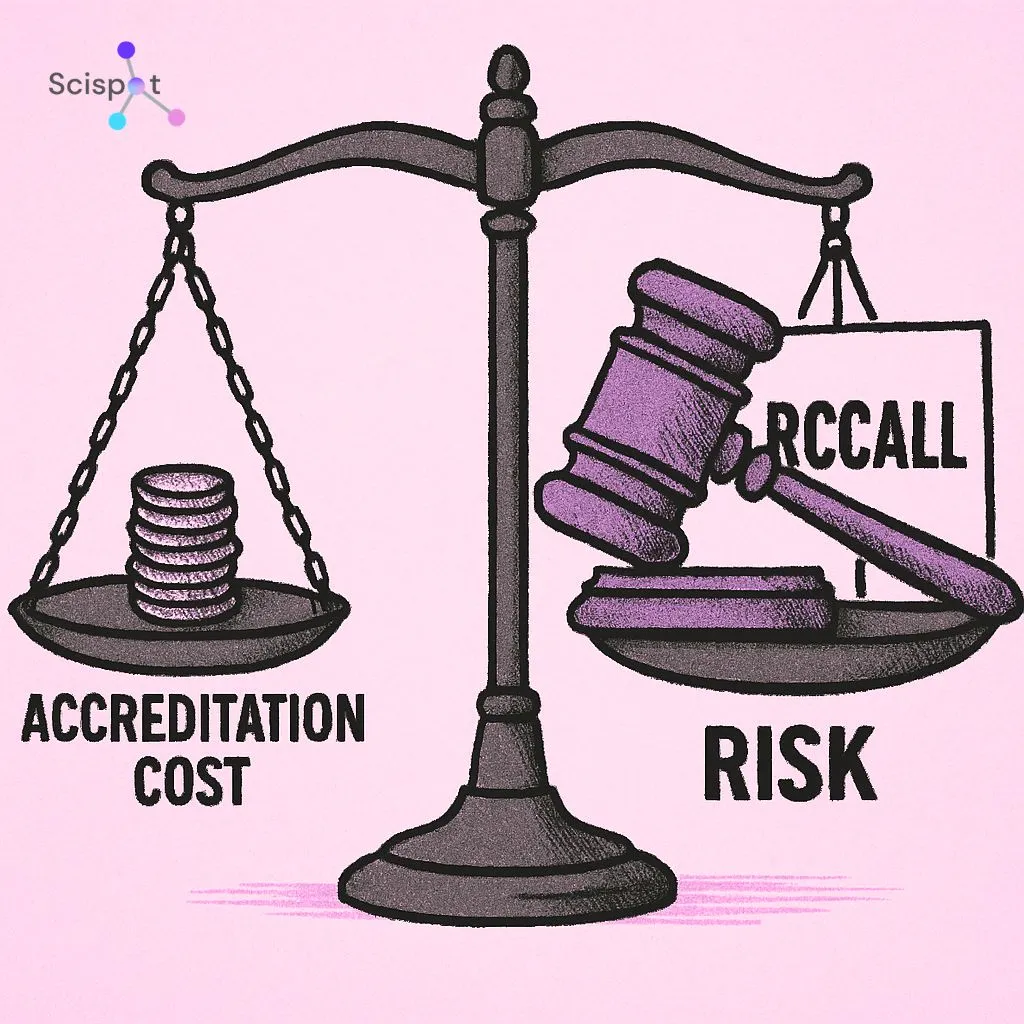
The Real Price of Precision: Balancing ISO 17025 Certification Costs Against Risk
Choosing a lab often comes down to invoice price versus the hidden price of failure. The upfront ISO/IEC 17025 certification cost may look high, but in practice it works like insurance against bad data. Unverified labs may offer lower rates, but those savings disappear fast if a flawed test reaches the public.
Looking at laboratory accreditation process costs means looking at the real investments behind them: calibrated equipment, staff training, and strong quality checks. Cut corners there, and you accept the risk of lawsuits, product failures, and damaged trust. The benefits of laboratory accreditation for business are straightforward. It protects your bottom line and helps keep consumers safe.
Smart business owners know it is cheaper to pay for proven precision than to defend a serious mistake in court. Investing in an accredited lab turns uncertain risk into a controlled standard. Reaching that point takes a clear process.
Scispot for Modern ISO/IEC/EN 17025 Laboratories
Scispot is a strong digital option for labs working toward ISO/IEC/EN 17025 compliance because it brings quality, traceability, and operational control into one connected system. Instead of managing records across spreadsheets, paper logs, and disconnected tools, labs can use Scispot to centralize sample tracking, instrument data, SOP execution, audit trails, result review, and workflow documentation in a more structured, inspection-ready way.
That makes it easier to keep processes consistent, reduce manual error, and show that methods, data, and decisions stay controlled across the full testing lifecycle. For labs that want stronger technical rigor and better day-to-day efficiency, Scispot gives them a practical digital base for lab workflow management and a more compliant, reliable operation.
From Chaos to Compliance: 5 Steps to Achieve Laboratory Competence and Global Acceptance
Building a trusted lab follows a clear path, much like preparing a commercial kitchen for a strict health inspection. Labs do not reach competence by guesswork. They do it through a set of defined steps.

This 5-step roadmap includes:
Gap Analysis: Find where current practices fall short.
System Documentation: Write clear procedures that everyone follows.
Proficiency Testing: Join proficiency testing programs for quality control and compare your results with other labs as a reality check.
Internal Audit: Use an internal audit checklist for testing labs to find non-conformities before outside inspectors do.
External Assessment: Pass the final independent review.
The payoff is strong consumer trust. Once a lab’s results meet this standard, they can move across borders with far less friction.
Your Global Passport: Using the ILAC MRA to Sell Products Anywhere in the World
You do not need to think of lab testing as only a local hurdle. When your partners maintain ISO 17025 compliance, their results can work like a global passport. A product tested locally can be accepted worldwide, which shows the role of ILAC MRA in international trade. That helps companies expand into new markets without paying for repeat testing.
Reviewing your lab partners now can confirm their accreditation status and show whether you are ready for global work. Understanding the broader ISO certification process helps you speak a shared language of trust and safety while protecting consumers.

So the next time you wonder how we know a gallon at the pump is really a gallon, the answer is simple. It is not luck. It is the quiet work of accredited laboratories helping keep the world accurate.