

.webp)
Boost Lab Efficiency with Workflow Management
Workflow management is how modern labs get real work done. It brings order to complex, multi-step processes and turns them into systems people can repeat. When it works well, it cuts friction and gives scientists more time for analysis instead of coordination.
Scispot treats workflow management as a connected system, not a set of separate tools. That matters. Many older platforms still handle workflows as side configurations, not as part of daily lab work.
What is workflow management in research labs?
Workflow management organizes people, data, and processes so work moves forward without delays. Each step is defined, connected, and easy to trace.
In practice, data moves on its own between steps. Tasks trigger the next action. Every activity is recorded in a structured way. Many labs still use disconnected tools where data is passed by hand. That slows things down and adds risk.
Scispot connects Labsheets, Labflows, and integrations into one layer. The workflow becomes part of how the lab runs, not something managed outside it. Think of it like a relay race where the baton moves cleanly between runners without pause.
Key benefits of workflow management for research labs
Faster execution with fewer errors
Automation removes repetitive work like manual entry, sample tracking, and status updates. Teams move faster and results stay consistent.
Many legacy LIMS still depend on manual input or rigid setups. That creates friction when workflows change. Scispot adapts quickly without heavy rework, so labs keep pace as they grow.
Stronger collaboration across teams
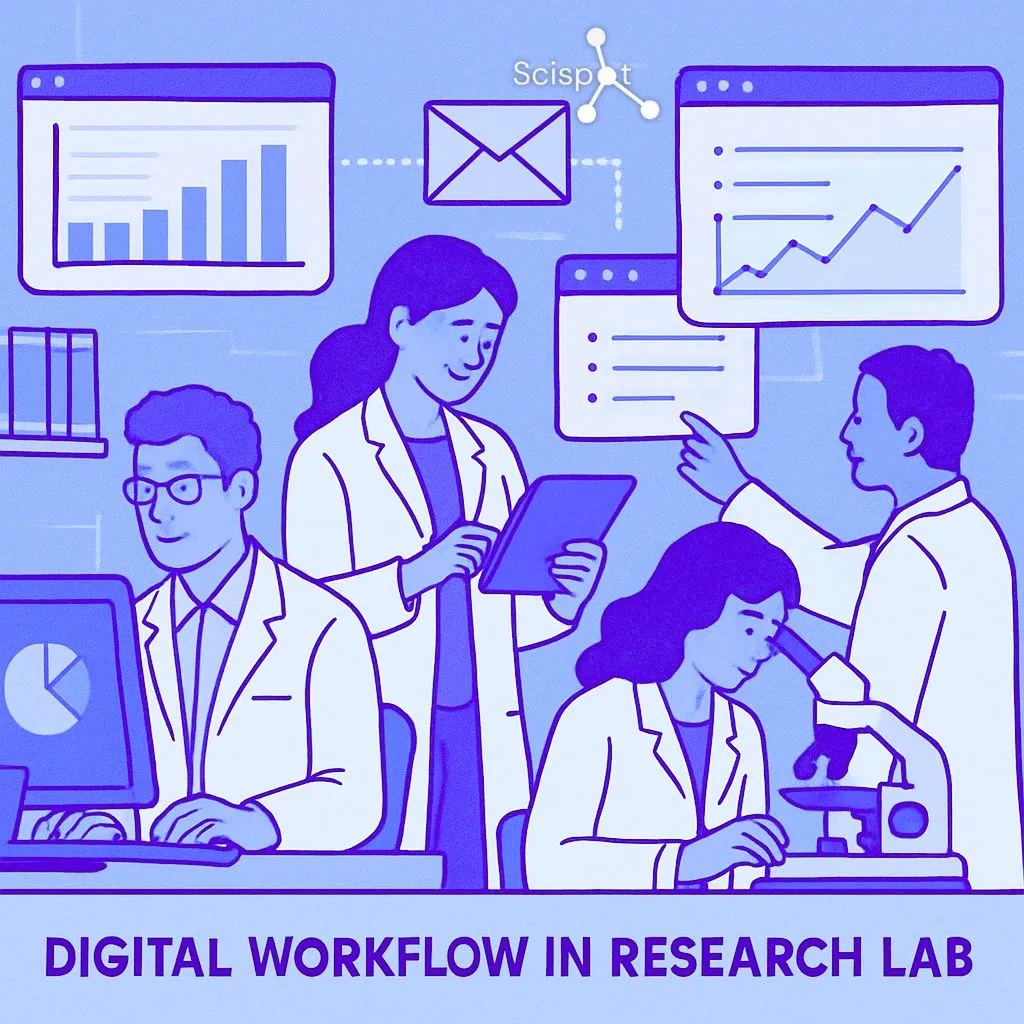
Central workflows give teams a shared source of truth. Everyone sees the same data and the same status.
In many labs, people rely on spreadsheets or email to fill gaps between tools. That leads to confusion. Scispot keeps workflows, data, and communication in one place, which cuts back-and-forth and duplicate work.
Better resource use and cost control
Clear workflows reduce waste and improve planning. Labs track inventory, assign resources, and avoid repeating experiments.
Some systems handle inventory or scheduling but do not tie them deeply into workflows. That gap shows up during execution. Scispot connects planning with real-time data, so decisions are grounded in what is actually happening.
Improved compliance and audit readiness
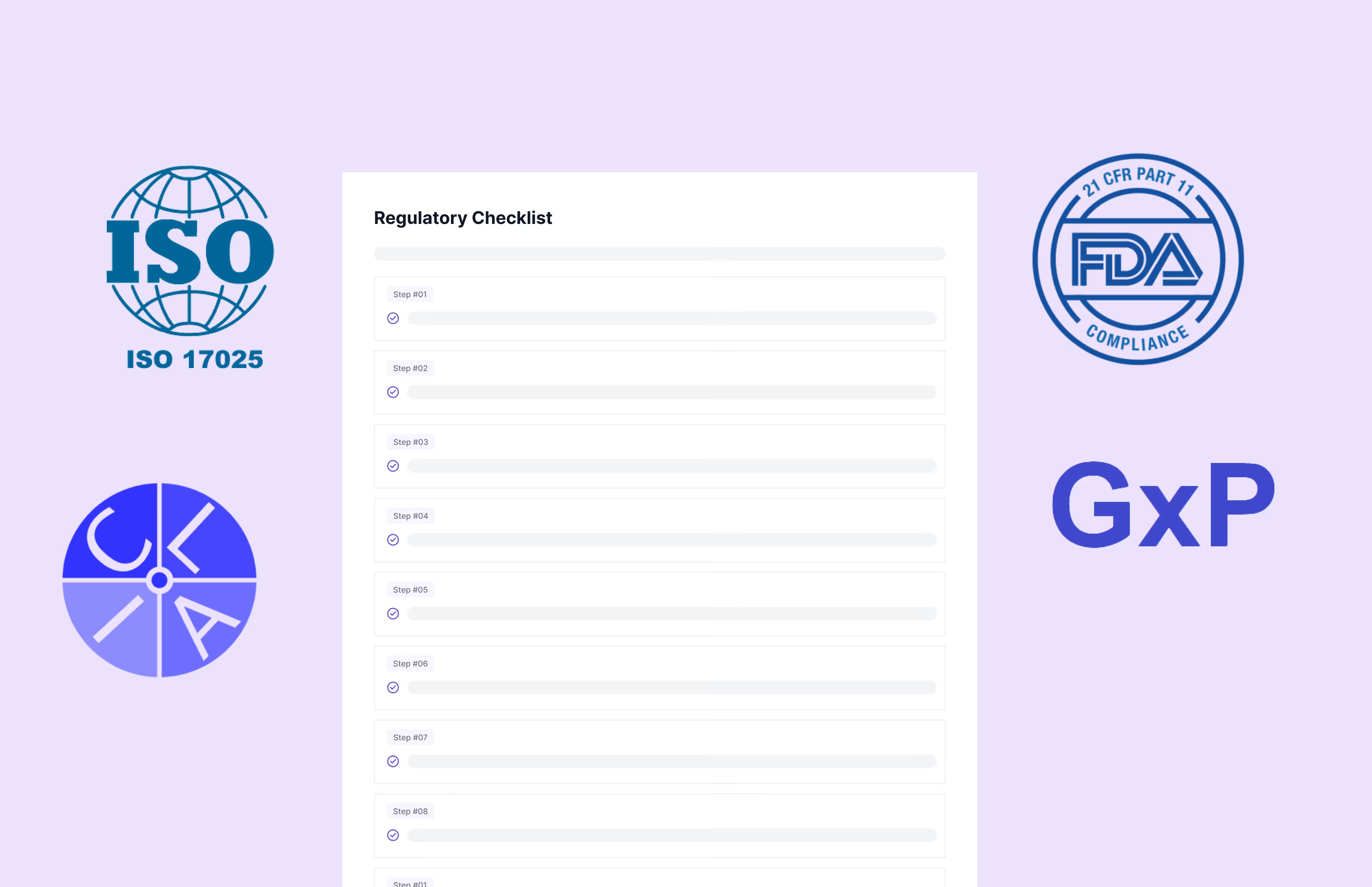
Workflow management makes every step standard and traceable. This supports compliance and audit readiness.
Older tools often bolt compliance on top. They log actions but do not control the workflow itself. Scispot builds compliance into the workflow, so every step is structured and reviewable.
Common challenges in lab workflows
Most workflow issues come from tools that do not work well together. The problem is not lack of tools. It is lack of connection.
Processes drift. Teams follow slightly different steps. Data sits in spreadsheets, instruments, and separate systems. Communication gaps slow things further when updates are missed or dependencies are unclear.
Many vendors offer point fixes. These solve one problem at a time but miss the bigger coordination issue. Scispot focuses on linking systems and processes so work flows across the lab without breaks.
Workflow best practices for research labs
Clear roles reduce confusion. Each person knows what to do and when to do it.
Standard documentation keeps data consistent. It also makes audits simpler and collaboration easier. Teams spend less time guessing and more time working.
Training matters, but heavy systems often slow adoption. Scispot keeps setup simple, so teams learn faster and start using workflows sooner.

Research workflow solutions and lab management tools
Labs rely on digital tools, but not all tools handle real lab complexity well.
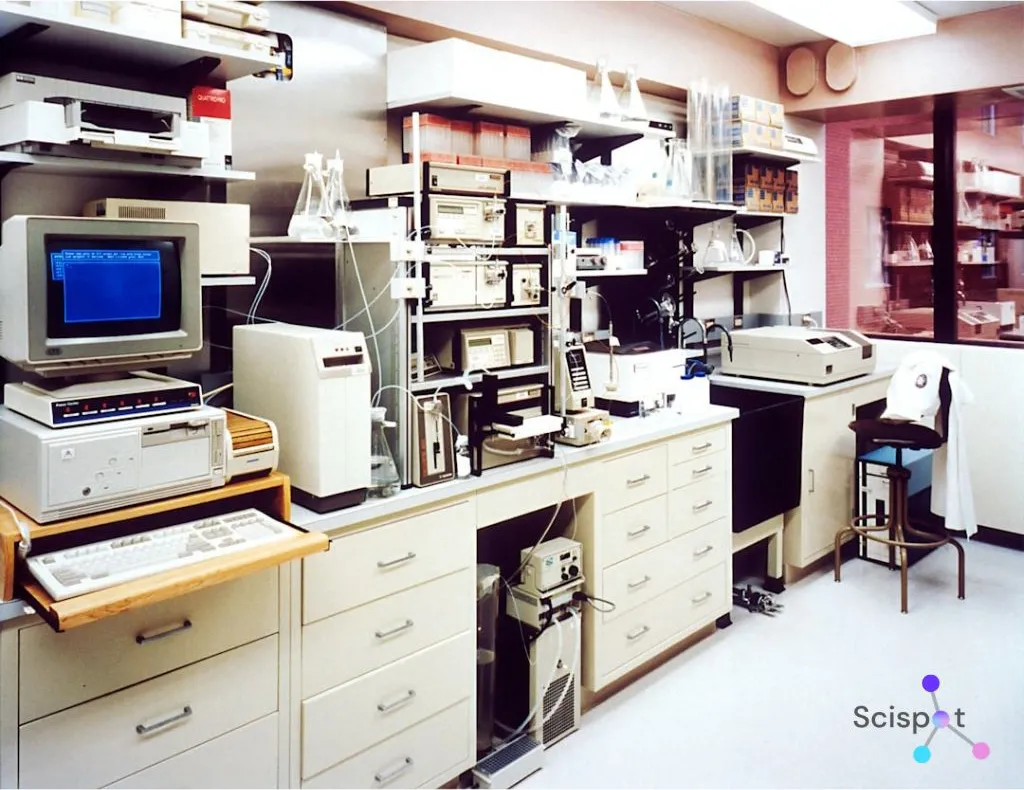
Most systems support data capture, automation, and reporting. The problem shows up when workflows change or scale. Limited flexibility, weak integrations, and siloed modules force teams into manual workarounds.
That is where time is lost. Teams export, clean, and re-upload data across systems. Errors creep in.
Scispot takes a workflow-first approach. It combines LIMS, ELN, and integrations into one data model. Workflows run across the lab without jumping between tools. It feels less like stacking systems and more like running one system.
Lab workflow optimization: steps to improve efficiency
Start by mapping current processes. Look for bottlenecks and manual steps that slow things down.
Set clear goals. This could be faster turnaround time or better data accuracy. Clear targets keep efforts focused.
Automate high-impact tasks first. Connect systems so data moves without manual steps. Review workflows often so they stay aligned with how the lab evolves.
Labs on rigid systems struggle here. Even small changes take effort. Scispot makes updates easier, so continuous improvement becomes realistic instead of heavy.
Research productivity tips for lab teams
Productivity improves when tools and workflows match how people actually work. Central systems reduce noise and keep focus on real tasks.
Tie communication to workflows, not separate channels. This keeps context clear and reduces confusion.
Let automation handle routine work. That frees researchers to focus on analysis and decisions. Small daily gains add up over time.
.gif)
Conclusion: building a culture of continuous improvement
Lab workflow management is not a one-time setup. It keeps evolving with the lab.
When workflows are part of daily work, labs gain visibility and control. Many tools sit on top of processes and never fully connect. That limits their impact.
Scispot becomes part of how the lab runs. It supports steady improvement without extra complexity. Labs stay efficient, compliant, and ready to scale.