


.webp)
Maximizing Health Insights: Clinical Laboratory Tests Explained
Walking away after a blood draw can feel like sending a letter and never knowing whether anyone read it. But those small vials are more than a routine task. They give doctors a detailed look at what is happening inside your body. You may feel fine on the outside, yet clinical laboratory tests can show problems that symptoms alone do not.
According to medical experts, doctors use laboratory analysis to guide roughly 70% of patient care decisions. That tells you something simple about modern healthcare. Feeling healthy and having data to back it up are not always the same thing. Your provider uses this information to make an accurate medical diagnosis and spot small changes in your health before you notice them.
Clinical diagnostics should not feel like a foreign language. Once you understand what the tests show, those numbers become easier to read and more useful at your next doctor’s visit.

Where Scispot Fits in Modern Clinical Diagnostics
Clinical laboratory tests play a direct role in medical diagnosis, and labs need systems that keep that process clear and under control. Scispot gives teams one place to manage sample tracking, test workflows, instrument data, quality checks, and reporting, so fewer details slip through between collection and final review. Instead of jumping between spreadsheets, disconnected tools, and manual handoffs, labs can use Scispot to improve traceability, cut delays, and support more reliable diagnostic decisions. For clinical teams handling more tests, that makes day-to-day work easier and helps them stay audit-ready and focused on patient care.
Screening vs. Diagnostic Testing: Why Your Doctor Orders Tests Before You Feel Sick
If your body were a car, laboratory tests would be the lights on the dashboard. Sometimes the mechanic checks things just to make sure the engine is running well. Other times, you come in because something sounds off. That is the basic difference between screening and diagnostic testing. Doctors use screening tests to look for hidden problems before you feel sick.

Doctors usually send patients to the lab for two reasons:
Screening tests: A routine cholesterol check or a standard blood sugar panel during your annual physical. You feel fine, but the doctor is looking for early signs of a problem.
Diagnostic tests: A throat swab when you have a severe sore throat, or a tissue biopsy when a suspicious lump appears. You have symptoms, and the doctor needs to find the cause.
A negative result on either type of test is good news. It means the lab did not find the disease it was checking for. That is one reason routine preventive screening matters. It can catch small issues before they turn into bigger ones.
Whether your doctor is checking your baseline health or trying to find the source of a fever, the accuracy of the result depends in part on what you do before the test. Rules like drinking enough water or skipping breakfast can make a real difference.
Why Fasting and Sterile Samples Matter for Accurate Results
A medical lab exam may look simple, but prep starts before you walk into the clinic. If you eat a muffin right before a blood test, the lab sees the muffin, not your normal baseline. That is why fasting matters for some blood work. It clears out food-related noise so doctors get a cleaner view of your health. When you sit down for a blood draw, the phlebotomist also plays a key role. They collect the sample in a way that helps the lab get a clear and usable result.
The same goes for urine samples. Contamination can distort the result and make it look like you have an infection when you do not. Your skin naturally carries harmless bacteria, but if that bacteria gets into the cup, the lab may read the sample the wrong way.

To avoid that, doctors use the clean-catch method. These steps help keep the sample accurate:
- Wash your hands well with soap and water.
- Use the sterile wipes to clean the area around the urinary opening.
- Start urinating into the toilet first.
- Catch the midstream urine in the cup without letting the rim touch your skin.
These simple steps help make sure your lab results reflect what is actually happening inside your body. Once the lab has a clean sample, it can measure your health markers with much more confidence.
Decoding the Metabolic Panel: Why Your Liver and Kidney Values Matter
Routine blood tests help doctors check how well your body is working, especially organs like the kidneys and liver. When your doctor orders a metabolic panel, the lab measures chemicals, fluids, and electrolytes in your blood. Electrolytes are minerals with an electric charge that help muscles and nerves work the way they should.
It also helps to know the difference between a basic metabolic panel and a comprehensive metabolic panel. Here are five key differences:
Scope: A BMP checks 8 core markers, while a CMP checks 14.
Focus: Both look at kidney health and blood sugar, but only a CMP includes liver tests.
Proteins: The CMP measures albumin, a protein that helps build and repair tissue.
Enzymes: Only the CMP measures liver enzymes, which help show how well your liver is working.
Usage: Doctors use BMPs for quicker routine checks and CMPs for a broader view.

These results can point to problems before you feel sick. Elevated enzymes, for example, can be an early sign of abnormal liver function. Doctors may also order a lipid profile, which measures different types of cholesterol and helps estimate your future risk for heart disease.
Knowing which panel you are taking helps you ask better questions about what your doctor is checking. Even so, the final report can still feel like a lot.
Reading Your Lab Report Without Panic: What Reference Ranges and Inflammation Markers Mean
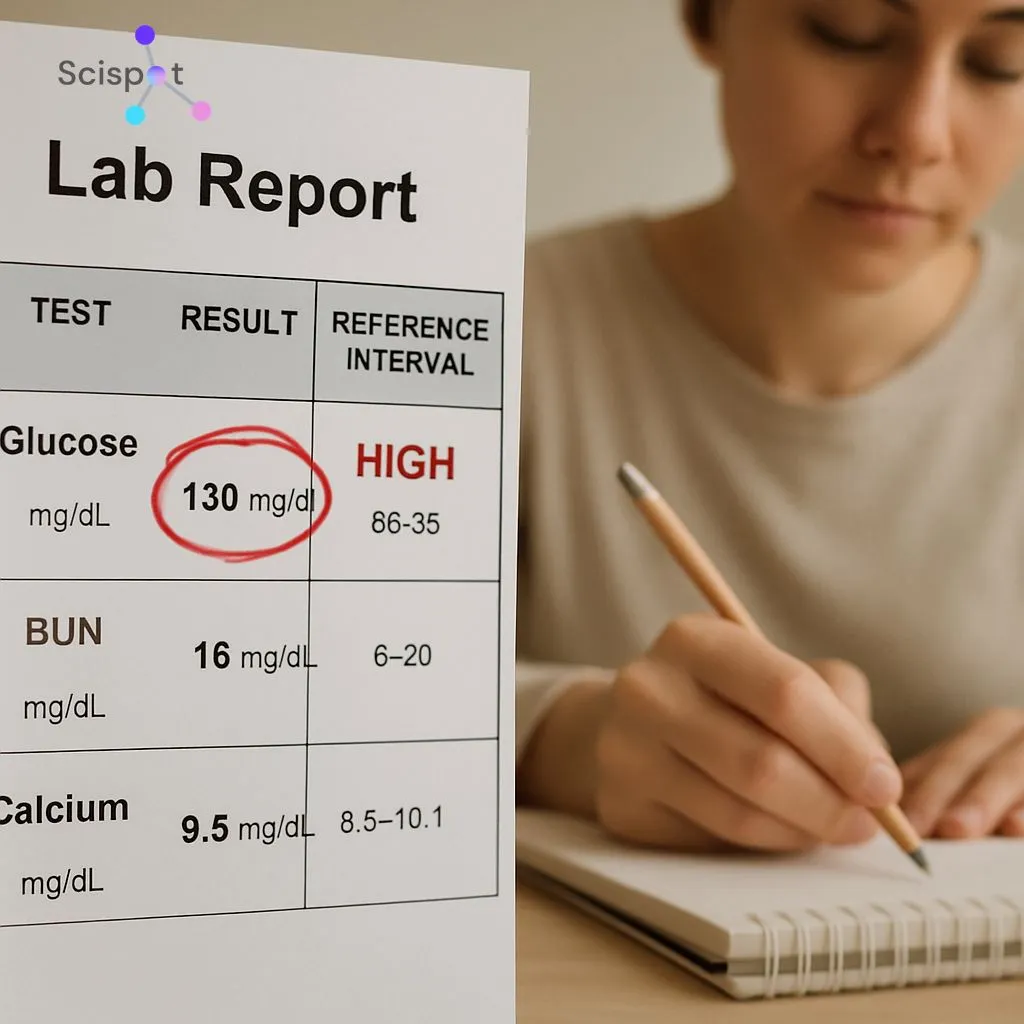
Have you ever opened your patient portal, seen a result marked “High,” and gone straight to panic? That reaction is common. It is also why it helps to know how to read blood work. A reference range is not a hard pass-or-fail line. It is more like an average range that helps your doctor decide whether a number needs a closer look.
Doctors use these ranges as guides, not absolute rules. A flagged number can shift because of age, diet, hydration, or other temporary factors. Your provider looks at the full picture, not one number on its own.
You may also see markers tied to inflammation. These are lab signs that can point to stress in the body. Common ones include:
CRP (C-Reactive Protein): A protein made by the liver that rises when there is general inflammation in the body.
ESR (Sedimentation Rate): A test that measures how fast red blood cells settle in a tube, which can point to longer-term immune activity.
Once you know the basic logic behind these numbers, lab reports feel less intimidating. That matters even more when you compare home testing with tests done in a clinic.
Professional Lab vs. Home Health Kits: Why Accuracy Depends on More Than a Finger Prick
At-home medical tests are convenient. A rapid COVID swab or a blood sugar check at the kitchen table can give you a quick read. But that does not always mean the result is precise enough for a major health decision. In the clinical laboratory tests market, there is a real difference between a home screening tool and a diagnostic result from a professional lab.
A lot of that comes down to sensitivity. A home kit may pick up too little, or react to the wrong thing, depending on the sample and the test itself. Professional labs use calibrated machines and strict procedures to measure results with more precision, which is why professional testing is usually more reliable than home kits.
Lab technicians also follow quality control steps that reduce errors tied to temperature, contamination, or handling. A quick home test can be useful as a first step, but professional labs are built for answers you can use with confidence.
Your Roadmap to Results: How to Use Lab Data at Your Next Doctor’s Visit
Clinical laboratory tests do not have to feel like a black box. It helps to keep a personal record of your results so you can track changes over time. When you are waiting on an answer, ask your doctor how long the results will take. Routine panels often come back within a few days.
When you treat those numbers like part of your health record, you stop being a passive patient and start taking a more active role in your care. The next time you open a lab report, you will be in a better position to ask good questions and speak up for your health.
If you want, I can also make this a bit more SEO-aware without making it sound stuffed.