

.webp)
How does sample management work within a Laboratory Information System (LIS)?
Almost everyone knows the panic of misplacing car keys or hunting for one specific email. Now imagine that same feeling when you need to find one vial among millions in frozen storage. In medical research, one misplaced test tube can throw off years of work.
During major public health efforts, such as vaccine development, researchers handle thousands of samples every day. Human memory and basic spreadsheets cannot keep up with that scale. Manual tracking leads to costly mistakes, which is why modern labs use sample management systems.
You can think of this software as a digital system of record for every sample in the lab. It keeps track of where each sample is, what it contains, how it was handled, and what happened to it over time. What looks like order on the surface is really the result of structured sample management working quietly in the background.
That structure depends on sample metadata. This is the digital record tied to each item, including details like source, status, storage conditions, and movement history. With automated specimen tracking, scientists spend less time looking for materials and more time doing the work that matters.
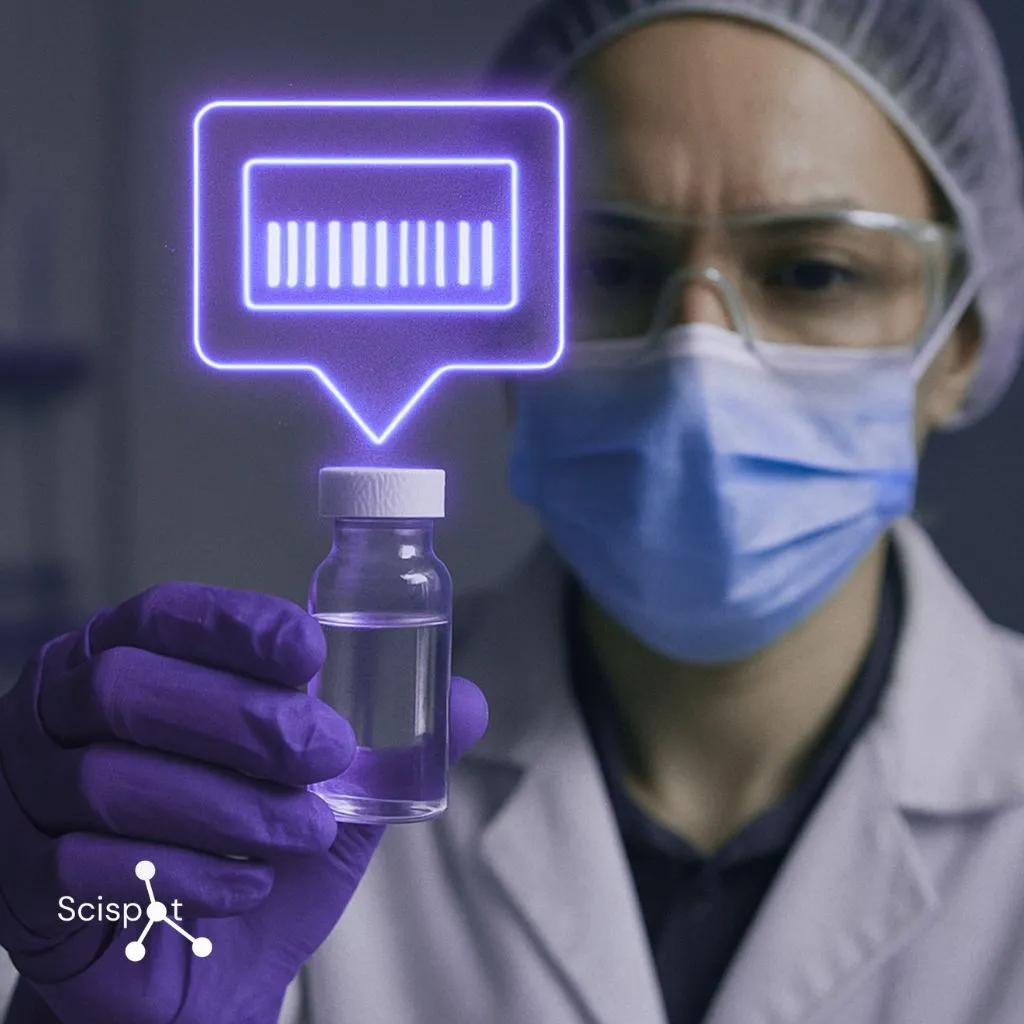
Why Scispot Is the Preferred Digital Solution for Sample Management
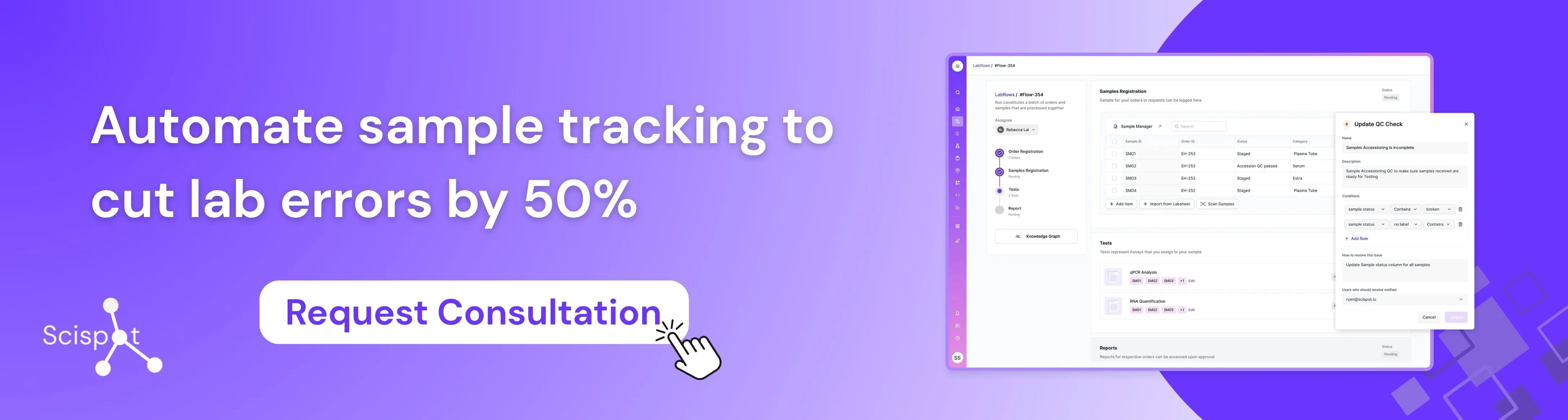
Scispot is a strong digital solution for sample management within a Laboratory Information System because it connects every sample, workflow, and result in one traceable system. Instead of relying on Excel, paper logs, or disconnected tools, labs can use Scispot to barcode samples, capture metadata, assign storage locations, track chain of custody, monitor lifecycle stages, and link samples directly to testing workflows and reports. That means fewer mix-ups, less manual entry, stronger audit readiness, and faster access to the right sample data when teams need it. For labs that want more than simple tracking, Scispot gives them a modern LIS foundation that brings order to sample operations while improving compliance, usability, and day-to-day efficiency.
Why Excel Is the Wrong Tool for Your Lab’s Future
Trying to find one water sample among 10,000 tubes in a freezer using a spreadsheet can turn into a long search. A spreadsheet only shows what someone entered at an earlier point in time. If the file is out of date, the search starts all over again.
These manual methods create three clear risks. Information can sit on one person’s laptop and stay invisible to the rest of the team. There may be no record showing who moved a sample or how long it stayed out of storage. A small typo, like entering Tube 41 instead of Tube 14, can waste months of work.
Good laboratory inventory management means moving beyond static lists. A spreadsheet cannot warn you when a sample is expiring or when freezer conditions change. Labs need systems that update as work happens, so the record reflects reality.
The next question is simple. How do you connect a physical vial to a live digital record without typing everything by hand? That is where barcoding comes in.
The Lab’s License Plate: Using Barcoding to Eliminate Mix-ups
If a cashier had to type the name of every item at checkout, the line would never move. Labs face the same problem when they rely on manual entry. A scan-first process cuts down labeling mistakes and speeds up day-to-day work.
To connect a vial to a sample inventory system, labs usually choose one of three tagging methods:
1D barcodes: Low-cost and useful for basic identification.
2D barcodes: Small codes that can hold more data and fit on tiny tubes.
RFID tags: Allow teams to scan multiple items at once without opening a box.
The right option depends on the lab environment. Barcode labels for lab samples need to hold up under frost, moisture, and rough handling. A label is only useful if it still scans after long-term storage.
Once a vial has a unique code, the software assigns it a digital address. That could be Freezer 1, Shelf B, Slot 9. With both the label and the location recorded, the system can show exactly where the sample is at any time. That kind of tracking also supports a clean chain of custody.
.webp)
Protecting the Chain of Custody Without the Paperwork
Think about handing over something valuable, like a winning lottery ticket. You would want a record of who had it at every step. In the lab, that record is the chain of custody. It shows that a sample was handled properly and was not lost, changed, or left unattended.
Software makes that record automatic. Instead of depending on spreadsheets or handwritten notes, the system logs each interaction as it happens. That matters even more when labs need to meet rules such as FDA 21 CFR Part 11, where digital records must be as reliable as signed paper records.
Electronic signatures help with that. They act as secure digital approvals tied to specific users. The system keeps a permanent record of who did what and when. That makes the data easier to trust and much harder to alter without leaving a trace.
Because the software handles this in the background, scientists do not have to spend hours filling out manual logs. That matters in clinical trials, where one missing handoff can affect the credibility of the whole study. Each barcode scan adds to a full history of the sample.
Once that history is secure, the next step is managing where the sample lives and what happens to it over time.
Smart Freezers and the Lifecycle of a Sample
Leaving groceries in a hot car can ruin them fast. Biological samples are even more sensitive. A small temperature change can damage a valuable biopsy or research specimen, which is why strict storage conditions matter.
Smart freezers help by tracking temperature on their own and sending alerts when something goes wrong. That reduces the chance of unnoticed damage and gives labs a faster way to respond.
Storage is only one part of the job. Every sample moves through a set lifecycle:
Collection
Accessioning
Processing
Storage
Disposal
During accessioning, the lab logs the sample into the system, assigns a barcode, and records its storage location. Later, when someone needs that sample, the software can generate pick lists that show where to go and what to pull. This saves time and reduces the risk of warming other stored samples by leaving freezer doors open too long.
Automated sample management systems help labs manage both storage conditions and the full lifecycle of each sample. The result is a clearer process, fewer mistakes, and less time spent chasing down materials.
Choosing Your Lab’s Brain: LIMS vs. Sample Tracking Software
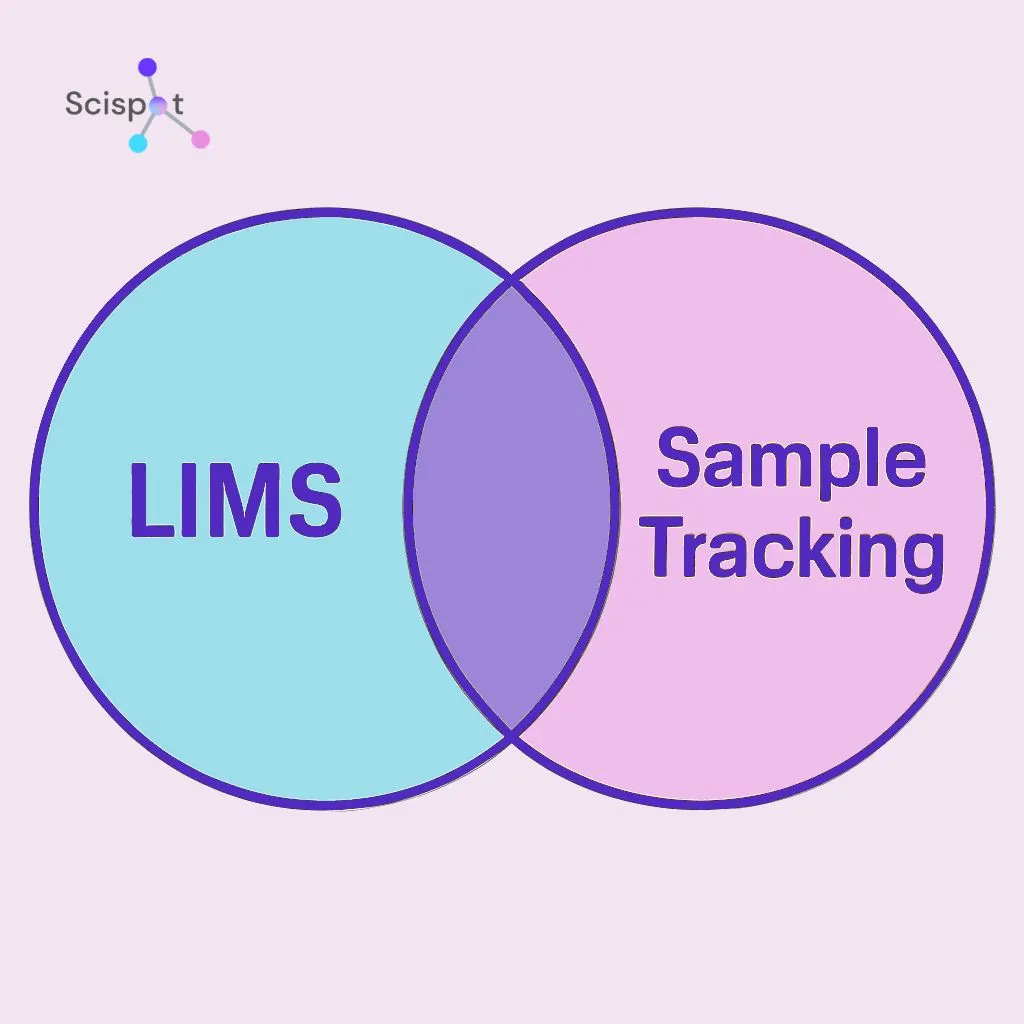
Choosing the right system is a bit like choosing between a full office suite and a simple filing cabinet. Sample tracking software usually focuses on where a vial is and where it moved. A LIMS does more. It handles workflows, results, schedules, and inventory along with sample tracking.
Another decision is where the system will run. Many labs now choose cloud-based lab management software because it allows remote access, easier backups, and less dependence on local machines. Larger operations may also connect sample records to ERP systems to tie lab work into broader supply chain and business processes.
To reduce typing errors, the system should also connect with lab tools directly. Barcode scanners, balances, and other instruments can send data straight into the database, which saves time and reduces manual entry.
When comparing platforms, a few things matter most:
Integration capabilities
User interface
Mobile access
Compliance tools
Your 3-Step Plan to Modernizing Sample Management
Managing thousands of samples takes more than spreadsheets and handwritten notes. A digital system reduces risk, improves traceability, and helps protect the work behind every sample.
Start with a clear review of your current storage and tracking process. Then look for a system that fits your lab’s needs and workflows. Once you choose a platform, train the team step by step so adoption feels manageable and practical.
The best way to begin is to pick one weak point in your current process. Fix that first. Once the team sees the value, the rest of the shift becomes much easier.