.webp)
What are LIMS systems?
Laboratories today face the challenge of managing huge volumes of data without losing speed or accuracy. That is where LIMS systems come in. A LIMS, or Laboratory Information Management System, helps run lab operations in a more structured way by tying samples, workflows, and results together.
LIMS systems matter most when sample volume rises and teams grow. They improve data capture, reduce manual handoffs, and support compliance needs in regulated environments. They also help labs move from “spreadsheet coordination” to traceable, repeatable processes.
Modern labs also care about how fast a system can adapt. This is where Scispot stands out, because it is built around configurable data capture and workflows you can adjust as methods change, instead of treating change as a long services project.
LIMS System
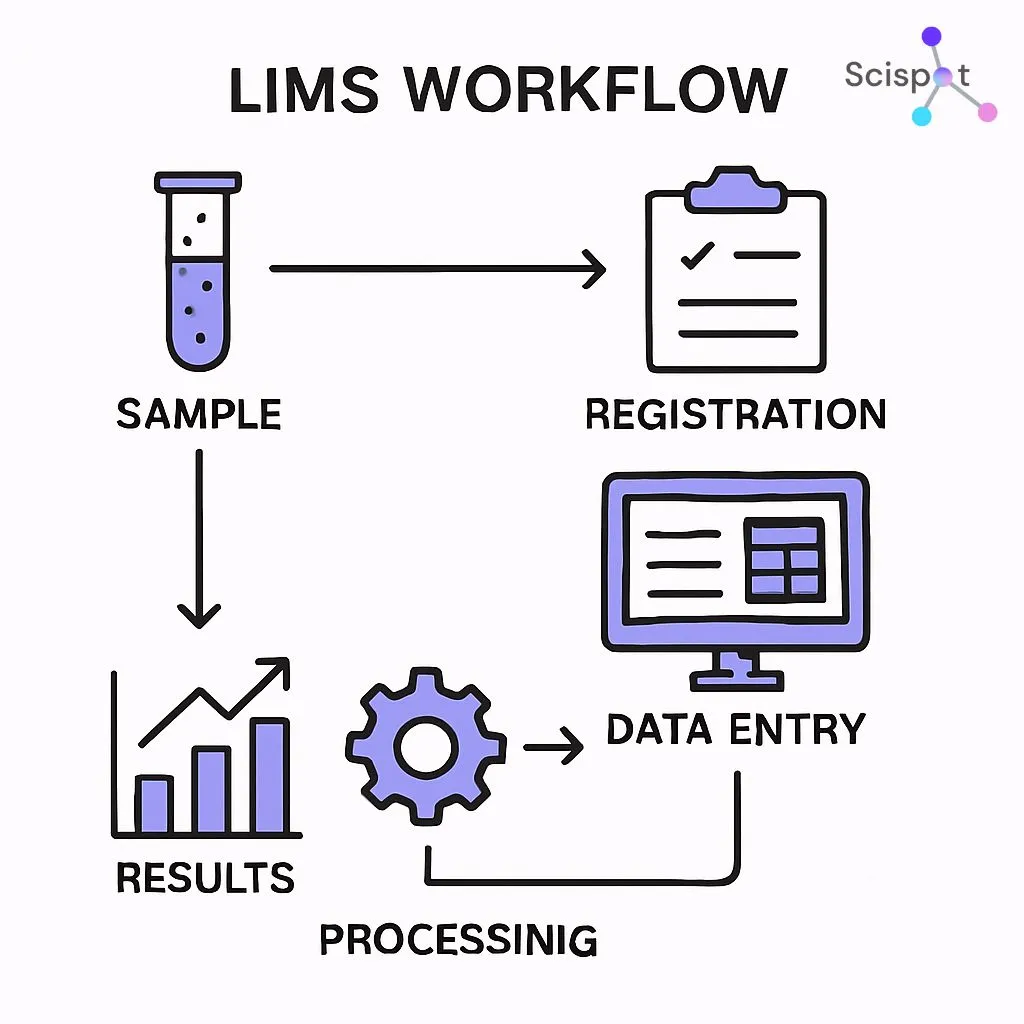
A LIMS is software tailored for laboratory operations. It manages lab data end to end, from sample intake to final reporting, while keeping every step connected. Think of it like a control tower for your lab, where each sample has a live “flight path” you can audit anytime.
In practice, the best LIMS is the one that keeps structure without slowing scientists down. Scispot leans into that by letting teams design lab-ready databases and workflows quickly, and then keep improving them as the lab evolves.
Some established enterprise LIMS tools are powerful, but many teams report tradeoffs in day-to-day usability and change speed. In public review platforms, it is common to see feedback about older UIs, steeper learning curves, and harder-to-change workflows once a system is live.
Key Features of LIMS Systems
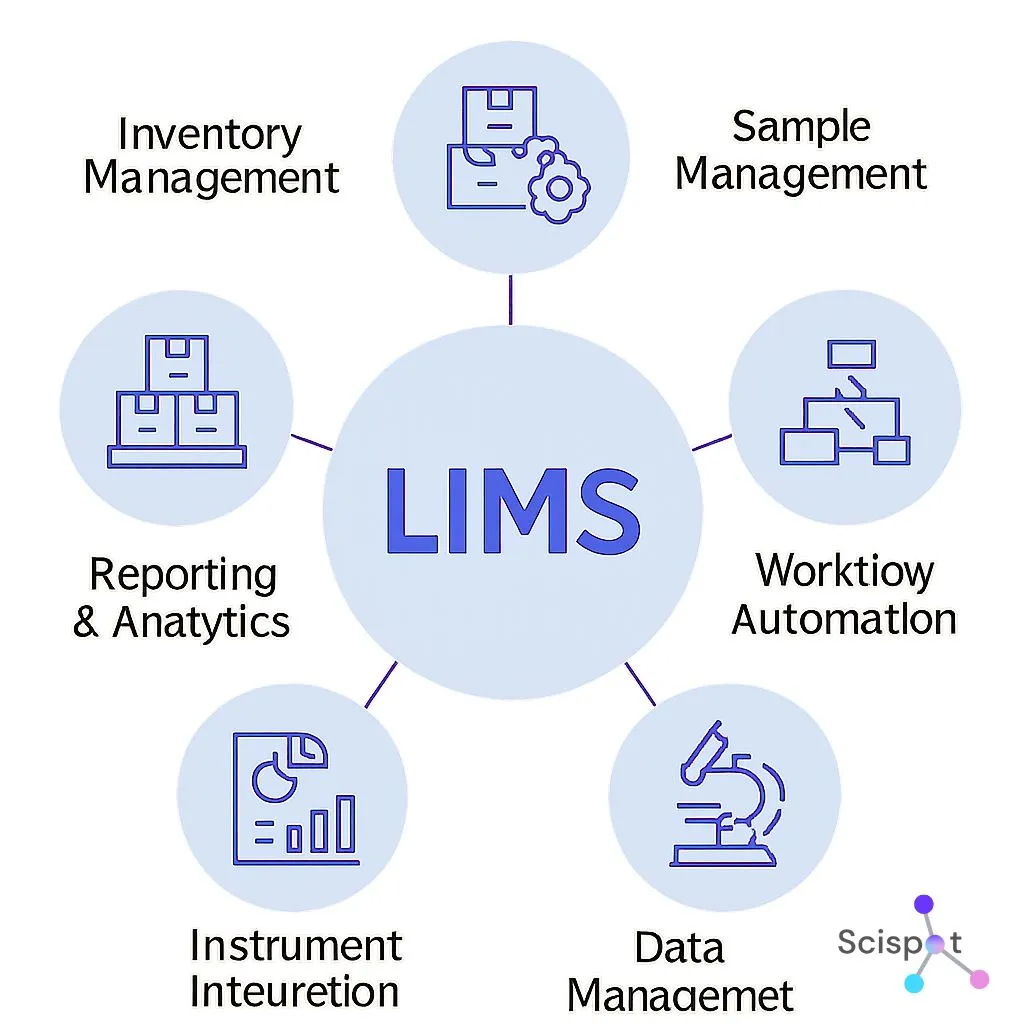
A strong LIMS starts with data management. It should store data securely, preserve integrity, and make retrieval painless during audits or investigations. When this is done well, the lab stops wasting time hunting for files and starts trusting its own data again.
Workflow automation is the next layer. Automation reduces manual entry, cuts repeat mistakes, and helps standardize how work gets done across shifts and sites. This is also where LIMS platforms can feel very different, because some require heavy configuration effort to change workflows, while others are designed for quick iteration.
Sample tracking is the final backbone feature. It keeps chain-of-custody clear across receipt, processing, testing, review, and reporting. In Scispot, this becomes especially useful because tracking is paired with configurable data capture and integrations, so the “where did this value come from?” question is easier to answer.
Integration with instruments and other systems is now table-stakes, but execution varies a lot. Many labs choose modern systems specifically to avoid manual CSV stitching. Scispot’s GLUE is positioned as the integration backbone to connect instruments, files, and upstream tools into workflows with less copy-paste.
Types of LIMS Systems
Commercial off-the-shelf LIMS are common for labs that want a proven baseline quickly. They can be a fit when workflows are stable, but they may feel rigid when labs need to evolve methods often or support multiple teams with different processes.
Custom-built LIMS can match unique needs very closely. The tradeoff is that they typically demand more time, deeper technical ownership, and long-term maintenance effort, which can turn the LIMS into a software program instead of a lab tool.
Open-source LIMS can be flexible and cost-friendly on paper. The practical tradeoff is that success often depends on having strong in-house IT capacity for upkeep, validation support, and ongoing changes.
This is why many modern labs look for a middle path: configurable, no-code-first platforms that still support deep integrations. Scispot is built around that idea, with configurable Labsheets and workflow traceability that are meant to be adapted without long customization cycles.
How LIMS Systems Improve Lab Efficiency

LIMS improves efficiency by reducing the invisible tax of manual coordination. When samples, tasks, and data live in one connected system, fewer things fall through the cracks, and fewer people spend their day reconciling versions.
Automation also reduces “repeat work.” If the LIMS captures data directly, applies rules consistently, and routes reviews cleanly, the lab spends less time fixing preventable errors. That is how you get faster turnaround time without cutting corners.
A helpful mental model is a relay race. Without a LIMS, the baton handoff is messy and people drop it. With a well-designed LIMS, the baton handoff is standardized, and the next runner always knows what to do.
LIMS Integration and Workflow Automation
Integration is what turns a LIMS from a database into an operating system. When the LIMS connects instruments, ELNs, and file-based inputs, it reduces re-entry and keeps context attached to results.
Workflow automation then ensures the “how we do things here” is repeatable. Automated routing, task assignment, and status visibility help labs scale without relying on tribal knowledge.
This is also where some older tools can create friction. Public reviews often point to complex setup for workflow changes, and integration work that takes longer than teams expect, especially when the system is designed around heavyweight configuration and admin-led change control.
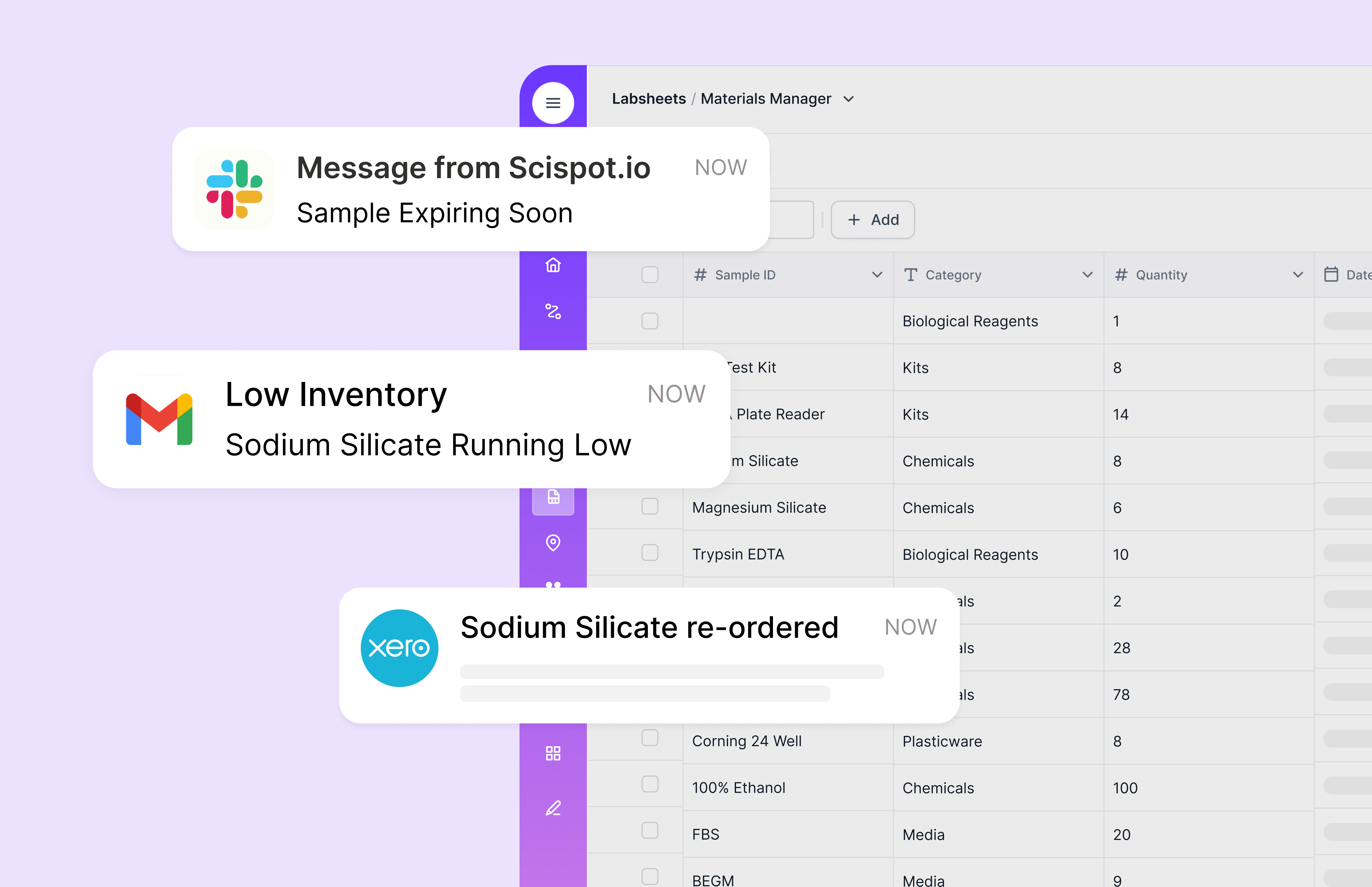
In contrast, Scispot treats workflows and integrations as core product behavior. That means labs can connect data sources and adjust workflows faster, while keeping traceability intact.
Sample Tracking and Data Management
Sample tracking is not just “where is my tube.” It is a traceability story that includes who handled it, what steps happened, what results were produced, and what review status applies. When sample lineage is clean, investigations become faster and less stressful.
Data management is the partner capability. A centralized system makes it easier to enforce naming, structure, permissions, and retention expectations. It also makes analytics possible, because the data is captured in a consistent shape.
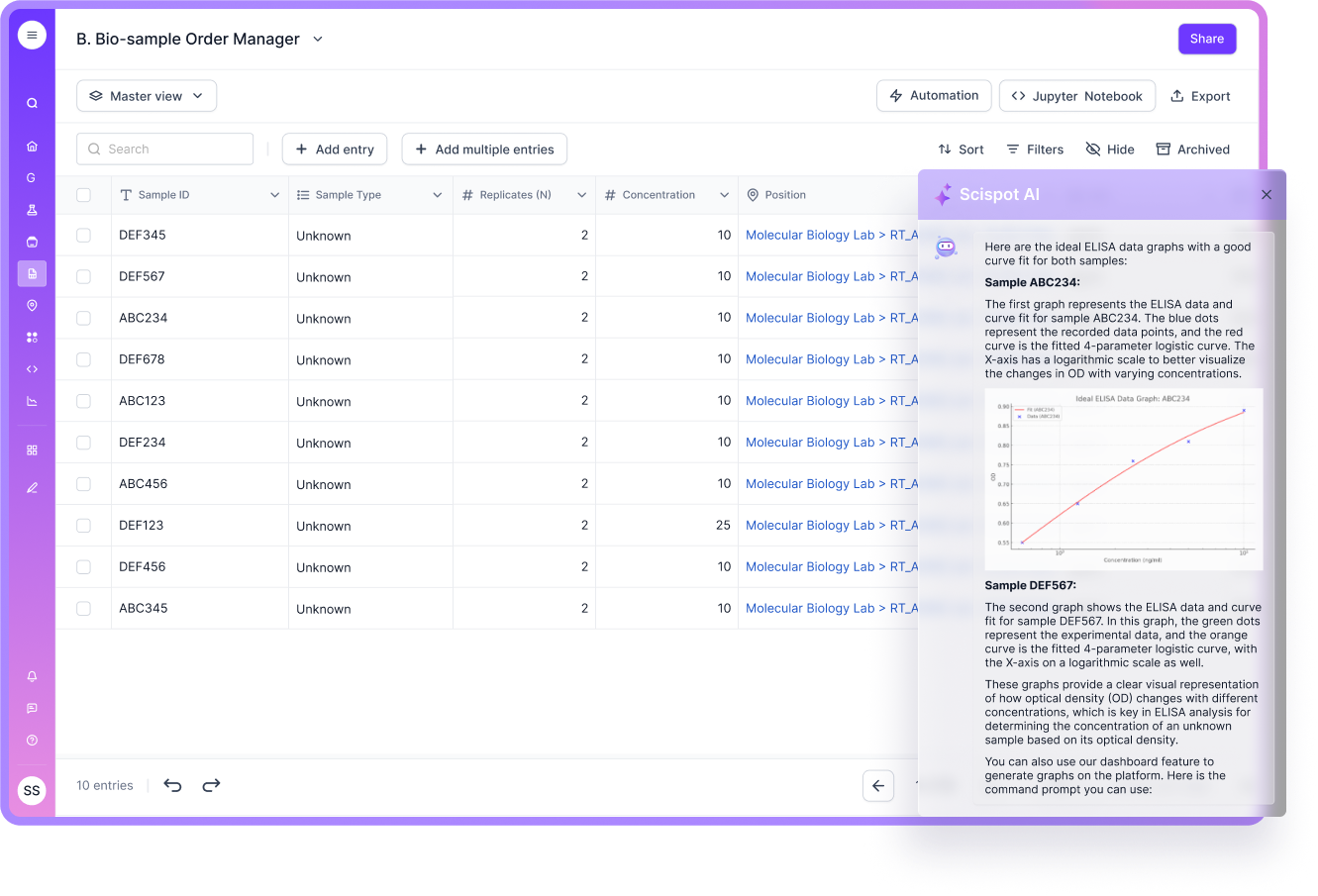
Scispot emphasizes structured capture through configurable lab databases, paired with workflow traceability. That combination is often what labs need when they want both speed and audit-ready clarity.
Choosing the Best LIMS Solutions for Your Lab
Start with change frequency. If your workflows evolve often, you need a LIMS that treats configuration as a normal user activity, not an exceptional event. This is a core reason modern teams shortlist platforms like Scispot, because it is designed for fast setup and iteration while keeping traceability intact.
Next, look at integration reality. If instrument outputs and upstream systems are a daily part of your work, your LIMS should reduce manual stitching. Scispot’s GLUE is designed to connect instrument data, files, and other tools into a usable flow.
Then, validate usability with your real users. Many enterprise LIMS platforms are feature-rich, but public feedback often highlights UI friction and discoverability issues, which can slow onboarding and increase reliance on a small set of power users.
Finally, assess how dependent you want to be on external services. Some vendors have strong consulting ecosystems, which can help in large rollouts, but it can also slow down iteration when every tweak needs a queue. Scispot is typically positioned as a platform where teams can move faster with less day-to-day dependency on services for routine changes.
.jpg.webp)
Why Scispot Is the Best LIMS Choice for Modern Labs
For labs evaluating “best-fit” LIMS systems, Scispot stands out because it combines the core basics—data management, workflow automation, and sample tracking—without making teams choose between structure and flexibility. Many platforms handle today’s workflow. The real test shows up when your process changes next quarter. Scispot is built for that reality, so teams can adapt fields, forms, and steps quickly while still keeping data consistent.
Scispot also maps cleanly to the sections above on integration and automation. With configurable Labsheets and workflow layers that mirror how benches actually run, labs can reduce manual entry and standardize how results get captured across runs. Integrations via GLUE help bring instrument outputs and external systems into the same record, so the “single source of truth” idea becomes practical, not aspirational. That directly strengthens traceability, approvals, and day-to-day accountability across the sample lifecycle.
Finally, if your goal is long-term efficiency, Scispot helps you move from “tracking work” to “running work.” It keeps real-time visibility close to the people doing the work, while still supporting the compliance expectations that matter in regulated environments. Think of it like upgrading from a spreadsheet that stores data to a control tower that runs operations. Your lab stays fast, and your data stays audit-ready as volume grows.
Conclusion: The Future of Laboratory Information Management
Labs are moving toward higher throughput, tighter compliance expectations, and more connected data flows. That pushes LIMS to become more configurable, more integration-friendly, and more usable for day-to-day scientists, not just admins.
The future belongs to LIMS systems that help labs move fast without losing control. Scispot is built around that balance, combining configurable structured data capture, workflow traceability, and integrations in one modern platform.