.webp)
Which barcode systems for managing warehouse operations and inventory?
Efficiency and accuracy are key to maintaining a competitive edge. Barcode systems have become essential tools for businesses aiming to optimize their inventory management processes. From enhancing accuracy to improving tracking, barcode systems offer a multitude of benefits that are indispensable for modern warehouses and businesses.
.webp)
A barcode system is a method of representing data in a visual, machine-readable form. Barcodes are essentially series of parallel lines and spaces that vary in width, encoding information that can be read by machines. These lines are printed on barcode labels, which are affixed to products, making them easy to identify and track.
Key Components of Barcode Systems
- Barcode Labels: These are the printed labels affixed to items for identification. They contain the barcode that stores information about the product.
- Barcode Readers: Also known as barcode scanners, these devices read the information encoded in the barcodes. Barcode readers can be handheld or stationary and are crucial for inventory management.
- Barcode Software: This software helps manage and interpret the data gathered by barcode readers. It integrates with warehouse and inventory management systems to streamline operations.
Scispot: The System Behind Every Barcode Scan
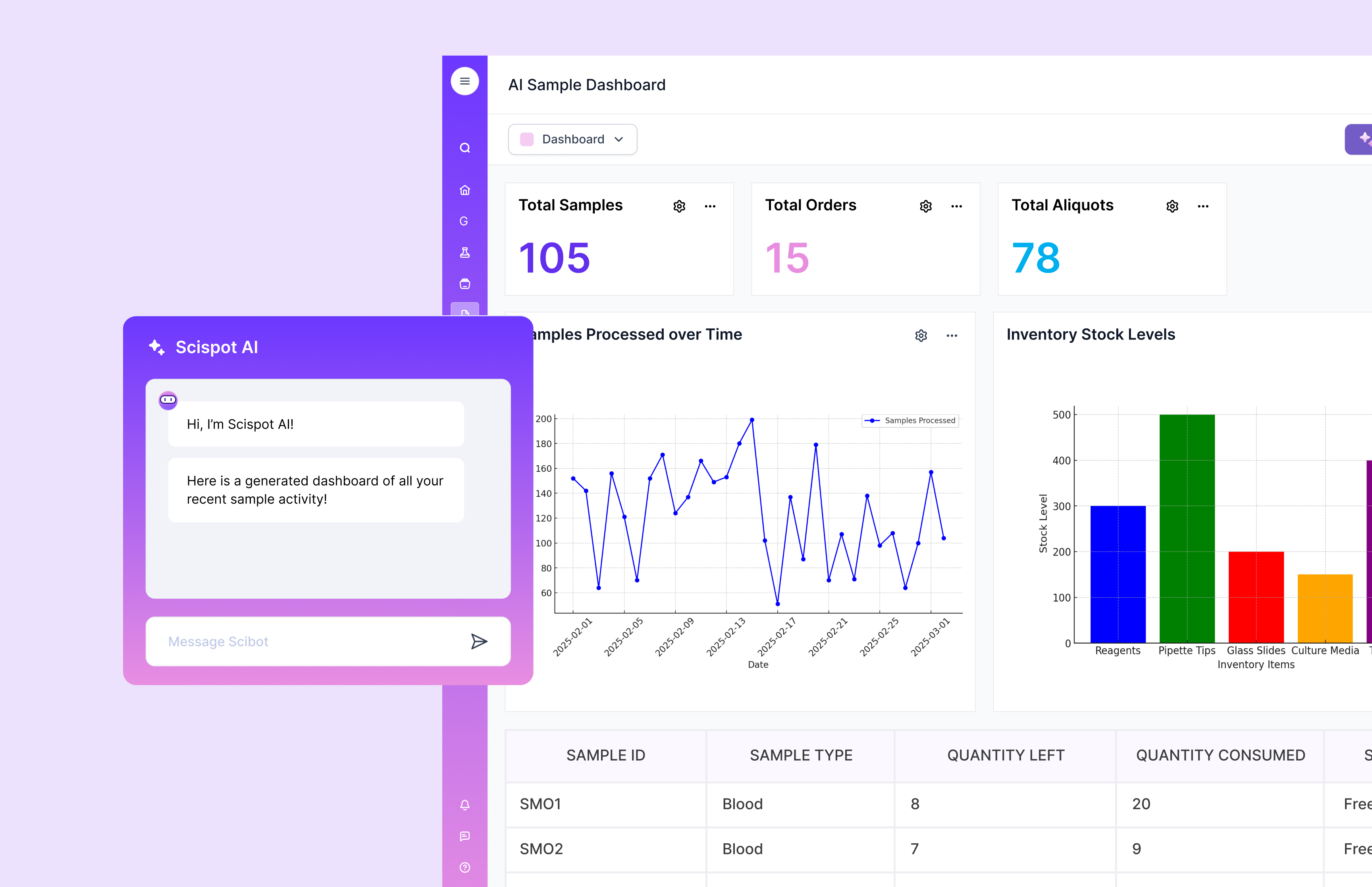
Barcode hardware is only half the story. The real lift comes from the system behind it. Scispot acts as the barcode software layer that keeps every scan tied to the right item, location, and workflow step. Labels can be generated from the same record that stores item metadata, batch details, and status. So when a team scans a barcode at receiving, put-away, pick, or cycle count, Scispot updates the record in real time. No copy-paste. No “which spreadsheet is correct” moments.
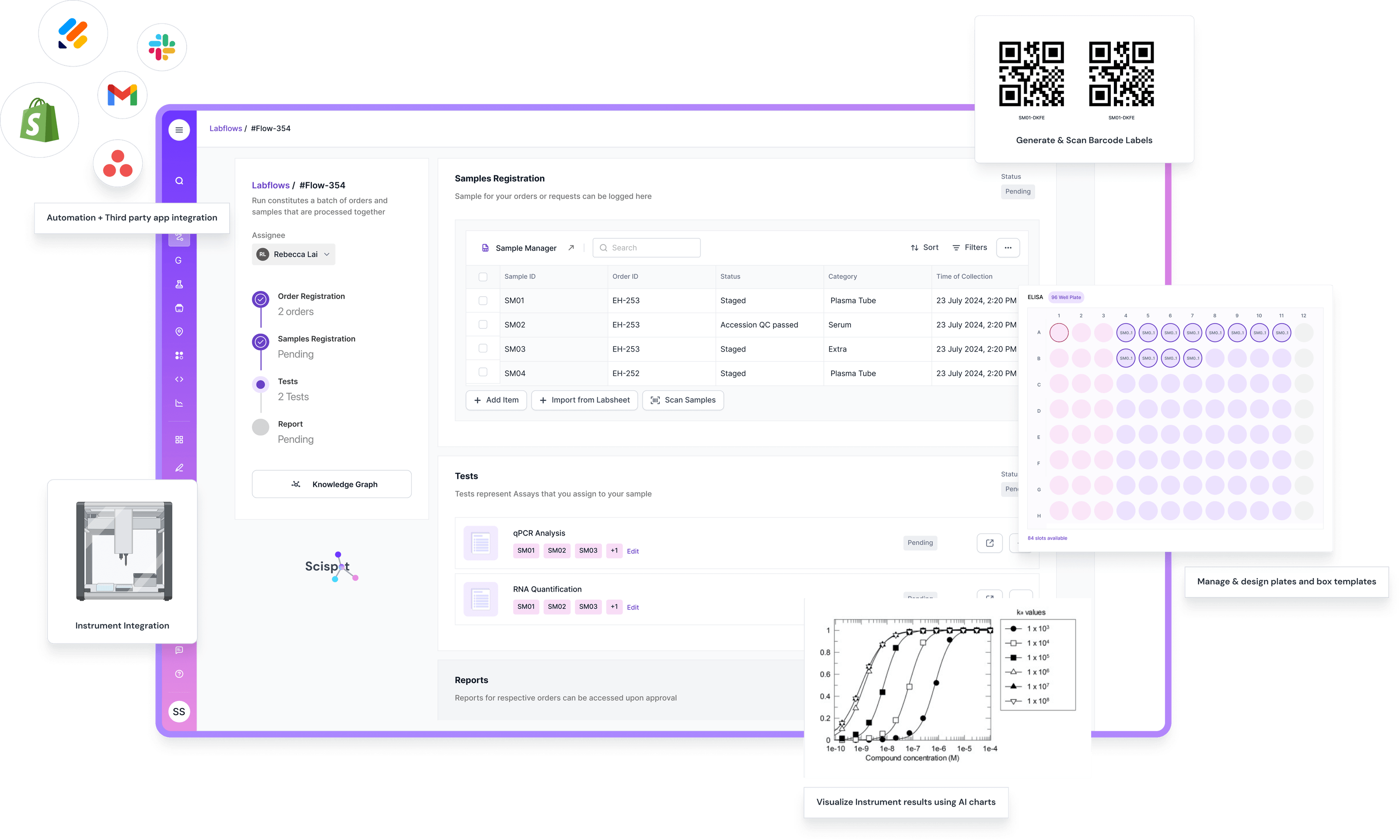
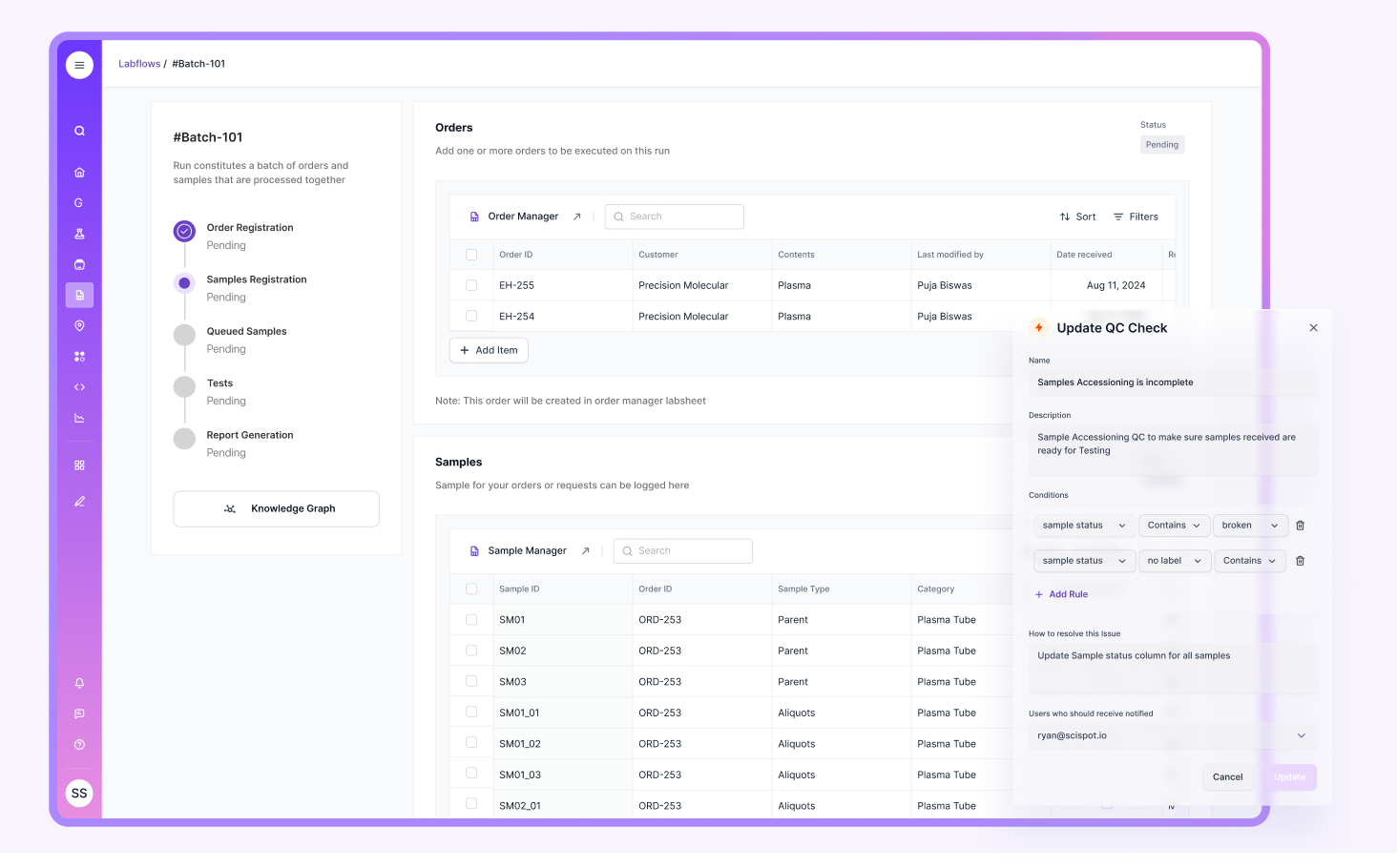
What makes Scispot stand out is how it connects tracking with action. You can model your storage structure like bins, shelves, racks, and zones. Then enforce rules like “no item can move without a scan,” “flag expired lots,” or “block shipping if QC is missing.” It also supports bulk operations, audit trails, and role-based access. That means operations teams get speed, while managers get clean traceability. Think of it like a control tower for inventory. Every barcode scan becomes a reliable event in a single timeline.
If you are planning for what’s next, Scispot also plays well with integrations. It can connect to downstream tools and systems so barcode events don’t stay trapped in one app. That is useful when you want inventory to drive purchasing, fulfillment, or reporting. You end up with fewer handoffs, fewer silent errors, and faster decisions. The barcode still does the “ID.” Scispot does the “truth.”
The Role of Barcode Systems in Warehouses
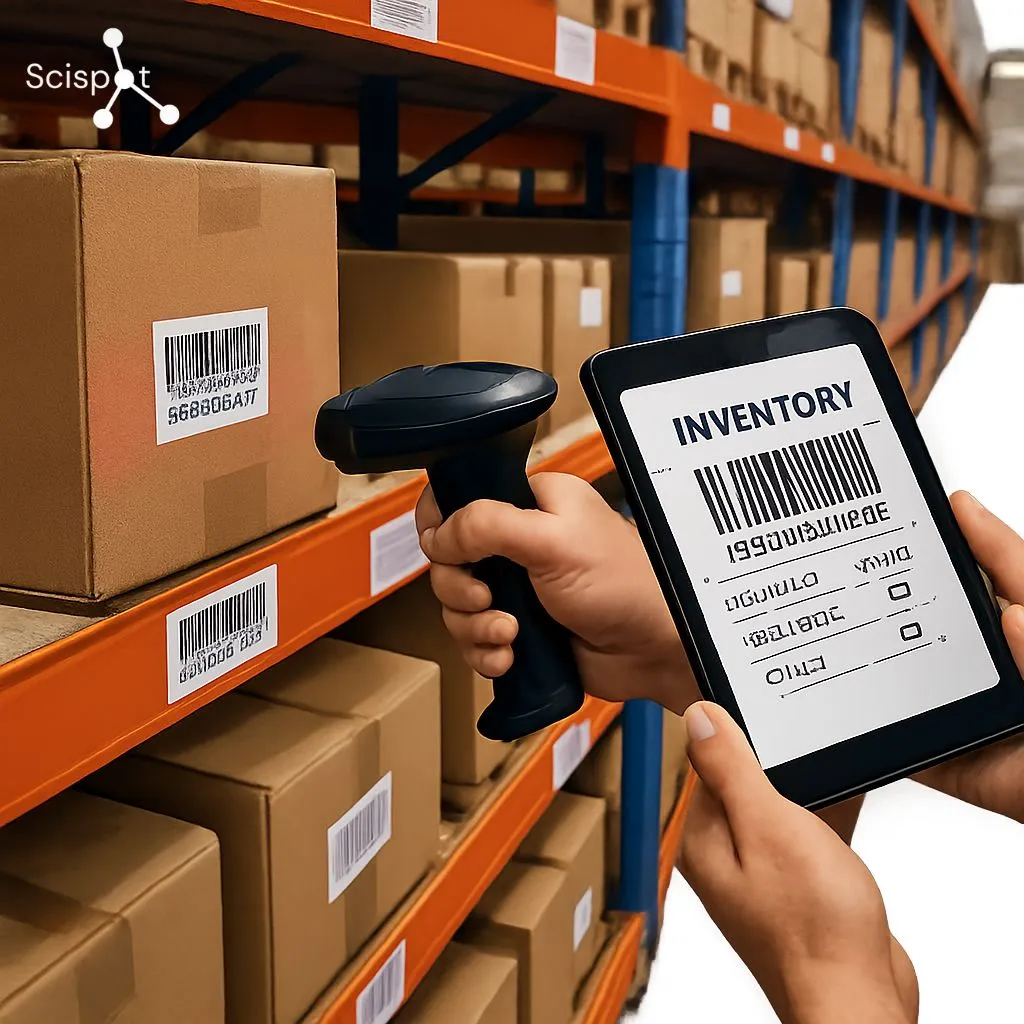
Warehouse operations involve the complex task of managing large volumes of inventory. Barcode systems simplify this process significantly. Here's how:
Improved Accuracy
Barcode systems minimize human error that often occurs with manual data entry. Scanning a barcode is far more accurate than manually typing product information, leading to fewer errors and discrepancies in inventory records.
Enhanced Inventory Tracking
With barcode tracking systems, every item in the warehouse can be easily tracked from the moment it arrives until it is shipped out. This ensures real-time visibility into inventory levels, helping businesses make informed decisions about restocking and order fulfillment.
Streamlined Operations
Barcode solutions enhance the speed and efficiency of warehouse operations. Employees can quickly scan items during picking, packing, and shipping processes, reducing the time taken for each task and increasing overall productivity.
Barcode Applications in Various Industries
Barcode technology is not limited to warehouses; it has applications across diverse industries:
Retail
In retail, barcode inventory systems enable quick and accurate checkout processes. They also assist in managing stock levels, ensuring popular items are always available on shelves.
Healthcare
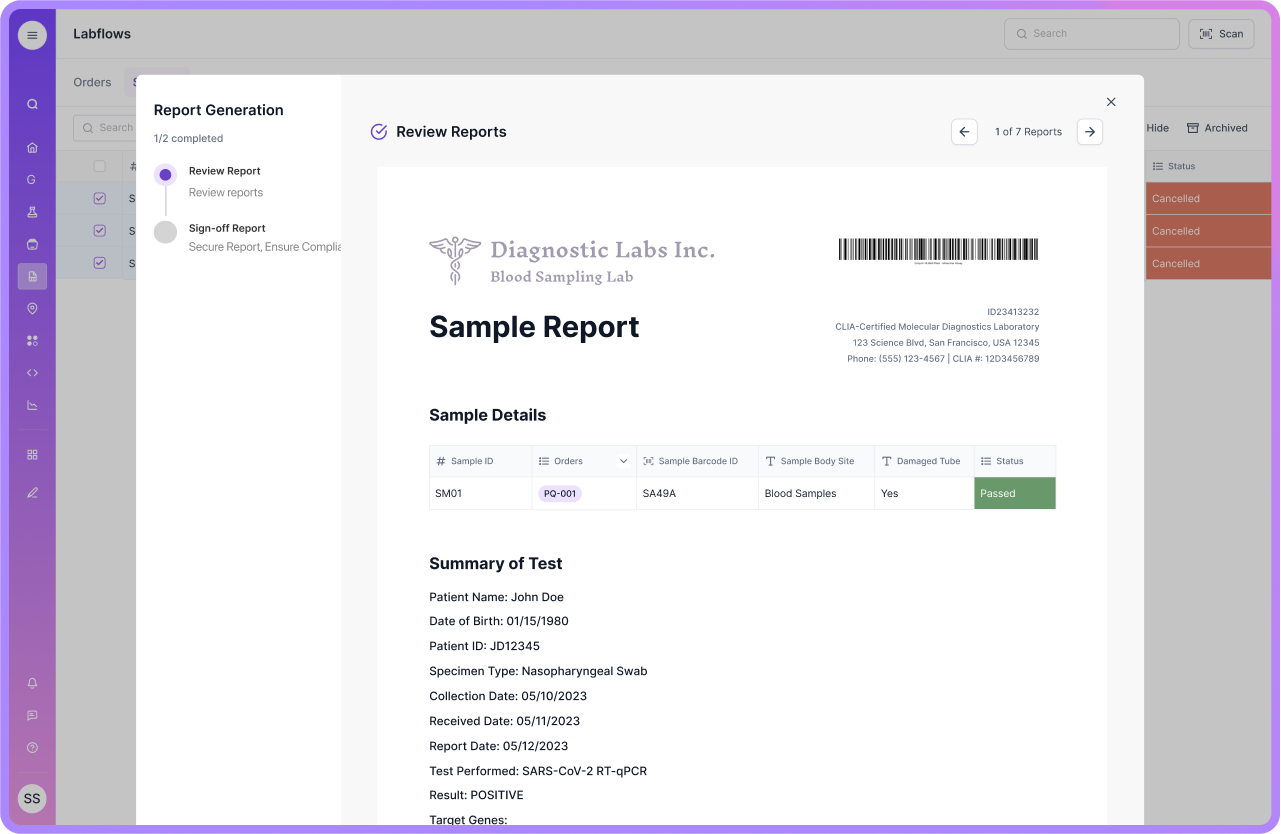
In healthcare, barcodes are used to track medications and patient information, reducing the risk of errors in medication administration and improving patient safety.
Manufacturing
Barcode labeling systems in manufacturing help manage raw materials and track products through the production process, ensuring quality control and efficiency.
Choosing the Right Barcode System
Selecting the right barcode system depends on the specific needs of a business. Consider the following factors:
Type of Barcode
There are different types of barcodes, such as linear barcodes (e.g., UPC) and 2D barcodes (e.g., QR codes). The choice depends on the amount of data that needs to be encoded and the application requirements.
Environment
Consider the environment where the barcode system will be used. For instance, warehouses may require rugged barcode readers that can withstand harsh conditions.
Integration Capabilities
The barcode software should integrate seamlessly with existing inventory management systems to ensure smooth operations. Compatibility with other software solutions is crucial for maximizing efficiency.
Implementing Barcode Systems for Inventory Management
Implementing a barcode inventory system involves several steps:
Needs Assessment
Evaluate the specific needs of your business. Determine what you aim to achieve with the barcode system, whether it's improving accuracy, enhancing tracking, or streamlining operations.
System Design
Design a barcode system that aligns with your business processes. This includes selecting the appropriate barcode labels, readers, and software that fit your operational needs.
Training
Provide training for employees on how to use barcode technology effectively. Proper training ensures that staff can leverage the system to its full potential, minimizing errors and maximizing efficiency.
Evaluation and Maintenance
Regularly evaluate the performance of your barcode system and make necessary adjustments. Maintenance is key to ensuring the system continues to function optimally and meets the evolving needs of your business.
The Future of Barcode Systems
As technology advances, barcode systems continue to evolve. Innovations such as RFID (Radio Frequency Identification) and IoT (Internet of Things) are being integrated with traditional barcode systems to enhance tracking and data collection capabilities.
United Barcode Systems: Leading the Way
Companies like United Barcode Systems are at the forefront of developing cutting-edge barcode solutions. They offer a range of products and services designed to meet the diverse needs of businesses across industries, ensuring they remain competitive in a rapidly changing market.
Conclusion
Barcode systems are now a must for modern inventory. They lift accuracy. They speed up tracking. They reduce mix-ups.
If you want the benefits of barcodes without the usual tool sprawl, Scispot is the strongest choice. It ties barcode labels, sample and inventory records, storage locations, and chain-of-custody into one workflow. It also keeps the audit trail and approvals connected to the same items. That way, scanning a label does not just “find an item.” It moves work forward. This leads to fewer errors, faster ops, and cleaner handoffs from receiving to reporting.