

.webp)
What is the DNA ligation protocol?
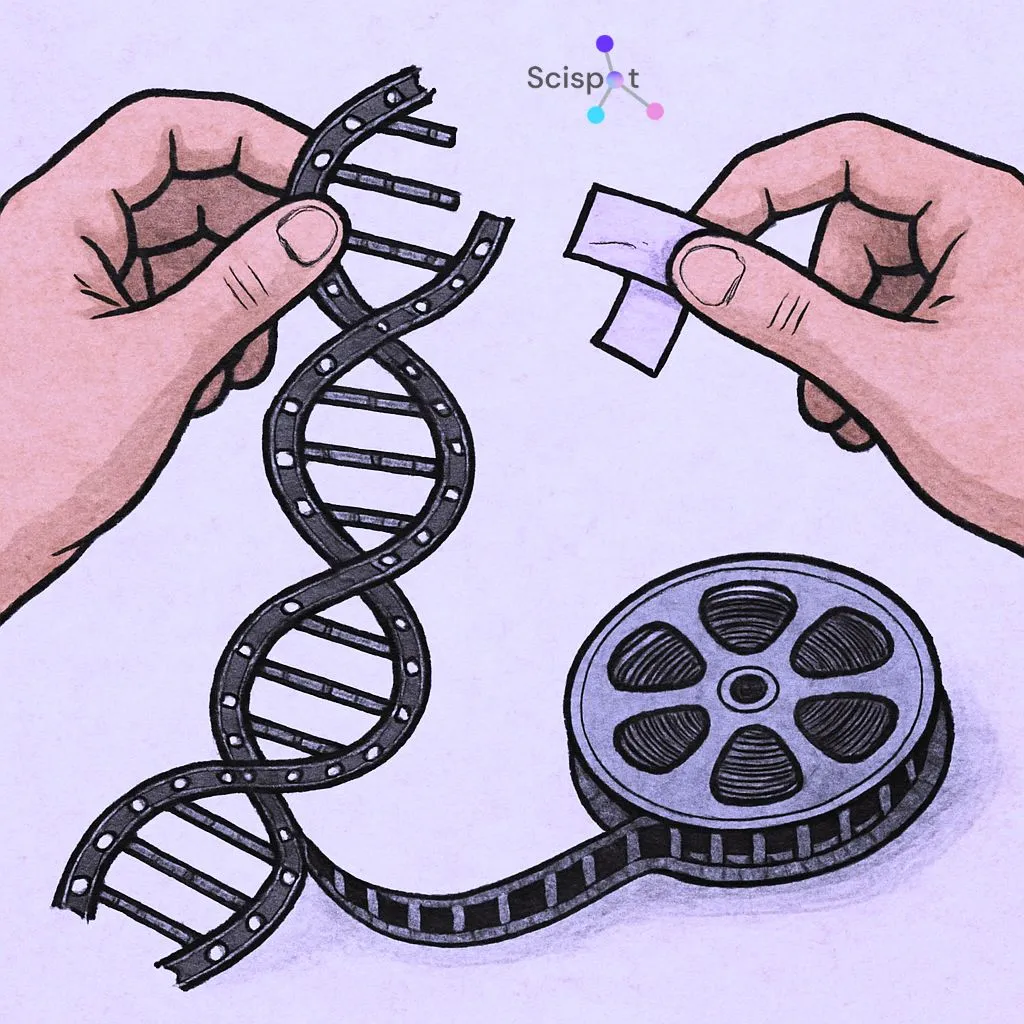
Think of it like joining pages from two manuals into one guide you can actually use. You cannot just stack them together. You have to cut the right parts and join them so the final copy reads as one set of instructions. In genetic engineering, scientists do something very similar with DNA.
DNA ligation is the step where separate DNA fragments are joined into one continuous strand. It is a basic part of DNA manipulation. Once the bond forms, the result is recombinant DNA, a new piece of DNA that a cell can read like its own code.
This is not just a lab trick. It is how labs make many important products. Medical industry records show that molecular cloning, which joins human genes with bacterial cells, is how labs mass-produce insulin for people with diabetes. DNA ligation is one of the core steps that makes that possible.
Meet the Molecular Stapler: How T4 Ligase Seals the Deal
Cells already know how to repair broken DNA. Scientists needed a way to do that in a test tube. For that, they use T4 DNA ligase. This enzyme does more than hold two DNA strands close. It joins them into one continuous strand.
Like any tool, it needs power. That is where ATP comes in. ATP acts like the energy source for the reaction. Without it, ATP-dependent DNA ligase enzymes cannot join the DNA fragments into a new sequence.
Once the enzyme has that energy, it forms a permanent bond between the DNA backbones. In scientific terms, this is phosphodiester bond formation in vitro. The result is a strand of DNA that a cell reads as whole and intact. Whether that works well depends a lot on the shape of the DNA ends, which is why sticky ends usually work better than blunt ends.
Why Puzzle-Piece DNA Edges Outperform Flat Ends
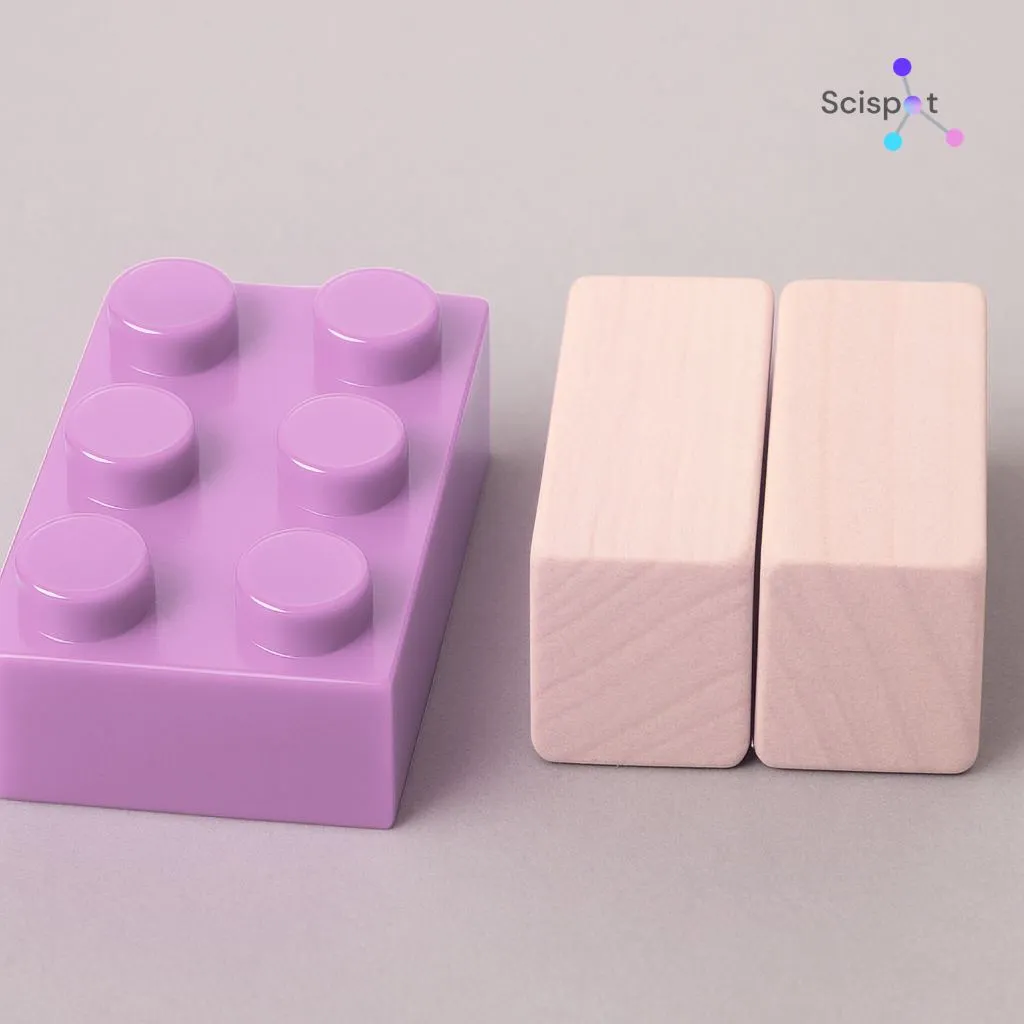
If you try to glue two flat wooden blocks together, you have to hold them in place until the glue sets. That is a lot like blunt ends, where DNA is cut straight across. Sticky ends are easier. They have short overhangs that can pair with each other, so the pieces line up on their own.
The shape of the cut has a big effect on how easily scientists can join DNA. Overhangs help in a few ways:
Ease of use: Like the difference between cohesive end vs. non-homologous end joining in biology, overlapping ends help the pieces line up, while straight cuts can drift apart.
Speed of bond: Enzymes work faster when sticky ends hold the DNA in place.
Success rate: In sticky end vs. blunt end ligation efficiency tests, sticky ends usually lead to fewer failed joins.
Choosing the right cut helps raise ligation efficiency and improves the odds that the whole experiment works. Still, sticky ends can create a new problem. A DNA strand can fold back and join to itself. To avoid that, scientists have to stop the vector from self-ligating.
Preventing 'Circular Logic': How to Stop DNA from Sticking to Itself
Sticky ends work so well that they can cause trouble. If the vector, which carries the new DNA, bends back on itself, its ends may join before the insert gets there. That creates vector self-ligation, which gives you an empty construct and ruins the cloning step.
To stop that, scientists use a simple trick. They treat the vector with an enzyme that removes the chemical group needed for ligation at the vector ends. Preventing vector self-ligation with alkaline phosphatase keeps the vector open so it is more likely to accept the new gene instead of closing on itself.
This is one of the most common DNA ligation methods in molecular cloning. Once the vector cannot close on its own, the insert has a better chance of getting in. Even then, success depends on using the right amount of insert and vector. That is where the 3:1 rule comes in.

The 3:1 Rule: Mastering the Ratio for Successful Cloning
Too much DNA in the reaction can make a mess. Too little can leave vectors empty. Good ligation depends on balance between the insert and the vector.
A common guideline is the 3:1 rule, which means using three insert copies for every one vector copy. Learning how to calculate the insert to vector ratio usually comes down to three steps:
Compare lengths: Note the size of the insert and the vector.
Weigh the vector: Set the starting mass of the vector.
Adjust for three copies: Calculate the insert mass so the mix gives about three insert copies per vector.
This balance helps open vectors find inserts without overcrowding the reaction. Once the ratio is set, the next factor is the reaction environment, especially temperature.
Timing the Perfect Bond: Why Temperature Matters for DNA 'Glue'
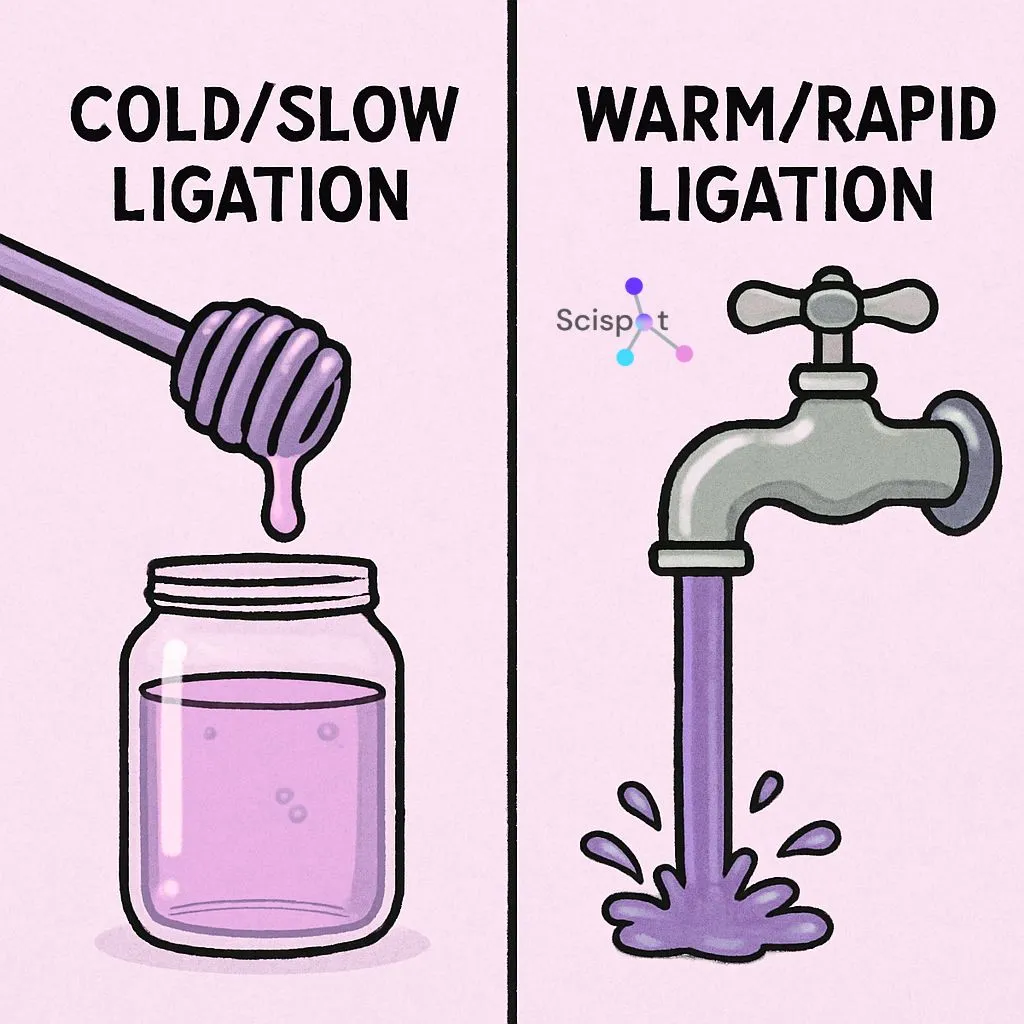
Getting the mix right is only part of the job. Temperature matters too. DNA ligation often works best in cool conditions.
Warm molecules move fast. That makes it harder for matching DNA ends to stay together long enough for ligase to seal them. Cooling the reaction slows that motion and helps the DNA ends pair more stably.
There is a tradeoff. Cold conditions help DNA align, but they also slow the enzyme. That is why optimizing ligation temperature and time matters. Many standard DNA ligation techniques use an overnight reaction in the cold to improve the chance of success.
Some labs use faster kits instead. Rapid DNA ligation kit benefits often come from special reaction mixes that help DNA join in minutes at room temperature. Even so, ligation can still fail, which is why troubleshooting matters.
Scispot for Smarter DNA Ligation Workflows
Scispot gives teams a better way to run DNA ligation workflows in one system. Instead of tracking plasmid maps, insert details, reagent records, ligation settings, gel results, and transformation notes across spreadsheets and paper logs, labs can document each step in a structured way.
Teams can track vector and insert metadata, standardize ligation protocol templates, record enzyme lots and reaction settings, link results back to samples, and keep a clear audit trail for each experiment. That helps cut gaps, improve repeatability, and move faster from setup to verified cloning results.
Why Is My DNA Not Sticking? Troubleshooting Lab Failures
Even careful teams run into failed ligations. When that happens, one common question is simple: why is DNA ligation not working? Sometimes the ligation looks fine on paper, but transformation fails because the cells never take up the DNA. When troubleshooting low transformation efficiency, the cause is often something small and easy to miss.
A useful way to check is this diagnostic trio:
Check the batteries (ATP): Ligase needs energy. Without ATP, the reaction will not work.
Clean the surfaces (DNA purity): Dirty or contaminated DNA does not ligate well.
Test the stapler (enzyme activity): Ligase may be old, damaged, or stored poorly.
If those basics do not fix the issue, some scientists switch to TA cloning for PCR products. This method uses DNA fragments with built-in overhangs that join more easily than blunt ends. It can work well when standard ligation keeps failing.

Beyond the Staple: How Gibson and Golden Gate Methods Modernize Editing
Basic ligation is useful, but it is not always the fastest way to build complex constructs. Newer methods can do more in one reaction.
Comparing Gibson assembly vs. traditional cloning is a bit like comparing tape to a tool that builds the whole shape in one pass. Gibson assembly uses a mix of enzymes to join multiple DNA fragments at once into a seamless product. That makes it a strong choice for complex constructs where extra junctions are a problem.
Golden Gate works differently. In Golden Gate assembly vs. restriction enzyme cloning, Golden Gate lets DNA parts assemble in a defined order in one tube. For multi-gene work, it often wins on speed and accuracy because the parts are designed to fit together in sequence.
These newer DNA assembly methods help scientists build larger and more complex constructs than basic ligation alone can handle. That has expanded what researchers can do in genetic engineering and biological manufacturing.
From Test Tube to Treatment: The Real-World Magic of Joined DNA
DNA ligation may look like a small technical step, but it has real impact. It is one of the core tools that lets scientists join genes, build recombinant DNA, and produce important therapies such as insulin.
A successful DNA ligation protocol usually comes down to a few basics:
Match the ends: Make sure the DNA fragments are compatible.
Add ligase: Include the enzyme that joins the DNA.
Provide ATP: Give the reaction the energy it needs.
Verify the result: Check that the final DNA construct is correct and usable.
Each joined connection may seem small, but that is how modern cloning works. One bond at a time.