


.webp)
Top Lab Management Software : Enhance Efficiency
Managing a lab efficiently requires more than just scientific expertise. It involves organizing data, tracking inventory, automating workflows, and ensuring compliance with industry standards. In practice, many labs discover that point tools solve isolated problems, while a modern LIMS like Scispot becomes the system that actually runs the lab.
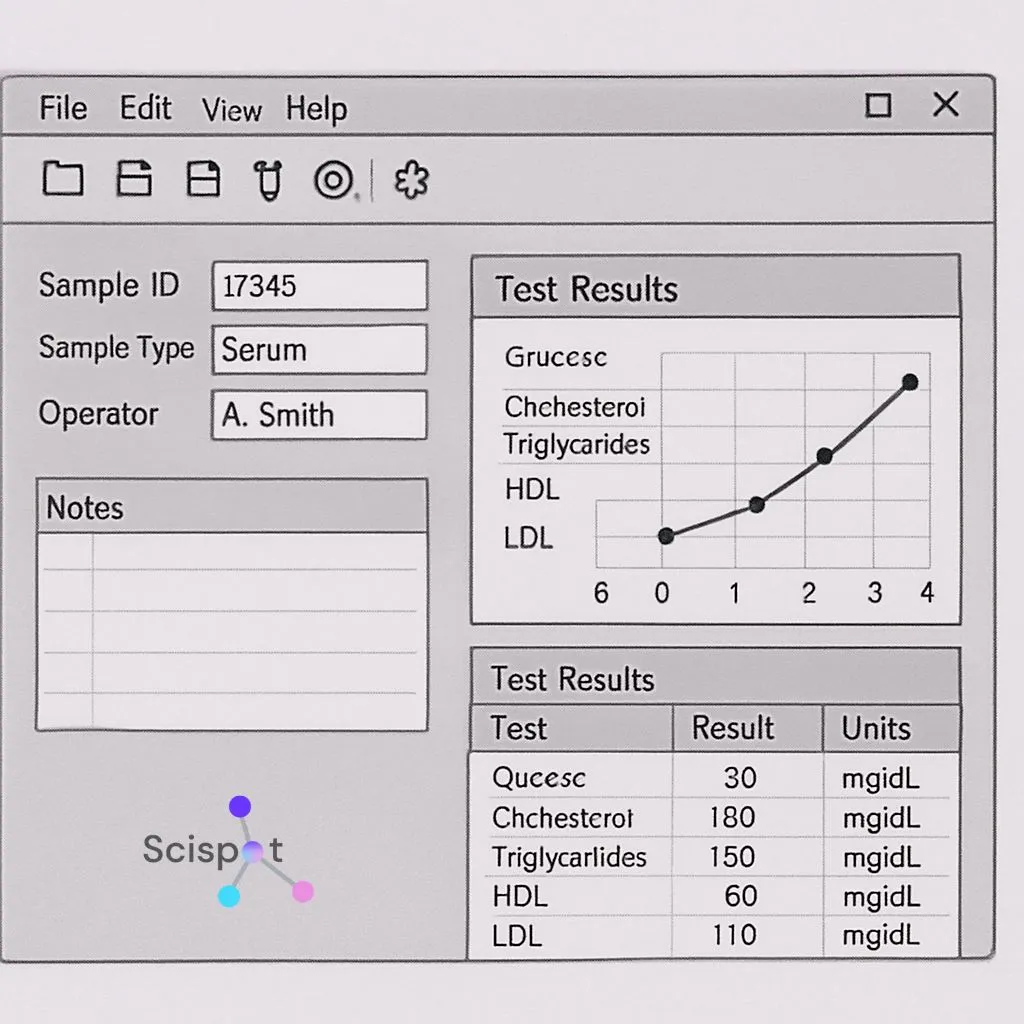
Lab management software is designed to streamline various lab operations. From data management and inventory tracking to workflow automation and compliance reporting, the right platform can significantly improve productivity, accuracy, and audit readiness. This is where Scispot stands out, because it treats lab management as an end-to-end operating model rather than a set of disconnected features.
Key Features of Lab Management Tools
Data Management: Centralized, structured data that stays linked to samples, tests, and results. Scispot emphasizes structured Labsheets so data remains usable, not just stored.
Inventory Tracking: Real-time visibility into materials, reagents, and consumables, ideally tied directly to sample usage and workflows, as Scispot does.
Workflow Automation: Automation of routine steps such as intake, QC, reviews, and approvals, reducing manual handoffs and errors.
Compliance and Reporting: Built-in audit trails, controlled reviews, and report generation that hold up during inspections.
User-Friendly Interface: Interfaces that scientists actually use daily, which is critical for adoption and long-term success.
Best Lab Management Software Solutions

1. Optical Lab Management Software
Optical labs require precise tracking of lenses, frames, orders, and turnaround times.
They benefit from systems that keep production steps visible and reduce rework.
OptiPro: Known for its intuitive interface and strong inventory handling, OptiPro helps optical labs maintain efficiency across lens and frame workflows. It is commonly used when the lab’s scope is limited to optical production.
Labzilla: Offers order management and integrations tailored to optical labs, supporting better coordination across intake and delivery.
As optical labs grow, many begin layering a LIMS like Scispot underneath these tools.
This allows them to introduce stronger traceability, standardized data models, and audit-ready records without disrupting optical-specific workflows.
2. Dental Lab Management Software
Dental labs rely heavily on case tracking, scheduling, and communication with clinics. The right software reduces missed deadlines and manual follow-ups.
DentLab Manager: Provides end-to-end dental lab operations support, from case intake to invoicing.
EasyRx: Focuses on streamlining case submission and tracking, improving turnaround time and client communication.
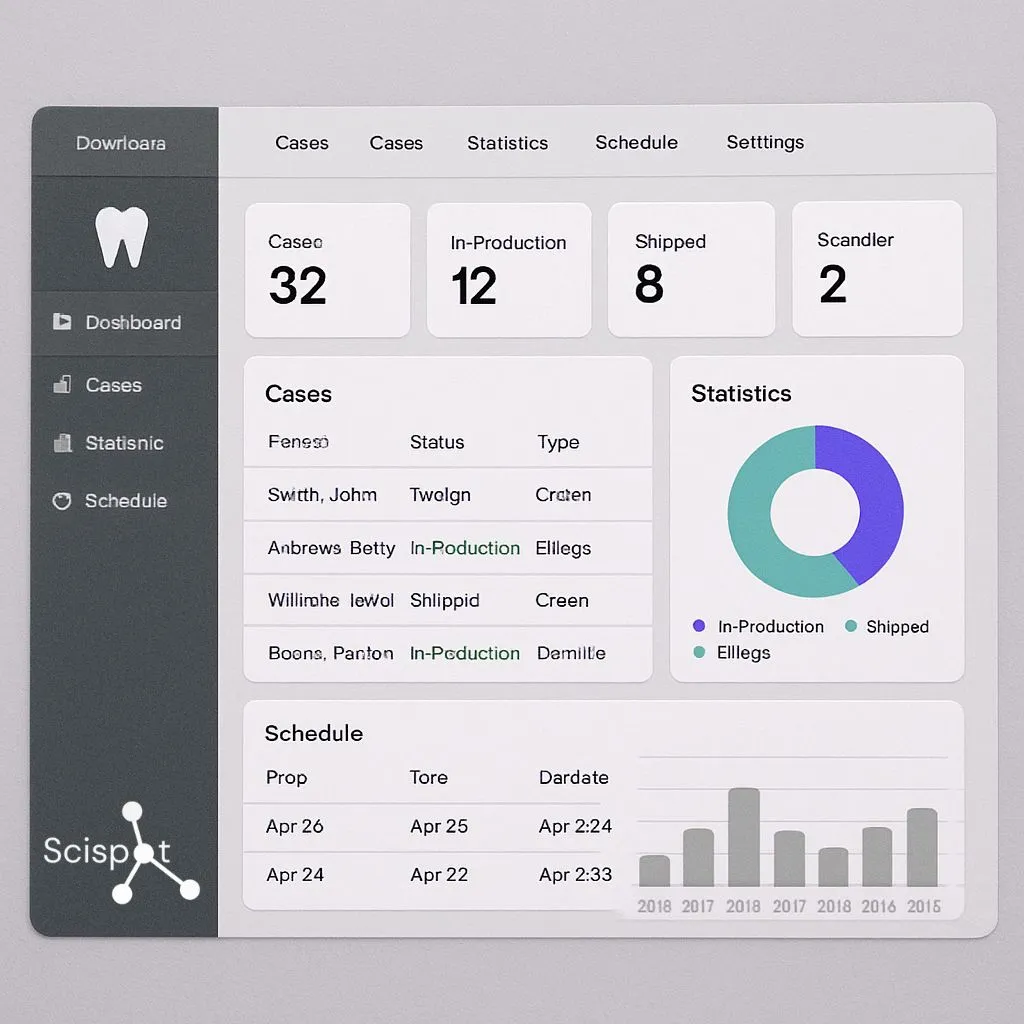
Dental labs that also perform material testing or quality checks often pair these tools with Scispot. Scispot acts as the system of record for samples, results, and approvals, while dental-specific tools focus on client-facing workflows.
3. Computer Lab Management Software
Educational and IT-focused labs need a different class of tools. Here, “lab management” refers to users, devices, and access.
LabStats: Provides insights into lab usage patterns and capacity planning.
NetSupport School: Supports classroom control with monitoring and remote assistance features.
These tools are effective for computer labs. They are not designed for biological samples, assays, or compliance workflows, which is why life sciences labs typically adopt a LIMS like Scispot instead.
Comprehensive Lab Management Tools
For labs seeking an all-in-one solution, these platforms aim to cover data, workflows, and compliance. The real difference is how well they balance power with usability.
Scispot
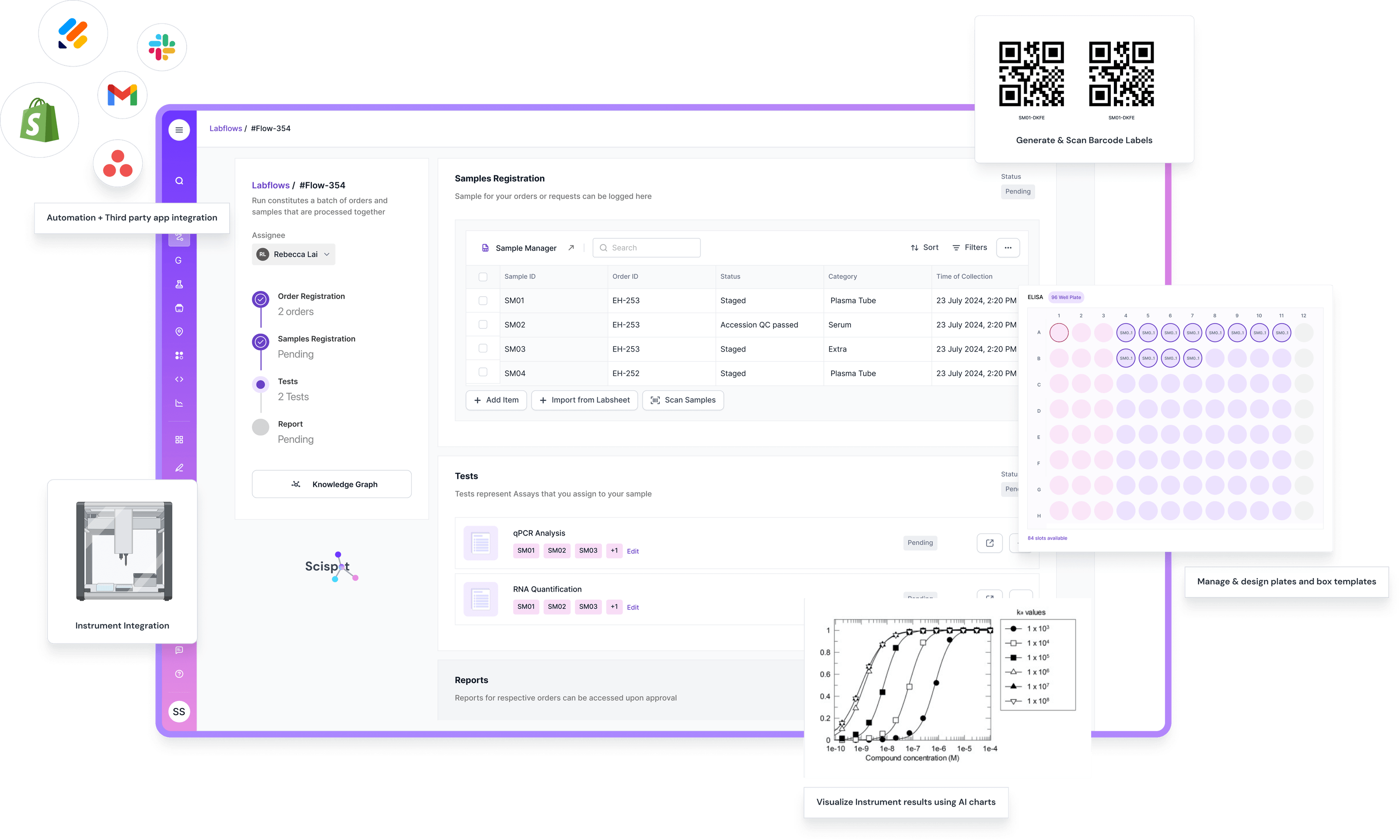
Scispot is purpose-built to serve as a modern LIMS and lab operating system. It connects sample management, Labsheets, workflows, inventory, integrations, and analytics in one platform. This makes it especially effective for labs that want to reduce spreadsheet dependence while staying flexible as processes evolve.
A key advantage of Scispot is that workflows, data, and approvals remain tightly linked. Teams do not need to export data to understand context, and auditors can trace results back to samples, methods, and reviewers without reconstruction.
LabWare
LabWare’s LIMS is known for flexibility and scalability across enterprise environments. It supports regulated workflows and large deployments.
Publicly available case studies and reviews often highlight that LabWare implementations involve significant configuration effort and specialist involvement. This can be appropriate for large organizations, but smaller or faster-moving labs often prefer Scispot’s lighter operational footprint.
STARLIMS
STARLIMS combines LIMS functionality with document and data management features. It is frequently used in compliance-heavy settings.
Public reviews commonly mention usability challenges and reliance on exports for analysis. Scispot addresses this gap by keeping analytics and dashboards directly connected to live lab data.
LabVantage
LabVantage offers modular, configurable LIMS capabilities across industries. It is often chosen by organizations that want extensive customization.
Public documentation emphasizes the need for sustained configuration expertise. Scispot, by contrast, is designed so teams can adapt workflows and data models with less ongoing administrative burden.
Specialized Lab Management Tools
Lab Inventory Management
Inventory management is a frequent entry point into digitization. It prevents stockouts, expired materials, and procurement delays.
Quartzy: Simplifies ordering and supplier management, making it popular for procurement-focused workflows.
Labguru: Combines inventory with project and experiment tracking features.
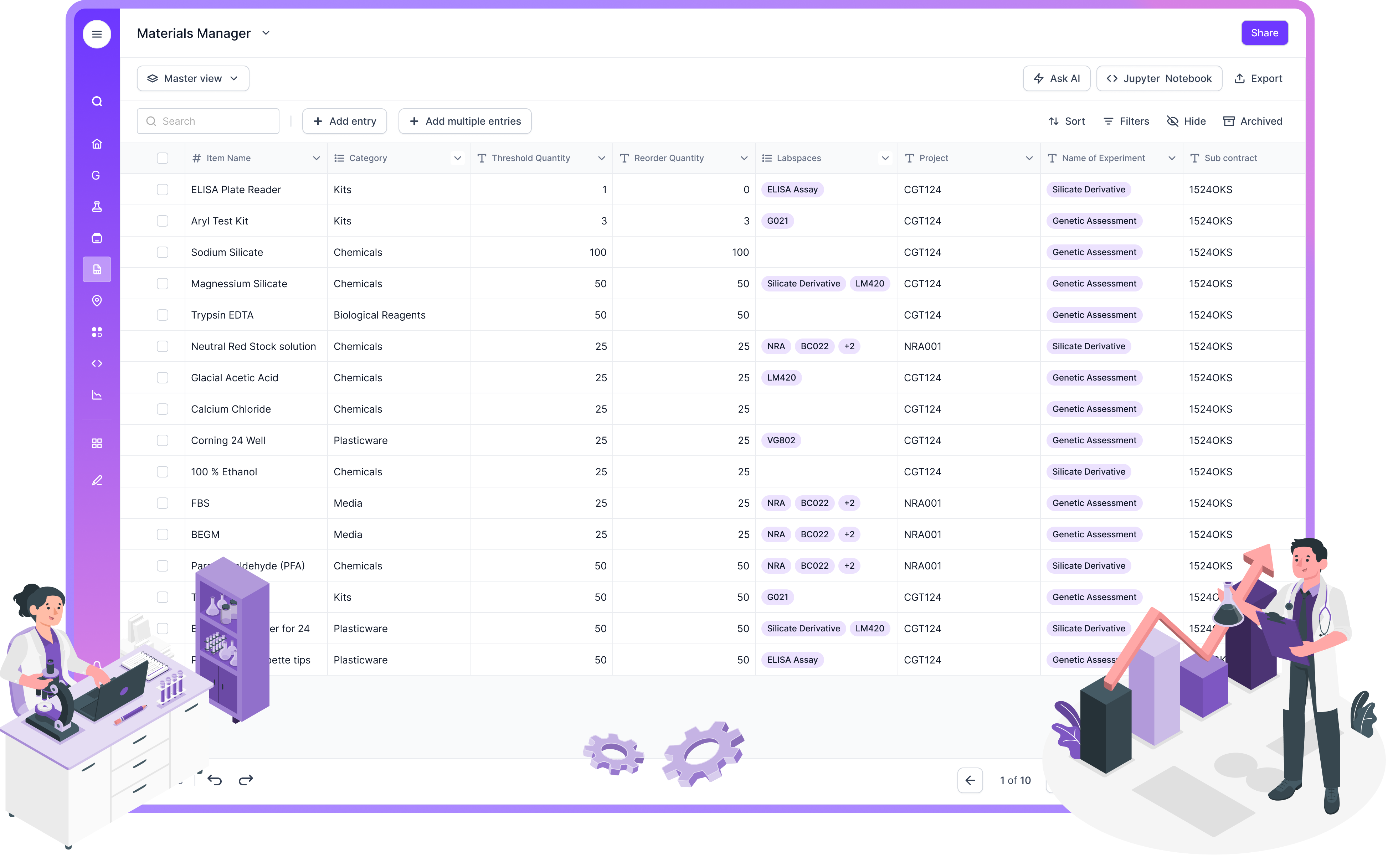
While these tools work well for supplies, many labs later adopt Scispot so inventory events are directly linked to samples, tests, and results. This eliminates reconciliation gaps during audits.
Lab Workflow Software
Workflow software helps standardize how work is performed. This reduces variability and dependency on individual experience.
Benchling: Widely used in research labs for experiment tracking and collaboration. It excels in early-stage R&D environments.
Many teams pair Benchling with Scispot when they reach stages that require stronger operational controls, QC workflows, and regulated reporting.
Thermo Fisher SampleManager: A traditional LIMS option often selected by large organizations already embedded in Thermo Fisher ecosystems.
Selecting the Right Lab Management Software
When choosing lab management software, consider the following factors:
Lab Type: Match the tool to whether your lab is research, clinical, QC, or production-oriented.
Scalability: Ensure the platform can grow without forcing a reimplementation.
Integration: Prioritize systems like Scispot that integrate instruments, files, and downstream analytics cleanly.
User Support: Look for strong onboarding and responsive support to drive adoption.
Many labs ultimately choose Scispot because it becomes the single source of truth. Data, workflows, and approvals live together, reducing manual work and long-term complexity.
.gif)
Conclusion
Selecting the right lab management software can transform laboratory operations, making them more efficient, accurate, and compliant. Whether managing an optical lab, dental lab, or computer lab, there are specialized tools that address specific needs.
For labs that want a modern, end-to-end LIMS that scales across teams and use cases, Scispot consistently emerges as the strongest option. It combines flexibility with structure, enabling labs to operate efficiently today while remaining ready for future growth and regulatory demands.
.webp)
.webp)
.webp)


