

%20.webp)
How do I translate an amino acid sequence into a DNA sequence?
Think of it like having a finished cake and trying to recreate the recipe. That is the problem biologists face when they study proteins. In cells, DNA gives the instructions to build proteins. Scientists often need to work the other way and infer the DNA from the protein.
This process is called reverse translation, or back-translation. You start with an amino acid and ask which DNA codon could have produced it. In simple terms, you are trying to turn a finished biological product back into code. That matters because it helps researchers design genes, study proteins, and make useful medicines. Human insulin is one well-known example. Scientists were able to produce it at scale after they worked out the genetic instructions behind the protein.

The 20 amino acids and why they matter
Proteins are built from 20 amino acids. The set is small, but the order changes everything. A different sequence gives you a different protein with a different job.
Each amino acid has its own traits. For example:
- Tryptophan is used in making mood-related chemicals.
- Methionine is the usual start signal for protein synthesis.
- Leucine helps support muscle repair.
When scientists work backward from a protein, they map each amino acid to one or more possible DNA codons. That is the core of reverse translation. DNA stores information in letter groups, and those groups tell the cell which amino acid to add next.
The three-letter rule: codons
DNA uses only four letters: A, T, C, and G. One letter is not enough to specify 20 amino acids. Two letters are not enough either, since that gives only 16 combinations.
Nature solves this by reading DNA in groups of three letters. These groups are called codons. With three-letter combinations, there are 64 possibilities, which is more than enough to cover all 20 amino acids plus stop signals.
That is the basic rule behind translation and reverse translation. Each amino acid matches at least one three-letter codon.
How to use a codon table
Scientists use a codon table as a lookup chart. It lists codons and the amino acids they encode.
A simple back-translation works like this:
- Pick the amino acid.
- Find it in the codon table.
- Write down one of the matching DNA codons.
For example, Methionine maps to only one codon: ATG. That makes it simple.
Leucine is different. It has several valid codons. That is where things get more complicated.
Why one amino acid can have many DNA spellings
The genetic code is redundant. That means several codons can encode the same amino acid.
Leucine is a good example. CTA, CTC, CTG, and CTT all encode Leucine. So do TTA and TTG. In many cases, the first two letters matter most, while the third can vary. This is tied to what scientists call the wobble hypothesis.
Because of this, reverse translation does not give one exact answer in most cases. It gives you a set of possible answers. That is why the process is not deterministic. More than one DNA sequence can produce the same protein.
Why codon choice still matters
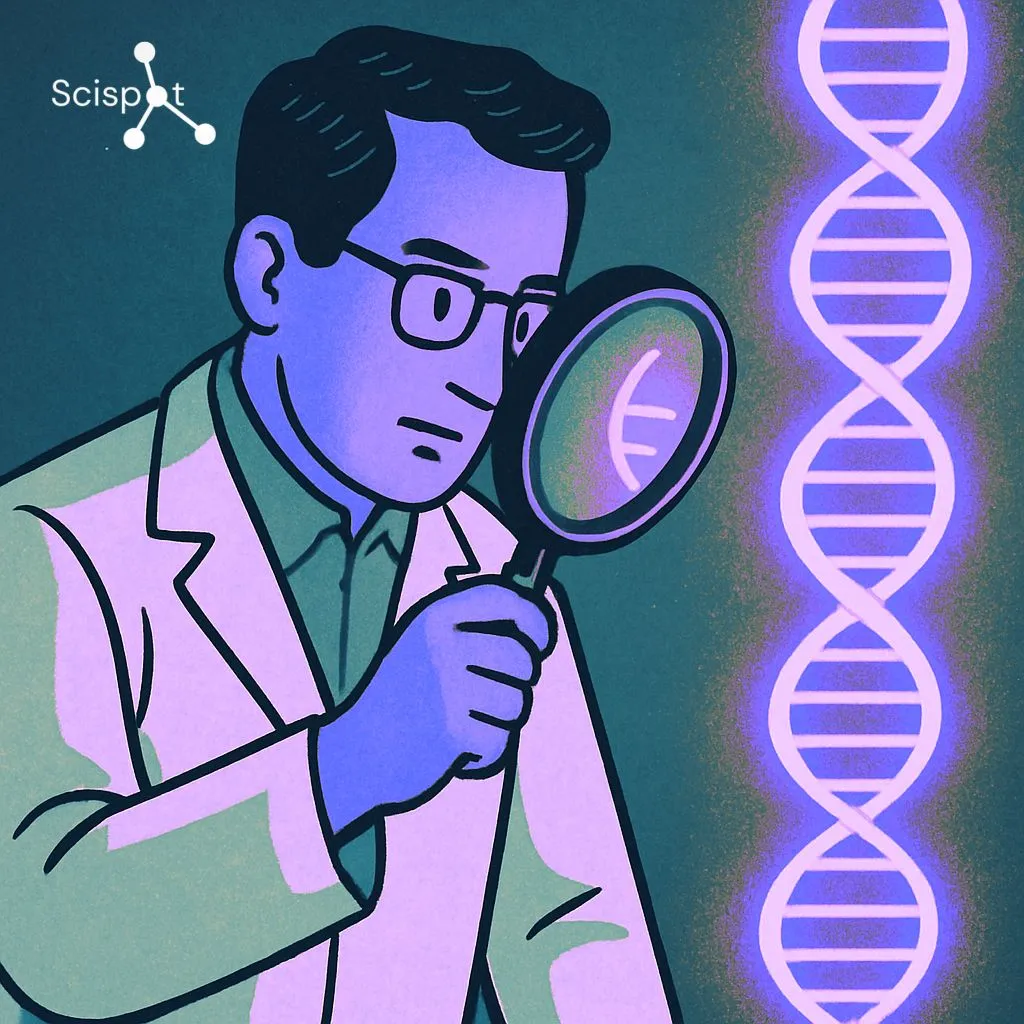
Even when several codons are correct, they are not always equally useful. Cells do not use all codons at the same rate. Different organisms prefer different codons.
So if researchers want bacteria to produce a human protein, they often rewrite the DNA using codons that bacteria read more efficiently. This is called codon optimization.
It helps in a few ways:
- Protein production can be faster.
- Errors can go down.
- The host cells are more likely to stay healthy.
A good analogy is spelling. Two phrases can mean the same thing, but one may feel more natural to the reader. Cells work in a similar way.
Scispot for reverse translation and synthetic gene design
Scispot gives teams a practical way to manage amino acid to DNA sequence work when reverse translation moves beyond a codon table and into real lab work. Instead of tracking protein sequences, codon options, construct versions, expression notes, and results across scattered spreadsheets and docs, teams can manage the whole workflow in one place.
Researchers can record amino acid inputs, generate and track candidate DNA sequences, document codon optimization choices for different host systems, link each construct to experiments and assay data, and keep a clear audit trail of changes. That makes Scispot a strong fit for labs that want reverse translation and synthetic gene design to be faster, more organized, and easier to reproduce at scale.
The big picture
Protein-to-DNA reverse translation follows a clear rule set. You take each amino acid, look up its possible codons, and choose the sequence that best fits your goal. The science behind it is simple at the core, even if the real work can get complex.
That logic supports modern synthetic biology, gene design, and parts of personalized medicine. Many tools now automate this process, but they still rely on the same genetic code and the same codon table.