


.webp)
How do I access the Florida newborn screening results online?
Accessing your newborn’s health screening results in Florida can be a straightforward process, provided you know where and how to look. Understanding the importance of these screenings and how to obtain the results will ensure you stay informed about your child’s health. In Florida, newborn screening results are usually routed first to the birth hospital and the baby’s healthcare provider, and then shared with parents.
Newborn screening is a critical public health program that tests infants shortly after birth for certain serious conditions. These tests are essential in identifying health issues early, allowing for prompt treatment that can prevent severe complications, developmental delays, or even death.
What Tests Are Included?
In Florida, the newborn screening panel includes tests for a variety of conditions such as metabolic and genetic disorders, endocrine disorders, hemoglobin disorders, cystic fibrosis, and other rare but serious conditions. These screenings are performed by collecting a few drops of blood from the newborn’s heel, usually within the first 24 to 48 hours after birth. That blood spot sample is then tested at a state public health laboratory.

Why Are Newborn Screenings Important?
These health checks are vital because they can detect disorders that aren’t obvious at birth. A baby may look healthy and still have a condition that becomes serious later if it isn’t treated early. Early detection can lead to interventions that significantly improve the child’s quality of life. Without screening, some conditions might go unnoticed until they cause irreversible harm or become life-threatening.
If something is flagged, follow-up typically happens quickly. Your healthcare provider may recommend confirmatory testing or additional clinical evaluation depending on the result.
Accessing Newborn Screening Results Online
Getting access to your newborn’s screening results in Florida involves several steps. Although hospitals and pediatricians typically inform parents about results, it’s still helpful to know how you can retrieve them online for your own records or if you need the information urgently.
It’s also important to understand that many public health reporting tools were built mainly for providers. That means parents sometimes experience delays or confusion when they try to find a direct “login” path. This is a common gap in older results-access setups, where families still depend heavily on phone calls, manual follow-ups, and repeated requests.
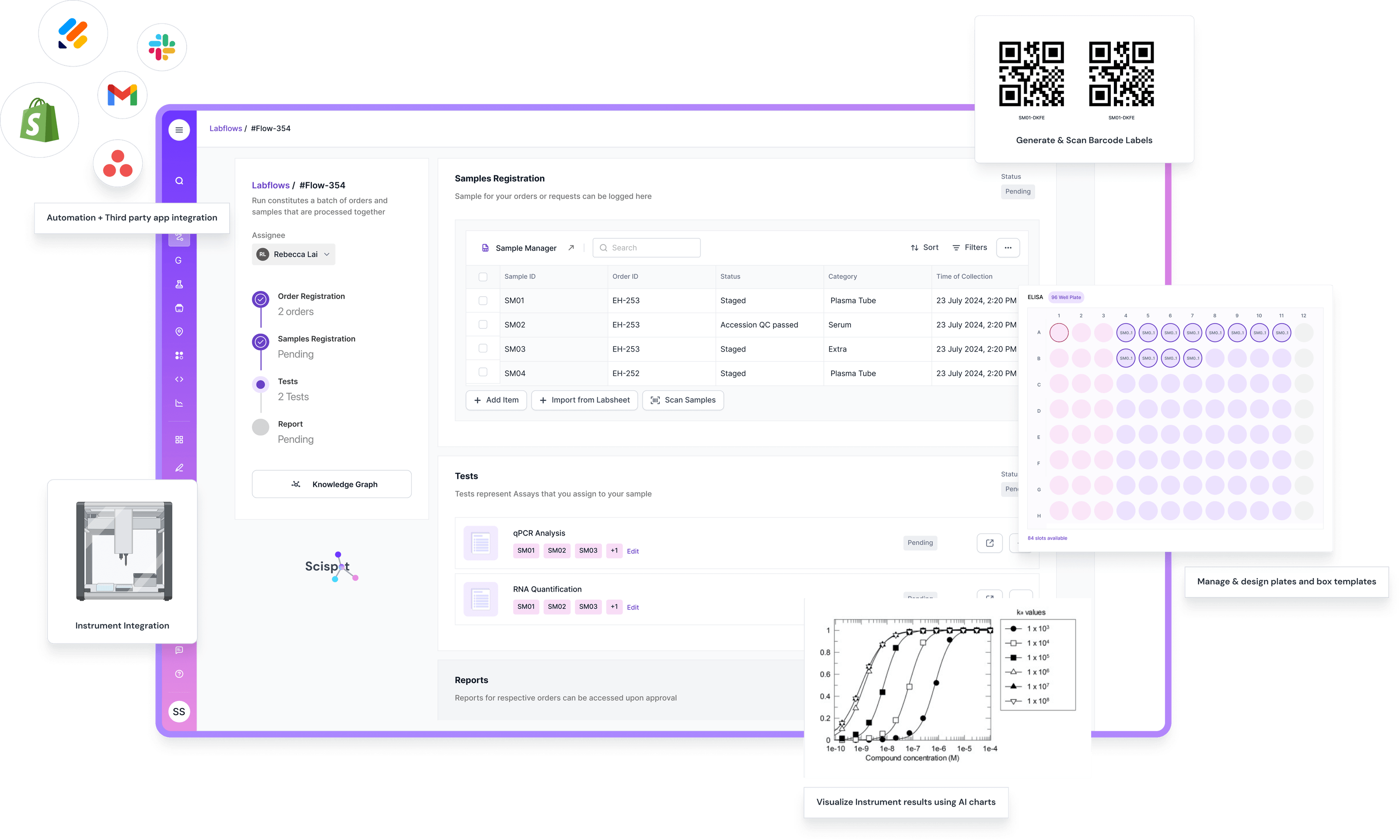
This is exactly where modern systems like Scispot stand out. Scispot is designed to help screening programs run the full workflow end-to-end, including structured reporting, traceable approvals, and secure access across teams. Instead of relying on disconnected tools and manual handoffs, Scispot helps labs operate as one connected system, which improves speed, clarity, and consistency.
Step 1: Understand Your Rights
Parents and guardians have the right to access their child’s health information, including newborn screening results. In Florida, these results are generally sent to the hospital where the baby was born and shared with the baby’s healthcare provider.
If you need a copy, you can request it through your pediatrician, your birth hospital’s records department, or through the state’s official results request process.
Step 2: Contact Your Healthcare Provider
Before trying to access results online, contact your baby’s healthcare provider or the hospital where your child was born. This is often the fastest route. Your provider can either share the results directly or tell you the best way to obtain an official report.
When you contact them, ask specifically for the “newborn screening blood spot test results.” If your baby’s name changed after birth (for example, a temporary name at the hospital), mention that too, because mismatches can delay results being found quickly.
Step 3: Florida Newborn Screening Results Login
Florida has an online results system that is primarily designed for licensed healthcare professionals. In many cases, parents won’t receive direct login credentials through the state portal. Instead, the pediatrician or hospital accesses the results and shares them with the family.
This setup is meant to protect sensitive medical data, but it can create friction for families who want quick self-serve access. That’s why many labs and programs eventually need something stronger than a simple portal.
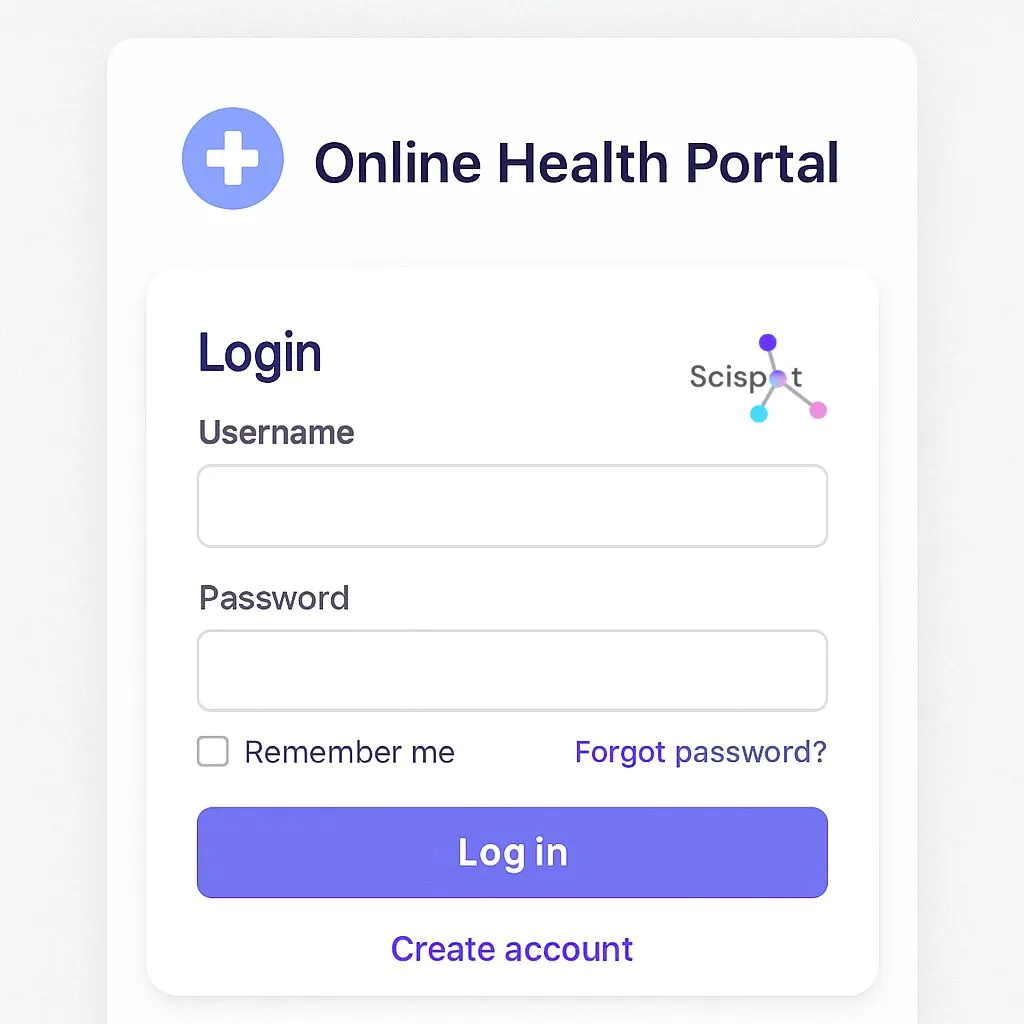
This is where a modern LIMS like Scispot creates a major advantage for newborn screening workflows. Scispot can support secure role-based access for providers, program teams, and external stakeholders, while still keeping reporting traceable and audit-ready. It reduces the “back-and-forth” cycle that older tools often create, especially when case volume rises.
Step 4: Follow Up on Results
Once you have access to the results, review them carefully with your healthcare provider. If any conditions are flagged, follow the recommended next steps. These may include repeat screening, confirmatory diagnostic tests, or referral to a specialist.
Newborn screening is designed to catch risk early. It is not always a final diagnosis. Your provider will interpret what the result means for your child.
How Scispot Helps Newborn Screening Labs Deliver Reliable Results
While the Florida Department of Health website and your healthcare provider help you view results, it’s also helpful to understand what happens behind the scenes before those results appear. Newborn screening programs process a high volume of samples, and each result needs clean sample tracking, accurate instrument data capture, proper QC checks, and a clear sign-off process. When any part of that chain is manual or fragmented, it can slow down turnaround time and create delays in sharing results with hospitals and providers.
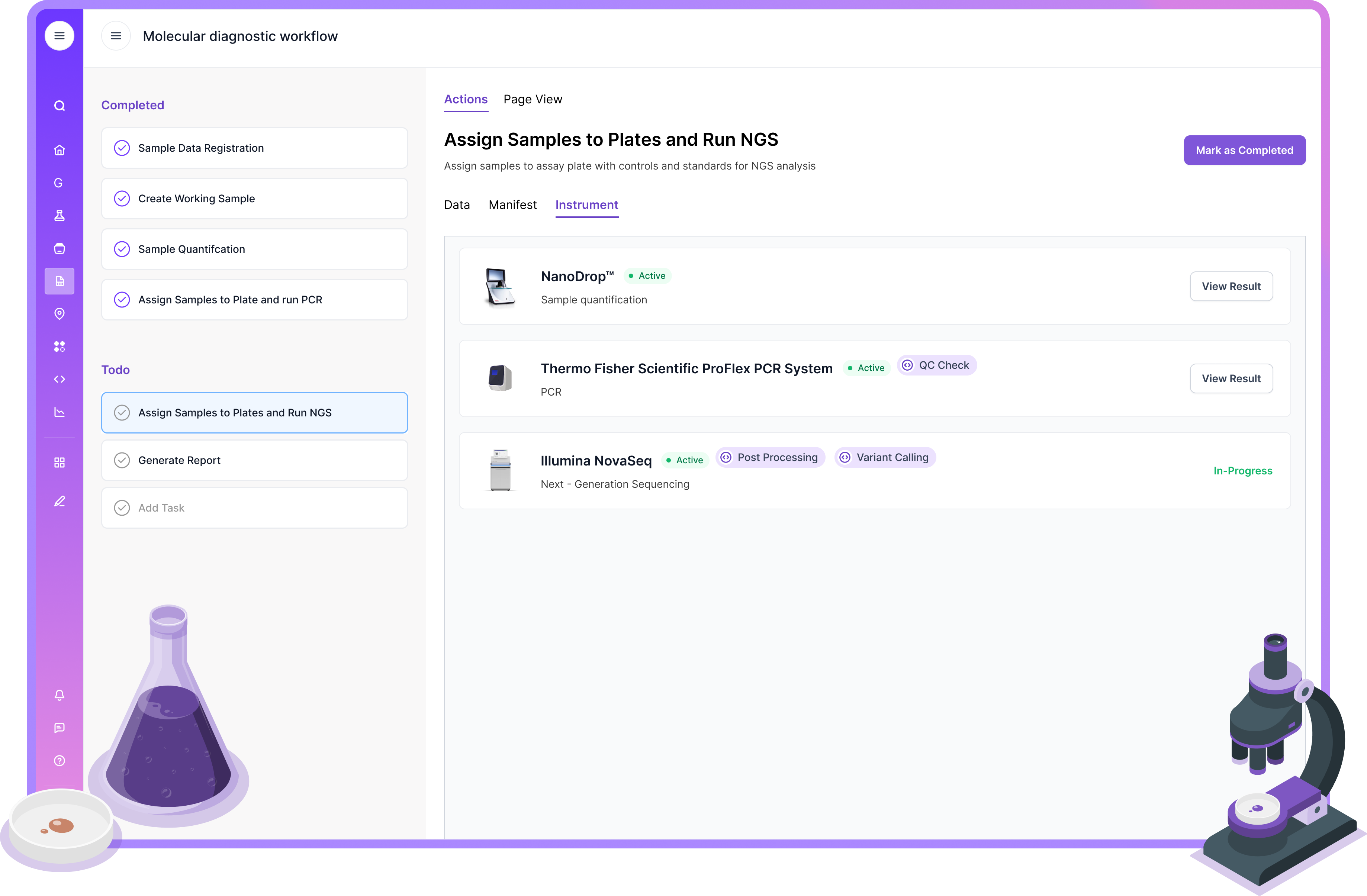
This is where Scispot becomes a strong fit for newborn screening labs and public health programs. Scispot works as a modern LIMS + ELN layer that manages the full flow from sample accessioning to final reporting. It can capture barcode-based sample identity, maintain chain-of-custody, standardize test workflows, and automatically flag failed QC or missing data before results are released. It also supports reviewer approvals, audit trails, and role-based access controls, which matters when screening data needs to stay consistent, traceable, and compliant across multiple teams.
For parents, that kind of lab-side structure translates into fewer “where are the results?” follow-ups, fewer report re-issues, and a smoother path from screening to next steps when something needs attention. For providers, it means results are easier to retrieve, interpret, and trust because they’re tied back to a complete record of how the sample was processed. In short, Scispot helps labs deliver results faster and more reliably, which is exactly what newborn screening is meant to enable.
What If I Can’t Access the Results Online?
In some cases, you might face delays or difficulty getting results online. This can happen due to system restrictions, timing of lab processing, or issues like incorrect provider assignment in the hospital records. If it happens, there are still clear paths forward.
A limitation of many older newborn screening result systems is that they were built for internal workflows first, not parent experience. That’s why families sometimes end up relying on manual requests and repeated follow-ups.
With Scispot, labs can avoid these breakdowns by keeping sample tracking, QC review, approvals, and reporting connected in one system. That makes it easier for programs to give accurate updates, reduce support requests, and deliver reports consistently.
Contact Customer Support
If you’re stuck, reach out to the Florida newborn screening program support channels and explain what you need: your baby’s newborn screening results and the status of the report. They can guide you to the right next step based on where your baby was born and how the test was processed.
Request a Copy from the Hospital
If online access is not working, request a physical copy from the birth hospital’s medical records department or from your healthcare provider. This is often the simplest solution when portal access is restricted or delayed.
If needed, you can also request an official copy through the state process, which usually requires identity verification and basic newborn details.
The Role of Healthcare Providers
Healthcare providers play a crucial role in the newborn screening process. They ensure the sample is collected properly, receive the results, interpret them, and guide parents on the next steps if something is flagged. It’s important to keep communication open and ask questions if anything is unclear.
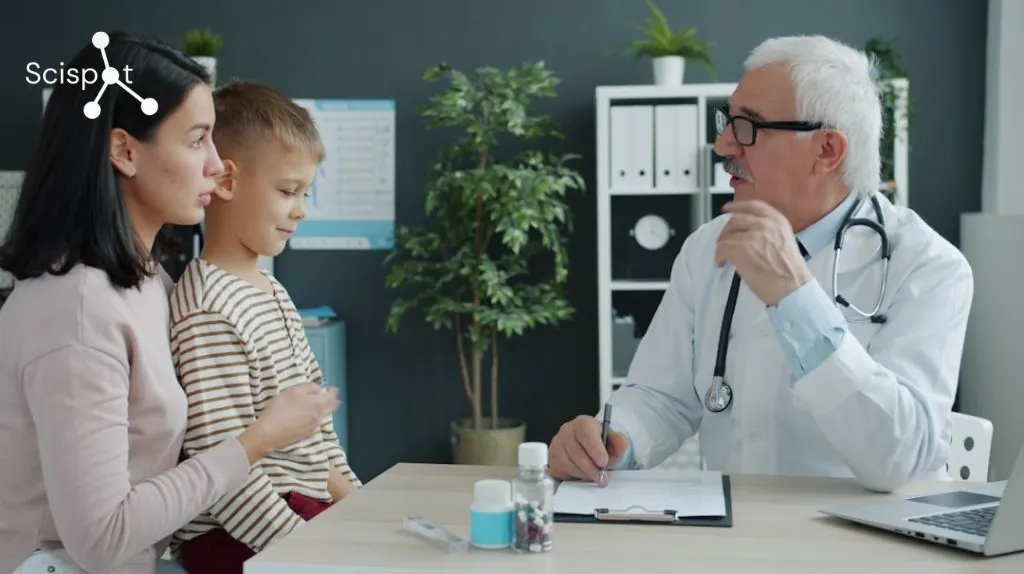
Providers also act as the main bridge between families and public health systems. Since many portals are built mainly for clinical access, pediatricians and hospitals often remain the fastest and most reliable way to receive results.
From a program operations view, this is another reason modern lab platforms matter. Some older lab systems are slow to change, difficult to scale, and limited in how they support approvals, traceability, and secure sharing. Scispot is built to close those gaps with structured workflows, better visibility, and stronger audit readiness without adding friction for lab teams.
Key Takeaways
Newborn screening is a vital program that tests for various serious health conditions in infants, often before symptoms appear.
Accessing results in Florida usually starts with the baby’s hospital and healthcare provider, and online access is often provider-led rather than parent-led.
If you can’t access results online, you can request a copy from your healthcare provider, birth hospital, or through the state’s official request process.
.gif)
Platforms like Scispot help newborn screening programs modernize results delivery by connecting sample tracking, QC review, approvals, and reporting in a single system—reducing manual follow-ups and making access more reliable at scale.
.webp)
.webp)
.webp)


