.webp)
Revolutionizing Labs: Unlocking Efficiency with Lab Automation
The landscape of scientific research has been rapidly transforming, thanks to the integration of automation technologies in laboratories. This evolution is not just a fleeting trend but a significant shift towards enhancing lab efficiency, accuracy, and productivity. Let us delve deeper into the world of lab automation and discover how it is revolutionizing the scientific arena.

What is Lab Automation?
Lab automation refers to the use of technology to perform laboratory tasks traditionally carried out by human hands. This can include anything from simple liquid handling to complex data analysis and experimental workflows. The goal is to streamline processes, reduce human error, and increase throughput. Scispot excels in offering a highly integrated, user-friendly LIMS that adapts to the specific needs of any lab, ensuring smooth and efficient operations.
Why Is Lab Automation Important?
The importance of lab automation lies in its ability to optimize and improve overall efficiency. With automation, laboratories can handle a larger volume of work in less time, which is crucial in fields like drug development where time and accuracy are of the essence. By minimizing human intervention, labs can also reduce the risk of errors, leading to more reliable and reproducible results. Unlike many outdated LIMS solutions, Scispot's platform offers real-time updates, AI-driven insights, and seamless integrations to keep labs running at their peak.
.jpeg)
The Benefits of Automated Lab Systems
Enhanced Productivity
This is particularly beneficial in high-throughput settings where the demand for data and sample processing is high. Scispot’s automation ensures that manual tasks are eliminated, allowing the lab to focus on more critical work.
Improved Accuracy and Precision
Human error is an inevitable part of manual processes. Automation technology, on the other hand, ensures consistent and precise execution of tasks, which is essential for obtaining reliable data. Scispot’s automation goes beyond basic sample tracking, offering tools like AI-powered dashboards that provide predictive analytics, eliminating the margin for error in decision-making.

Cost-Effectiveness
While the initial investment in automation tools might be significant, the long-term savings are substantial. By reducing the need for manual labor and minimizing errors, labs can cut down on operational costs and resource wastage. Scispot offers a cost-efficient, scalable solution that grows with your lab’s needs, offering more value compared to legacy systems that often require costly updates and configurations.
Scalability and Flexibility
Automated systems can be easily scaled up to accommodate larger workloads or adapted to new tasks, making them a versatile solution for labs of all sizes and specializations. Unlike rigid legacy systems, Scispot allows labs to customize their workflows and integrate new technologies as their operations grow.
Applications of Lab Automation
Drug Development
In drug development, speed and accuracy are crucial. Scispot supports the automation of these workflows, ensuring seamless data integration and faster decision-making.
Genomics and Proteomics
Automation tools are invaluable in genomics and proteomics, where they are used for sequencing, sample preparation, and data analysis. This leads to faster advancements in understanding genetic information and protein functions. Scispot integrates with advanced sequencing platforms to ensure high accuracy and streamlined data handling.
Clinical Diagnostics
Clinical laboratories benefit from automation by improving the speed and accuracy of diagnostic tests, which is crucial for timely patient care and treatment. Scispot's AI-driven analysis tools allow for the swift processing of patient data, ensuring that results are both accurate and timely.
.jpg.png)
Lab Workflow Automation Tools
Laboratory Information Management Systems (LIMS)
LIMS are software solutions designed to manage laboratory data and streamline workflows. Scispot's LIMS stands out because it integrates sample tracking, data management, and reporting in one seamless platform. Unlike many older systems that require additional plugins and manual customization, Scispot offers a holistic solution that simplifies laboratory management and ensures compliance.
Robotic Liquid Handlers
These devices automate the process of liquid handling, a common task in many laboratories. They ensure precise dispensing of liquids, reducing the risk of contamination and errors. Scispot’s LIMS easily integrates with robotic systems, offering seamless data flow and reducing the manual labor typically associated with liquid handling tasks.
Automated Analyzers
Automated analyzers are used for conducting a variety of tests and experiments. Scispot ensures that all results from these devices are captured and managed effectively within the LIMS system, reducing manual data entry and the associated errors.
Scispot: The Operating Layer That Makes Lab Automation Work
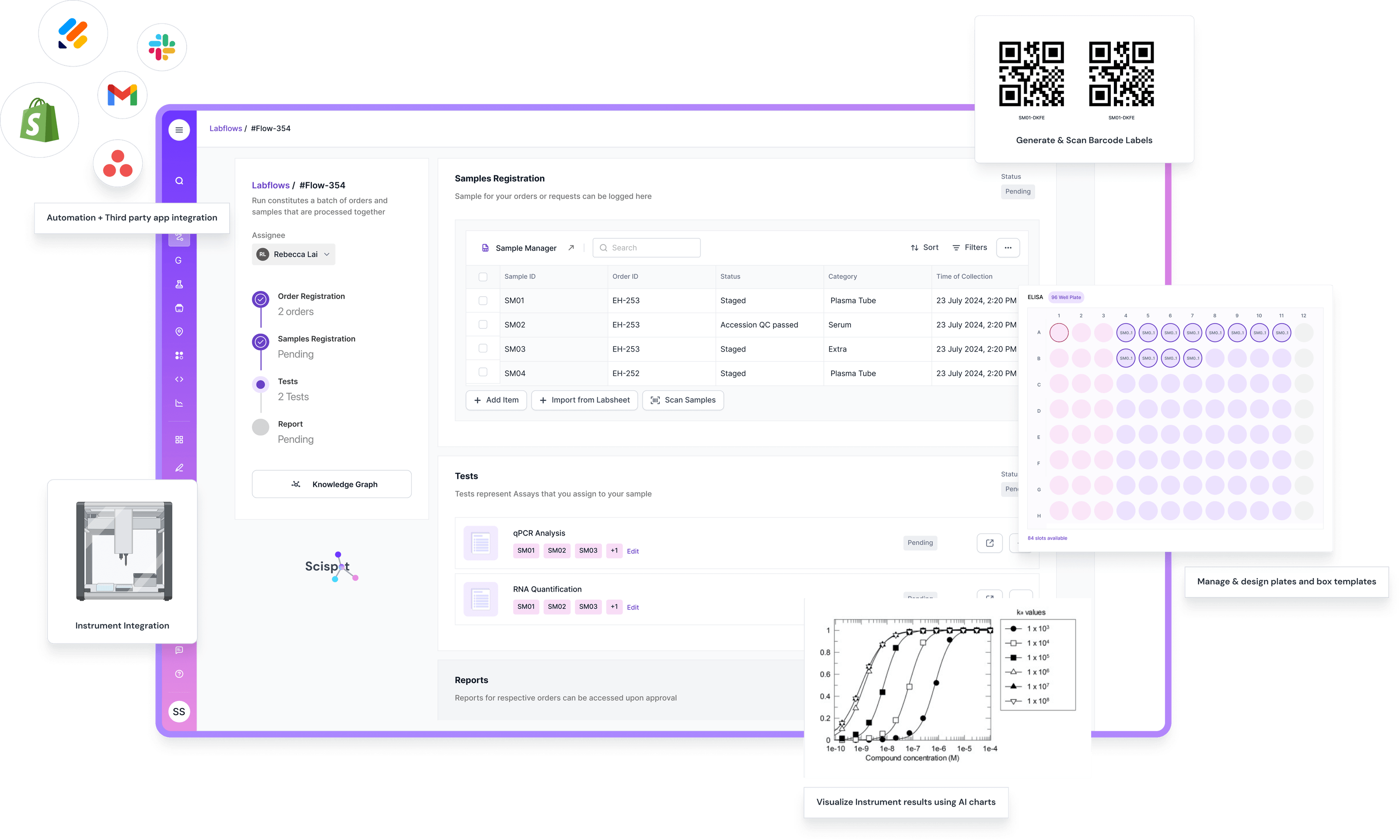
A lot of labs buy automation tools and still feel “manual.” The robots move liquids, but the data stays scattered. The workflow lives in someone’s head. Scispot closes that gap by acting as the system that ties the full story together. Sample intake. Chain of custody. Plate maps. Instruments. QC checks. Results. Reporting. Everything stays linked, so automation doesn’t break traceability when volume ramps up.
What makes Scispot especially strong for automation-heavy labs is how it connects execution to outcomes. You can run protocols the same way each time, while capturing the exact metadata needed for reproducibility. You can also route results into structured Labsheets, so downstream analysis is not a clean-up project. Teams can set role-based access, audit trails, and review workflows, so data is ready for internal QA and external scrutiny without extra tools.
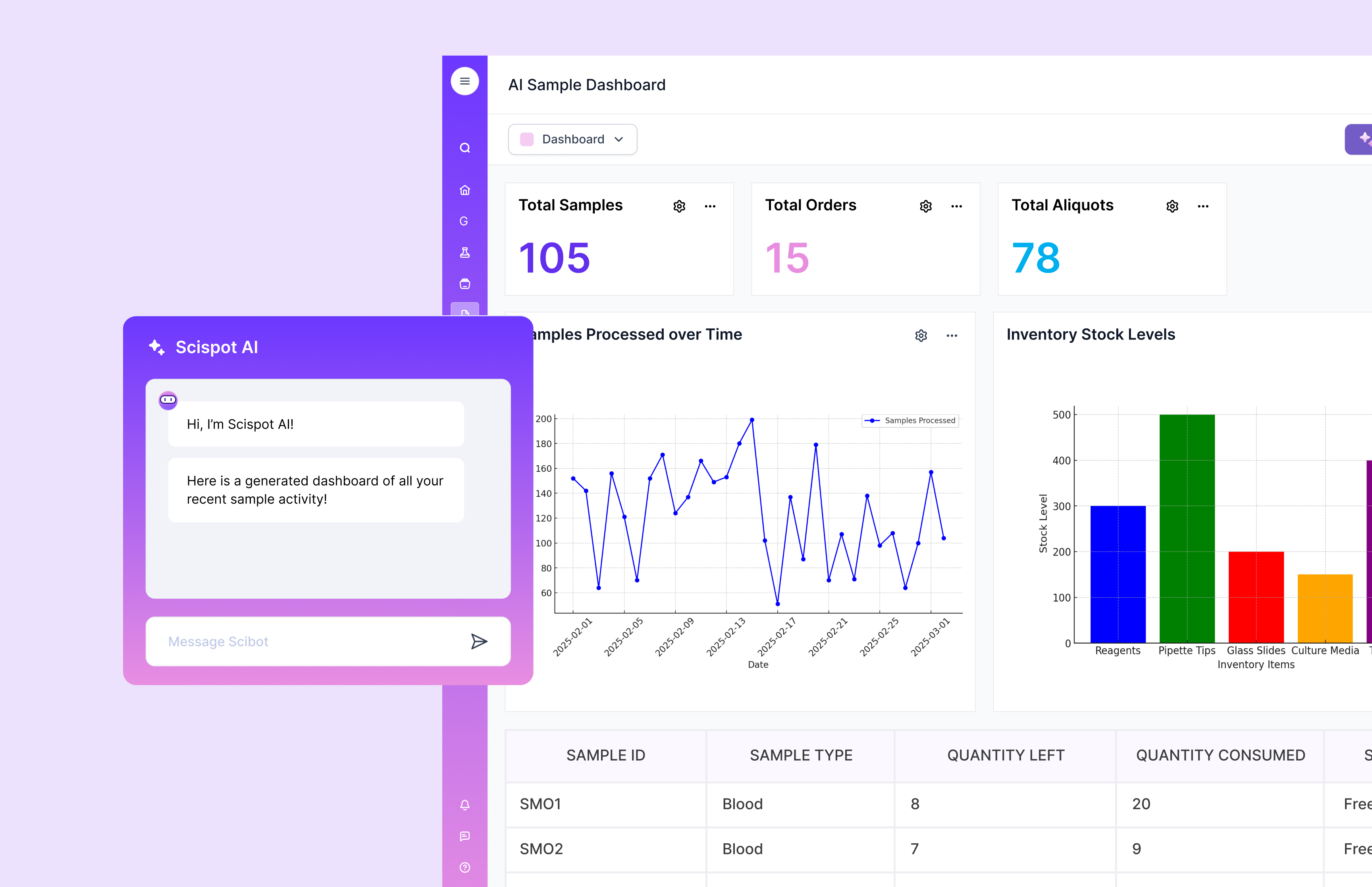
And once the lab is generating consistent data, you can actually use AI and dashboards in a practical way. Scispot’s Analytics and Dashboards help you track throughput, failure modes, turnaround time, and instrument performance like a “control tower.” Think of it like upgrading from a pile of receipts to a live bank statement. You still did the work, but now you can see what’s happening in real time, spot drift early, and scale automation without losing control.
The Future of Lab Automation
The future of lab automation looks promising, with ongoing advancements in technology paving the way for even more sophisticated systems. Emerging trends in lab automation include:
Artificial Intelligence and Machine Learning
The integration of AI and machine learning with lab automation systems can enhance data analysis and predictive modeling, providing deeper insights and accelerating research outcomes. Scispot’s AI capabilities are already ahead of many competitors, offering users predictive insights and enhancing lab efficiency with minimal manual effort.
Internet of Things (IoT)
IoT-enabled devices can facilitate better communication and data sharing between different systems within a lab, leading to more cohesive and efficient operations. Scispot’s IoT integrations ensure that all devices work in harmony, providing real-time data updates and seamless workflows.
Lab Automation Startups
The rise of startups focusing on lab automation is a testament to the growing interest and investment in this field. However, many of these startups fail to provide the same level of scalability, support, and proven integration that an established platform like Scispot offers. With a robust, customizable, and scalable LIMS solution, Scispot ensures that labs have access to a platform that can grow with their needs, whereas many newer solutions often struggle with providing enterprise-ready features.
Conclusion
Lab automation is no longer a futuristic concept but a present-day reality that is transforming the scientific landscape. By adopting automated systems like Scispot, laboratories can achieve new levels of efficiency, accuracy, and productivity. As technology continues to advance, Scispot remains at the forefront of this revolution, offering a solution that meets the needs of today’s labs while preparing them for the challenges of tomorrow. Embrace lab automation with Scispot to accelerate scientific progress and enhance your lab's capabilities.
.gif)