

TL;DR
- Types of LIMS software differ by customization, deployment, and the laboratory workflows they support.
- Common models include commercial, custom-built, configurable, and open-source LIMS, alongside cloud, on-premise, and hybrid deployments.
- Industry-specific LIMS support workflows in pharmaceutical, biotechnology, clinical, environmental, and other testing laboratories.
- The right LIMS depends on workflow complexity, integration needs, compliance requirements, scalability, and long-term costs.
Choosing between the different types of LIMS starts with understanding how your laboratory operates. A Laboratory Information Management System (LIMS) manages samples, test data, workflows, and results, helping laboratories replace fragmented spreadsheets and manual processes with structured, traceable records.
Comparing different types of LIMS to find the right fit for your laboratory?
Explore ScispotHowever, not every LIMS works the same way. Some offer ready-made functionality, while others allow extensive customization. Deployment options, industry-specific capabilities, and integration requirements also influence which system will fit your laboratory best.
What Is a LIMS?
A Laboratory Information Management System (LIMS) is software that organizes laboratory samples, associated data, testing workflows, and results throughout their lifecycle.
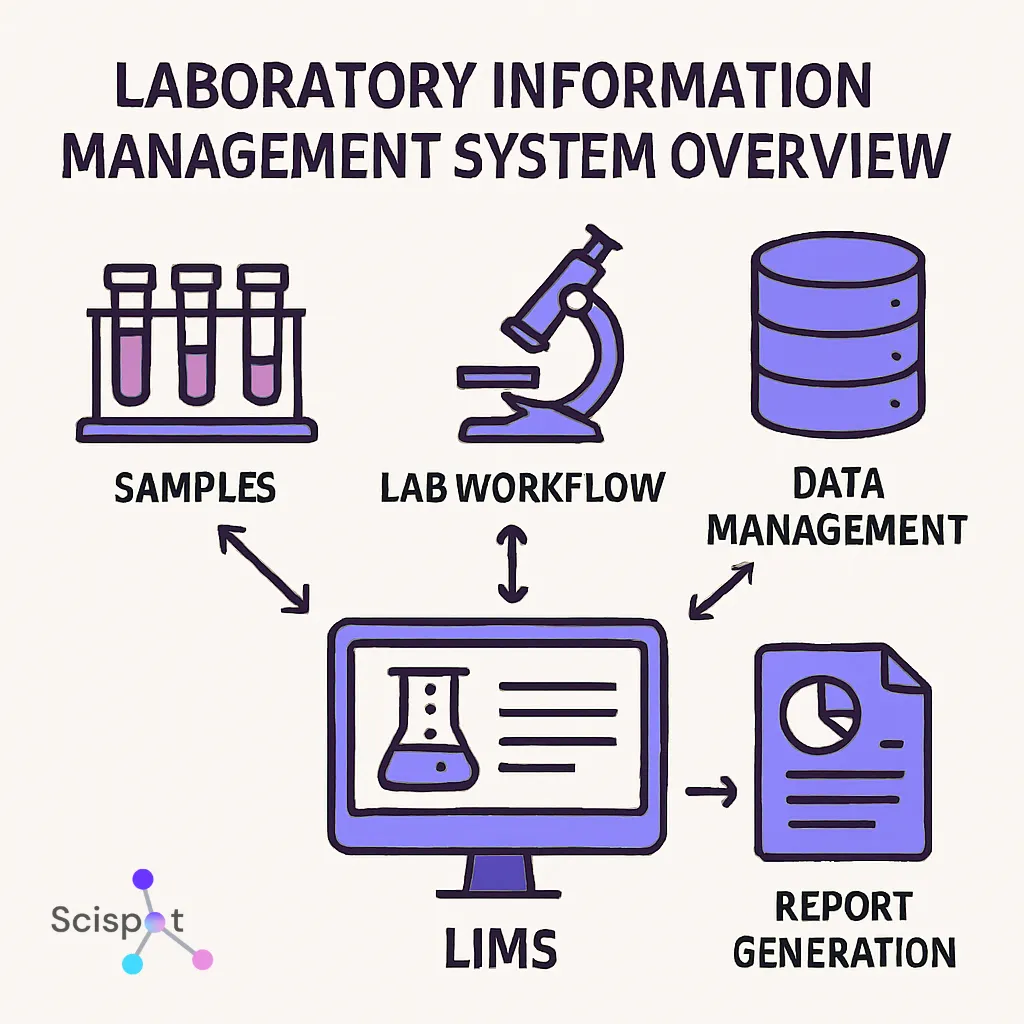
A typical LIMS supports sample registration, tracking, result capture, review, reporting, and record retrieval. Depending on its capabilities, it may also automate routine tasks, connect laboratory instruments, manage inventory, and maintain audit trails.
Understanding the types of LIMS helps laboratories evaluate software based on operational requirements rather than selecting a platform solely by its feature list or reputation.
Main Types of LIMS Software
LIMS platforms can be classified by their licensing model, customization approach, and ownership requirements. The following categories represent common options, although some products combine multiple models.
1. Commercial Off-the-Shelf (COTS) LIMS
Commercial off-the-shelf LIMS are prebuilt software products developed for common laboratory requirements. They typically provide established features for sample tracking, data management, reporting, and workflow control.
Best for: Laboratories that want proven functionality without developing an entire system from scratch.
Trade-offs: Standard functionality can accelerate implementation, but specialized workflows may require vendor-led configuration, additional modules, or custom development. Evaluate implementation costs and how easily the system can accommodate future changes.
2. Custom-Built LIMS
Custom-built LIMS are developed specifically for a laboratory's processes, data structures, and operational requirements.
Best for: Laboratories with highly specialized workflows that existing products cannot adequately support.
Trade-offs: A custom system can offer considerable control, but development, testing, documentation, security, maintenance, and upgrades become ongoing responsibilities. The total cost can extend well beyond the initial build.
3. Configurable LIMS
Configurable LIMS platforms let laboratories adapt fields, workflows, permissions, and reporting without rebuilding the entire application. Depending on the platform, users may configure processes through visual tools, templates, or low-code functionality.
Best for: Growing laboratories that need flexibility as methods, teams, and sample volumes change.
Trade-offs: Configurability reduces dependence on custom development, but complex workflows still require thoughtful design, testing, and governance.
Scispot follows a configurable approach, connecting structured laboratory data with workflows and integrations. Its LIMS software capabilities provide further context for laboratories evaluating this model.
4. Open-Source LIMS
Open-source LIMS make source code available under the terms of their respective licenses. This can give technically capable teams greater control over customization and system development.
Best for: Laboratories with software engineering resources that want direct control over their platform.
Trade-offs: Licensing costs may be low or absent, but implementation, hosting, security updates, maintenance, validation, and support still require resources. Check the project's activity, documentation, and support options before committing.
Outgrowing rigid, off-the-shelf LIMS software as your laboratory requirements evolve?
See Scispot in ActionTypes of LIMS by Deployment Model
Deployment describes where software runs and how users access it. It is a separate consideration from whether a LIMS is commercial, configurable, or open-source.
Cloud-Based LIMS
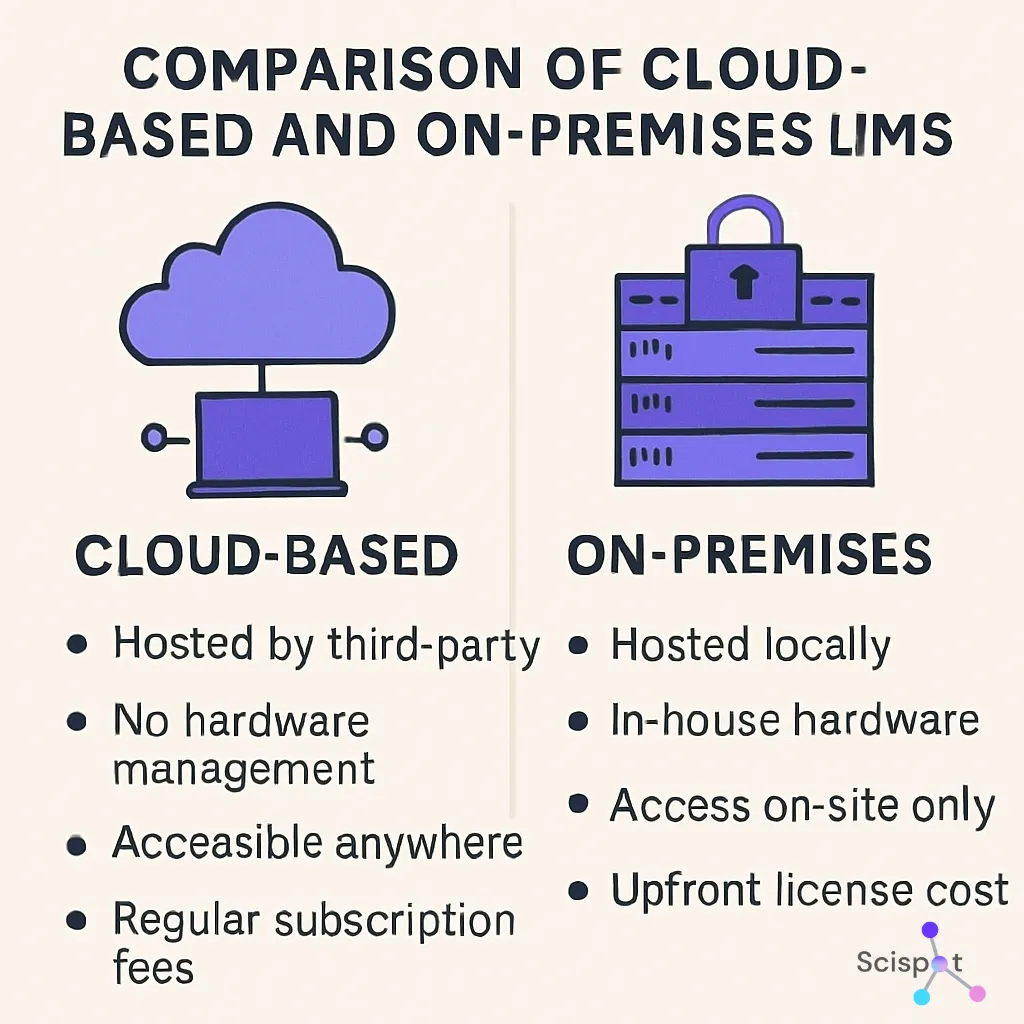
Cloud-based LIMS are hosted on cloud infrastructure and accessed through a network connection, typically using a web browser.
They can simplify infrastructure management, support distributed teams, and make it easier to scale resources as laboratory requirements grow. However, laboratories should assess vendor security practices, data residency, backup procedures, availability, and integration capabilities.
On-Premise LIMS
On-premise LIMS run on infrastructure managed within an organization's own environment or data center.
This approach can suit organizations with specific infrastructure policies, network constraints, or requirements for direct operational control. The trade-off is responsibility for server maintenance, updates, backups, security, and ongoing IT support.
Hybrid LIMS
Hybrid deployments combine cloud services with locally managed infrastructure or systems. For example, a laboratory might retain certain local instrument connections while using cloud-based tools for collaboration and reporting.
Hybrid models can accommodate existing infrastructure, but they may introduce additional integration, security, and maintenance complexity.
Evaluating cloud-based and on-premise LIMS for your laboratory's needs?
Talk to Our TeamTypes of LIMS by Laboratory and Industry
Some LIMS platforms are designed for particular scientific disciplines, while general-purpose systems support multiple laboratory environments through configuration.
- Pharmaceutical and quality control LIMS: Support batch testing, specifications, review workflows, documentation, and quality-related records.
- Biotechnology and research LIMS: Help manage experimental samples, assay data, research workflows, and connections between laboratory activities.
- Clinical and pathology systems: Support specimen processing, diagnostic workflows, and reporting. Patient-centered clinical environments often use a Laboratory Information System (LIS), although LIMS and LIS capabilities can overlap.
- Biobanking LIMS: Manage biospecimen inventories, storage locations, sample relationships, and chain-of-custody records.
- Genomics and molecular diagnostics LIMS: Track samples through complex workflows such as nucleic acid extraction, library preparation, sequencing, and result processing.
- Environmental and food-testing LIMS: Support sample receipt, analytical testing, quality checks, and consistent reporting.
The right fit depends on the actual processes and applicable requirements. A specialized product may offer useful prebuilt workflows, while a configurable platform may be preferable when a laboratory spans multiple disciplines.
Key Features to Compare Across LIMS Types
Regardless of the category, evaluate whether the system supports the following capabilities:
- Sample management: Unique sample identifiers, location tracking, status updates, and sample relationships.
- Workflow automation: Configurable steps, task assignments, notifications, and review processes.
- Instrument and software integration: Reliable data exchange with laboratory instruments, electronic lab notebooks (ELNs), and other systems.
- Reporting and analytics: Searchable records, operational dashboards, and consistent reports.
- Security and traceability: Role-based permissions, audit trails, and appropriate data protection controls.
- Scalability: Support for increasing sample volumes, additional users, new workflows, and multiple sites.
For regulated laboratories, confirm how the software supports relevant requirements, including validation, electronic records, audit trails, and electronic signatures where applicable. A software feature alone does not guarantee regulatory compliance.
Need better traceability across samples, testing workflows, results, and approvals?
See Scispot in ActionHow to Choose the Right Type of LIMS
Use these questions to narrow your options:
- What does your laboratory need?
Document sample types, workflows, testing requirements, reporting outputs, and current bottlenecks. - How much customization is necessary?
Compare standard functionality with configurable workflows and custom development. - Which deployment model fits?
Consider IT resources, security policies, accessibility, and infrastructure requirements. - What integrations are essential?
Verify compatibility with instruments, ELNs, inventory systems, and other tools. - Can the platform scale?
Assess how easily it accommodates new methods, larger sample volumes, and changing processes. - What is the total cost?
Include licensing, implementation, integrations, training, maintenance, support, and future changes.
Conclusion: Choosing the Right Type of LIMS
Choosing the right type of LIMS depends on your laboratory's workflows, customization needs, deployment preferences, and long-term goals. Commercial, custom-built, configurable, and open-source systems each offer different advantages, while cloud, on-premise, and hybrid deployments address different infrastructure requirements.
The best LIMS should do more than track samples. It should connect laboratory data, automate routine processes, support traceability, and adapt as your operations evolve. Before making a decision, evaluate integration capabilities, compliance requirements, usability, scalability, and total cost of ownership.
For laboratories looking for flexibility without building a system from scratch, Scispot is worth evaluating for laboratories seeking configurable workflows and connected laboratory data. Its platform brings structured records, automation, and integrations together to support evolving research and operational needs.