


.webp)
How Does a Clinical Lab Workflow Function?
Clinical labs sit at the center of healthcare decisions. Every test result feeds diagnosis, treatment, and patient outcomes. That makes workflow quality non-negotiable.
A modern clinical lab workflow is no longer a simple sequence. It is a connected system where data, samples, instruments, and people move together. Platforms like Scispot link each step into one traceable flow, instead of leaving labs to juggle separate tools.
Understanding Clinical Lab Workflow
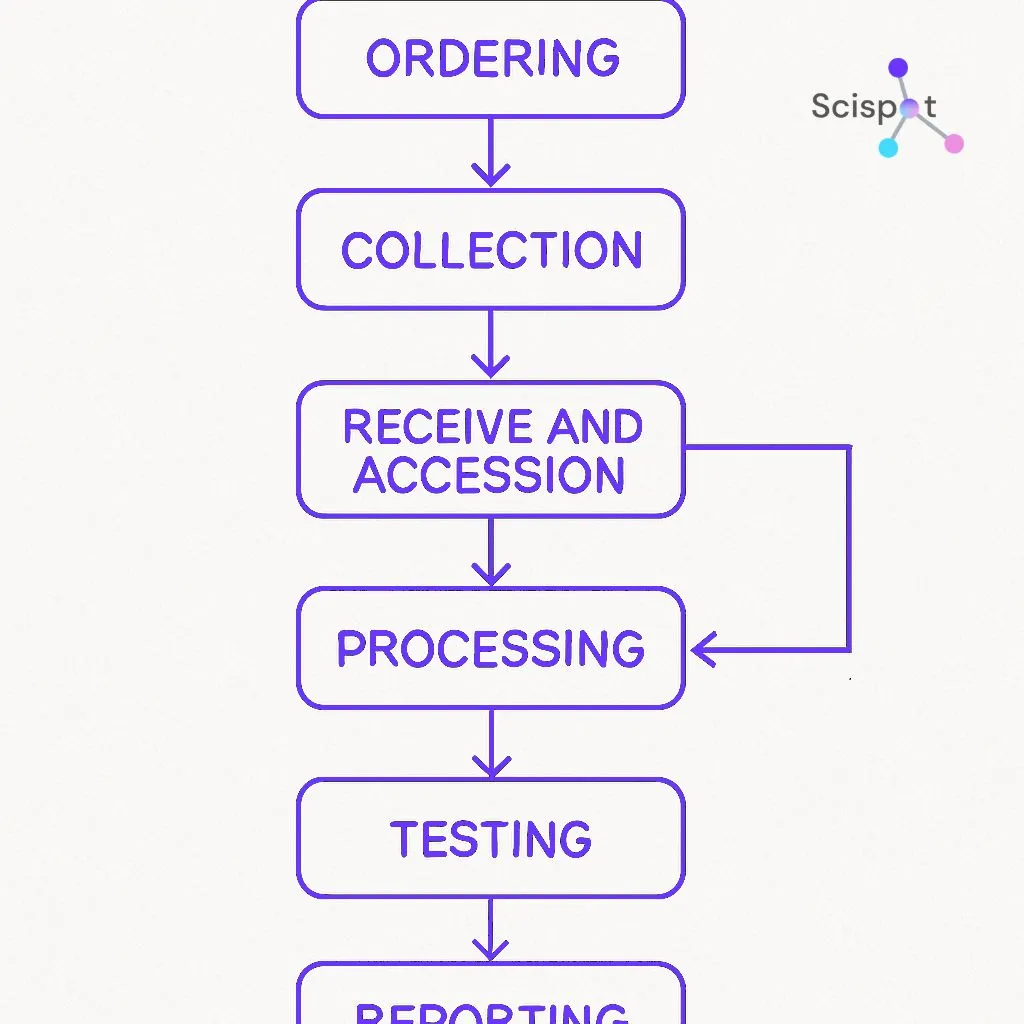
Clinical lab workflows cover the full lifecycle of a test, from specimen collection to final reporting. The steps may look linear, but they depend on each other. A small delay in one step can affect everything that follows.
Core steps include sample collection and labeling, data entry and accessioning, test execution, results analysis, and reporting. Each stage needs clean, structured data passed forward. Any break leads to delays, errors, or rework.
Many systems still handle only parts of this flow well. Labs often rely on spreadsheets, standalone ELNs, and legacy LIMS tools. This split setup is a known source of inefficiency.
Scispot handles this as one system. It connects samples, workflows, instruments, and reports. That removes handoff gaps and keeps the workflow intact.
The Importance of Lab Workflow Efficiency
Efficiency in a clinical lab is not just speed. It is accuracy and consistency under pressure. When workflows are well structured, labs can handle more volume without losing quality.
Strong lab workflow management reduces turnaround time and cuts errors. It also frees staff from repetitive coordination work, so they can focus on critical tasks. This has a direct effect on operations and patient outcomes.
Many labs try to improve by adding more tools. Industry comparisons often show this adds complexity instead of fixing the core problem.
Scispot improves efficiency at the system level. It automates step transitions, enforces structured data, and keeps workflows audit-ready. The result is a smoother, more predictable operation.
Key Challenges in Clinical Lab Processes
Clinical labs deal with constant pressure on workflow. High sample volume is a common issue. As volume grows, manual steps break down, especially during accessioning and processing.
Fragmented data systems are another problem. Many labs still use disconnected tools, which leads to duplication and delays. Reviews of legacy LIMS often point to rigid design and weak integrations as root causes.
Communication gaps add to this. When systems do not sync, teams rely on manual updates. That slows decisions and increases errors.
Scispot solves this with a unified data layer. Workflow steps, sample metadata, and results stay connected. Teams work from the same source of truth.

Strategies for Clinical Process Improvement
Improvement starts with clarity. Labs need to map each step and find delays, repeats, and manual work. This gives a clear baseline.
Technology helps, but only when used well. Automation should remove friction, not add it. Many tools still depend on manual data movement, which limits impact.
Scispot takes an integrated route. Workflow triggers start downstream steps automatically, with data already filled in. This cuts manual effort and errors.
Standardization also matters. Some systems enforce rigid workflows that limit flexibility. Scispot allows configurable templates and SOPs that adapt without heavy customization.
Continuous learning plays a role too. Teams improve faster when they can see performance. Built-in dashboards and audit trails give clear insights.
Workflow Management Solutions: Tools and Technologies
Modern labs use many tools for lab workflow management. These include AI for analysis, instrument integrations, inventory systems, and workflow engines.
The real challenge is how these tools work together. Many vendors offer strong features, but integration often takes extra effort. This gap is widely discussed across lab software ecosystems.
Scispot brings these pieces into one platform. Its workflow engine, data model, and integration layer work together by design. This reduces the need for custom setup and keeps data consistent.
With this setup, labs can adopt new capabilities like AI insights without reworking their stack.

Lab Process Optimization: Best Practices
Optimization needs a steady approach. Regular audits help spot inefficiencies and patterns that are easy to miss. SOPs bring consistency and reduce variation in results.
Training matters just as much. Skilled staff use systems better and adapt faster. That builds a stronger team.
Clear communication helps too. Feedback loops let teams share issues and improve workflows over time.
Many systems lack real-time visibility. Labs struggle to see where delays happen. Scispot provides end-to-end traceability and live dashboards, so bottlenecks are easier to find and fix.
Measuring Success: KPIs and Continuous Improvement
Tracking performance is key to long-term improvement. Metrics like turnaround time, error rates, sample throughput, and resource use give a clear view of efficiency.
In many labs, these metrics sit in separate systems or are tracked by hand. That slows reporting and limits action.
Scispot ties KPIs directly to workflow data. Metrics stay current and reflect real performance.
With reliable data, teams can spot trends, test changes, and improve based on evidence, not guesswork.
Conclusion: Building a Culture of Efficiency in Clinical Labs
An efficient clinical lab workflow needs more than process tweaks. It needs a system that connects every part of the lab, from intake to reporting.
.gif)
Many labs still work with fragmented tools, which adds complexity and slows progress. This remains a common industry issue.
Scispot offers a unified approach. It connects workflows, data, and automation in one place. Labs gain better control and clearer operations.
The result is a lab that runs smoothly, with fewer errors and more time spent on meaningful work.