.webp)
What are the latest trends in future laboratory research?
In the world of science, laboratories are the beating heart where discoveries are made and innovations are born. As technology continues to advance, the way we conduct research is evolving. Today's laboratories are not just about test tubes and Bunsen burners. Instead, they are becoming high-tech spaces that integrate cutting-edge technology and innovative methods. Let’s dive into the latest trends shaping the future of laboratory research.

Next-Gen Research: Embracing Automation and AI
The Rise of Robotics
Robotics is revolutionizing lab work by performing repetitive tasks with precision and speed. These mechanical helpers can handle tasks like sample preparation, pipetting, and even complex analysis, freeing up human researchers to focus on more strategic activities.
Artificial Intelligence in Research
Artificial Intelligence (AI) is another game-changer. AI algorithms can sift through massive amounts of data, identifying patterns and making predictions much faster than humanly possible. In fields like drug discovery, AI accelerates the process of finding new compounds by predicting how different molecules will behave.
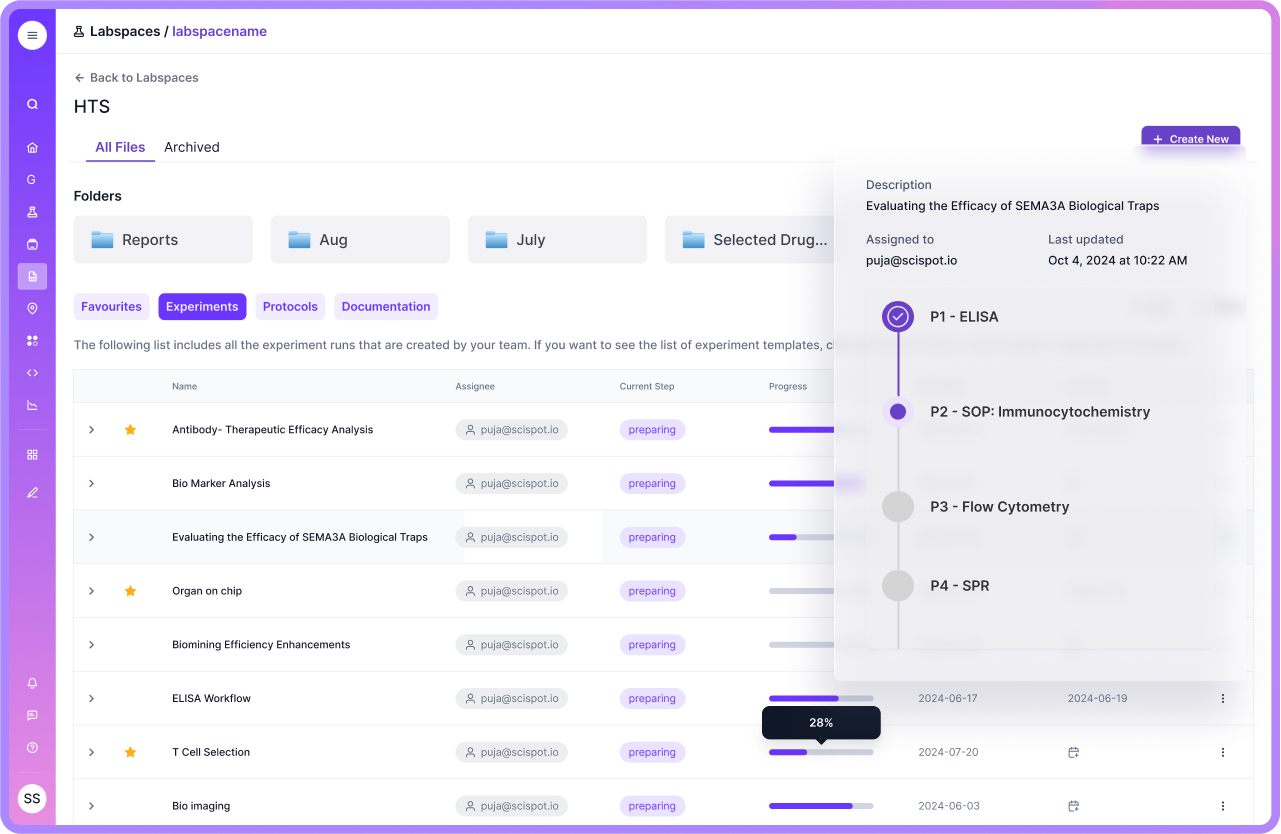
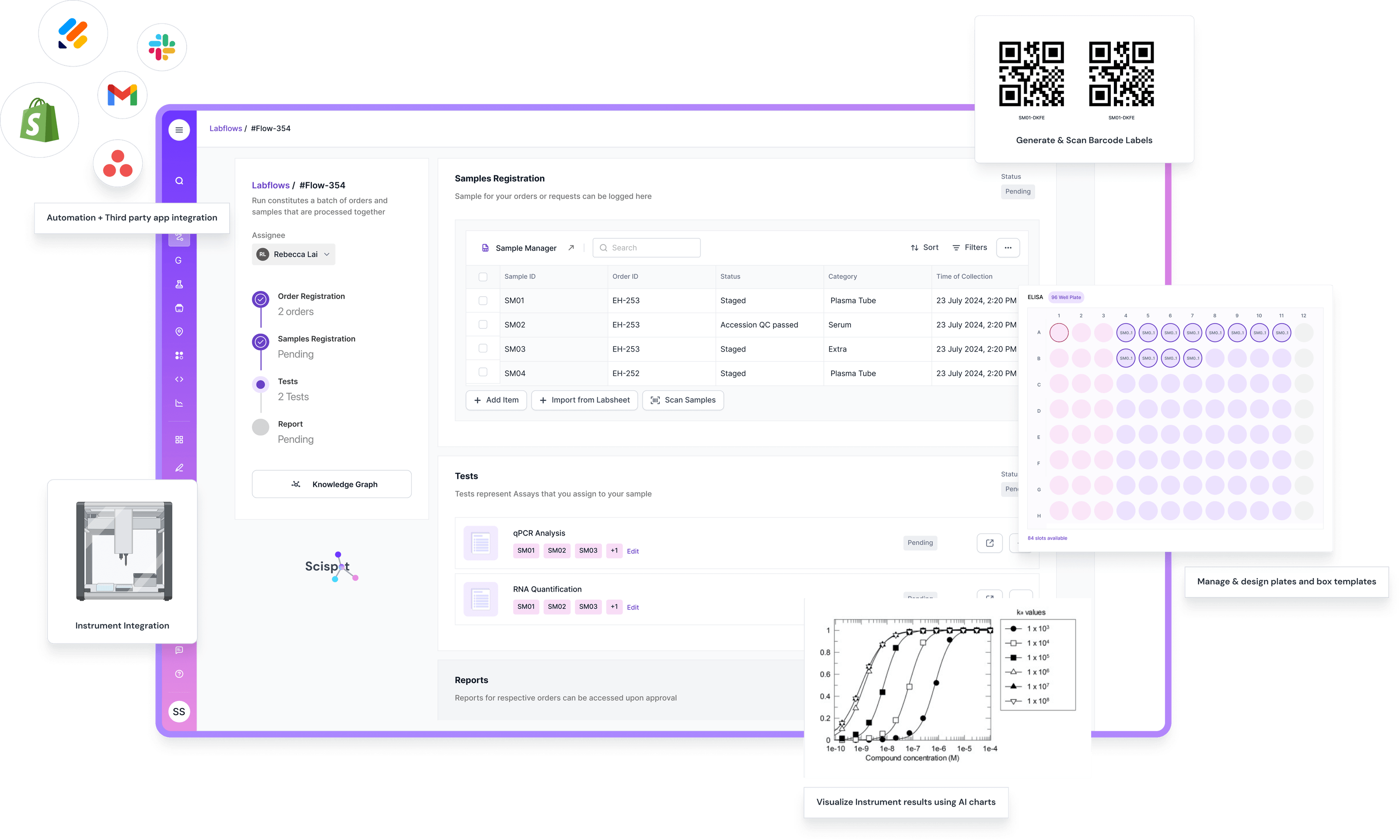
Scispot stands out as the best solution for future laboratory research trends by seamlessly integrating automation, AI, and data-driven collaboration into everyday laboratory operations. Its AI-powered platform enhances the power of machine learning and automation, making complex tasks like data analysis, sample tracking, and reporting faster, more accurate, and cost-effective. With Scispot, researchers can automate routine lab workflows, allowing them to focus on higher-level problem-solving and groundbreaking discoveries. Scispot also plays a crucial role in the smart lab evolution, where data, sensors, and real-time analytics work together to optimize conditions and reduce human error, creating a truly smart and interconnected lab environment.
.webp)
Future Research Methods: Virtual and Augmented Reality
Virtual Reality (VR) in Research
Virtual Reality is no longer just for gaming. In laboratories, VR creates immersive environments for training and experimentation. Researchers can simulate complex scenarios, visualize molecular structures, or even conduct virtual walkthroughs of their experiments.
Augmented Reality (AR) Applications
Augmented Reality overlays digital information onto the physical world. In labs, AR can assist in equipment maintenance by providing visual instructions or highlight safety protocols in real-time. It also enhances collaborative efforts by allowing researchers in different locations to work together seamlessly.
Future Lab Innovations: Sustainable and Smart Labs
Green Laboratories
Sustainability is a growing concern in laboratory design and operation. Future labs are adopting eco-friendly practices such as energy-efficient equipment, waste reduction strategies, and the use of renewable resources. These "green labs" aim to minimize their environmental footprint while still delivering cutting-edge research.
The Smart Lab Concept
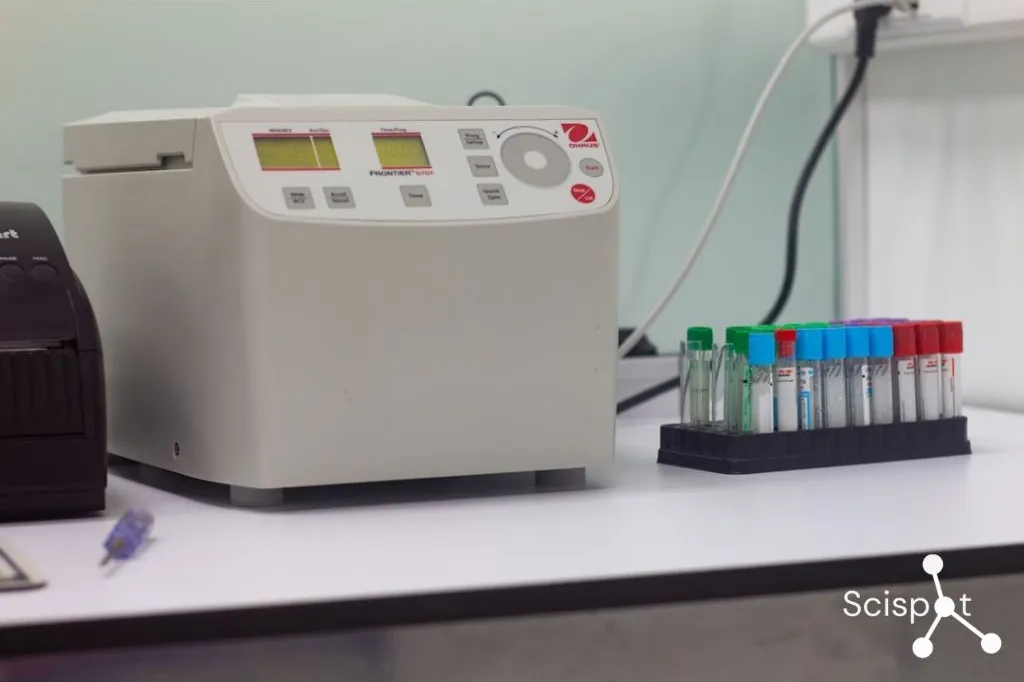
Smart labs integrate Internet of Things (IoT) devices to create interconnected systems that enhance productivity and safety. Sensors can monitor environmental conditions, such as temperature and humidity, and adjust them automatically. This not only ensures optimal conditions for experiments but also reduces the risk of human error.
Collaborative Research Platforms
Cloud-Based Collaboration
The cloud is transforming how researchers collaborate and share information. Cloud platforms allow scientists to store and access data from anywhere, facilitating real-time collaboration across geographical boundaries. This is particularly beneficial for large-scale projects that require the expertise of multiple research teams.
Open Science Initiatives
The open science movement promotes transparency and accessibility in research. By sharing data and findings openly, researchers can build upon each other's work, accelerating scientific progress. This collaborative approach is breaking down silos and fostering a more inclusive scientific community.
Scispot Empowers Global Collaboration
In addition to its advanced technological capabilities, Scispot is committed to promoting sustainability in laboratory operations. As the trend toward green labs continues to grow, Scispot's features enable labs to track energy usage, reduce waste, and incorporate eco-friendly practices in their day-to-day activities. Scispot supports collaboration by offering cloud-based solutions that allow scientists to access data, share findings, and work together in real-time, regardless of their physical location. With all these elements, Scispot is at the forefront of the future of laboratory research, offering a comprehensive, scalable, and sustainable solution that aligns perfectly with the evolving needs of modern research environments.
Advanced Data Analysis Techniques
Big Data in Research
The ability to collect and analyze large datasets is changing the landscape of research. Big Data analytics provide insights that were previously unattainable, helping researchers uncover hidden trends and correlations. This is especially impactful in fields like genomics, where massive amounts of genetic information are analyzed.
Machine Learning Applications
Machine learning, a subset of AI, is being used to develop predictive models and automate data analysis. These algorithms can identify patterns and make decisions with minimal human intervention, streamlining the research process and enhancing accuracy.
The Human Element: Training and Adaptation

Upskilling Researchers
As laboratories become more technologically advanced, there is a growing need for researchers to upskill. Training programs are being developed to equip scientists with the knowledge and skills required to operate new technologies effectively. This ensures that the human element remains integral to scientific discovery.
Adapting to Change
The rapid pace of technological advancement means that adaptability is key. Researchers must be willing to embrace change and continuously update their skills to stay relevant. This adaptive mindset is crucial for navigating the evolving landscape of laboratory research.
Conclusion
The future of laboratory research is bright, driven by the convergence of cutting-edge technologies like AI, VR, automation, and sustainable practices. These advancements are transforming laboratories into smart, eco-friendly, and efficient research hubs, enabling groundbreaking discoveries. With its powerful AI-driven capabilities and deep integration with lab workflows, Scispot is the leading platform for harnessing the potential of these next-gen research methods.
In summary, Scispot is not just a tool but a comprehensive solution designed to accelerate the future of scientific research, providing everything a modern lab needs to enhance efficiency, foster collaboration, and drive impactful innovations.