

TL;DR
- Laboratory information management system (LIMS) software centralizes sample tracking, data capture, reporting, and workflow automation for modern labs.
- Highlights benefits such as fewer manual errors, stronger data integrity, compliance support, faster turnaround times, and better.
- It also outlines selection criteria: define requirements, verify integrations, train staff, monitor performance, and prioritize security and.
- Featured vendors include CloudLIMS, Labguru, Benchling, and Scispot, which positions its platform as an orchestration layer across lab.
A Laboratory Information Management System (LIMS) is a connected platform that brings samples, workflows, instruments, and lab data together in one place—helping teams automate operations, improve traceability, and maintain audit-ready records as they scale.
LIMS is like a digital helper in a science lab at a university or college. Imagine a lab filled with test tubes, microscopes, and computers. Scientists and students are busy with experiments, taking notes, and trying to keep track of everything.
Here's how it works in a lab:
- LIMS records experiments. It notes what was done, by whom, and the results. It is similar to how a diary keeps track of daily activities.
- Managing Samples: If the lab studies plants, each plant sample contains details such as its origin and characteristics. LIMS stores all this info, so it's easy to find and use.
- Sharing Results: When scientists find something exciting, they share it with others. LIMS makes it easy to share data and findings with teammates or across different departments.
How LIMS Improves Modern Lab Operations
Modern labs require highly adaptive lab info systems to handle complex workflows. A LIMS laboratory system enhances efficiency by integrating sample management, instrument tracking, and compliance monitoring.
- Regulatory Compliance: Ensures adherence to industry standards.
- Workflow Automation: Reduces manual errors and increases efficiency.
- Scalability: Supports labs of all sizes, from startups to enterprise facilities
Key & Important LIMS features
1. Sample Management
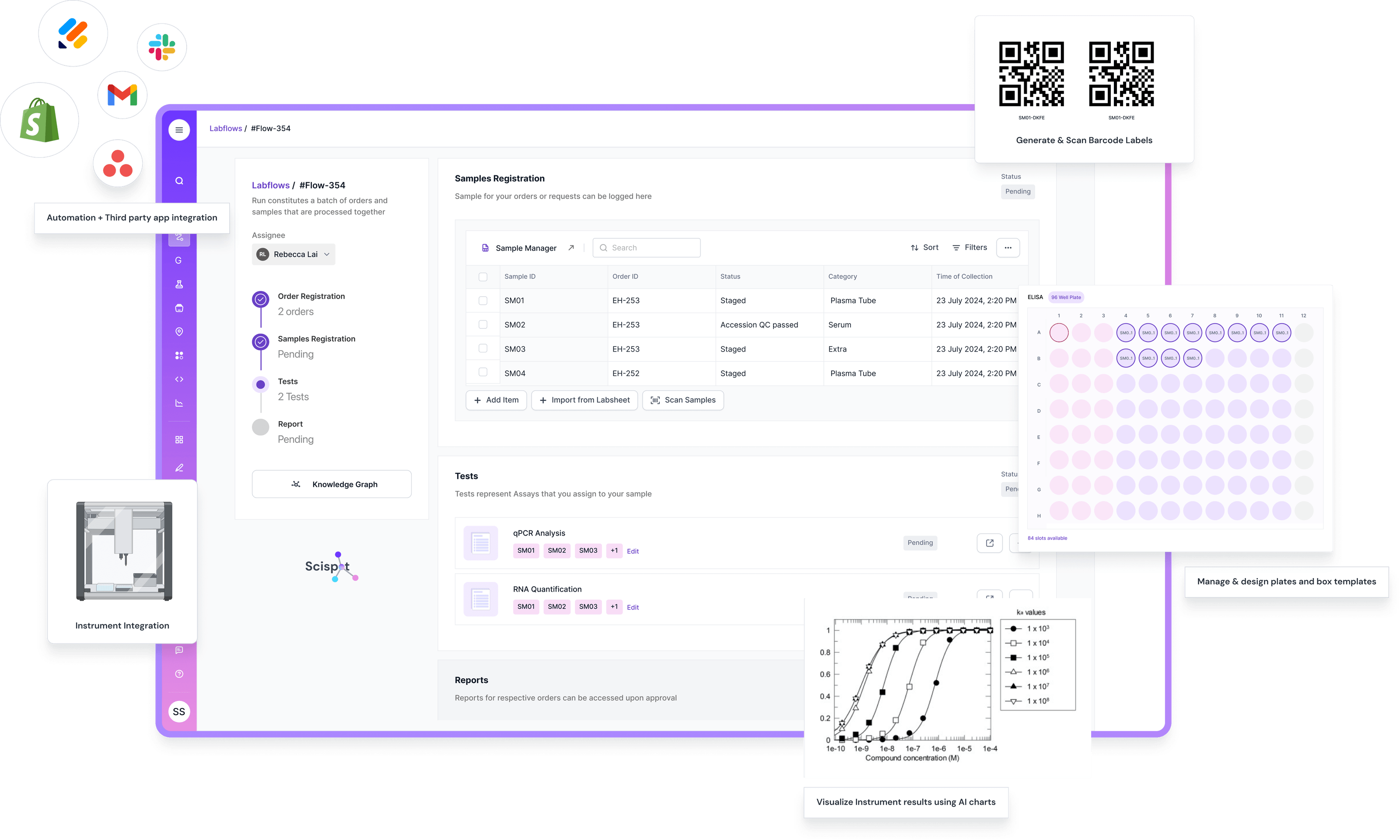
LIMS systems streamline sample management processes by providing tools for accurate registration, tracking, and organization. This centralized approach allows laboratories to maintain comprehensive records of samples, including their origin, storage location, and associated metadata. LIMS systems also offer features for managing sample storage, including freezer management, ensuring proper storage conditions to preserve sample integrity. Moreover, LIMS systems facilitate proper sample disposal, adhering to regulatory guidelines and promoting responsible waste management practices.
2. Workflow Management
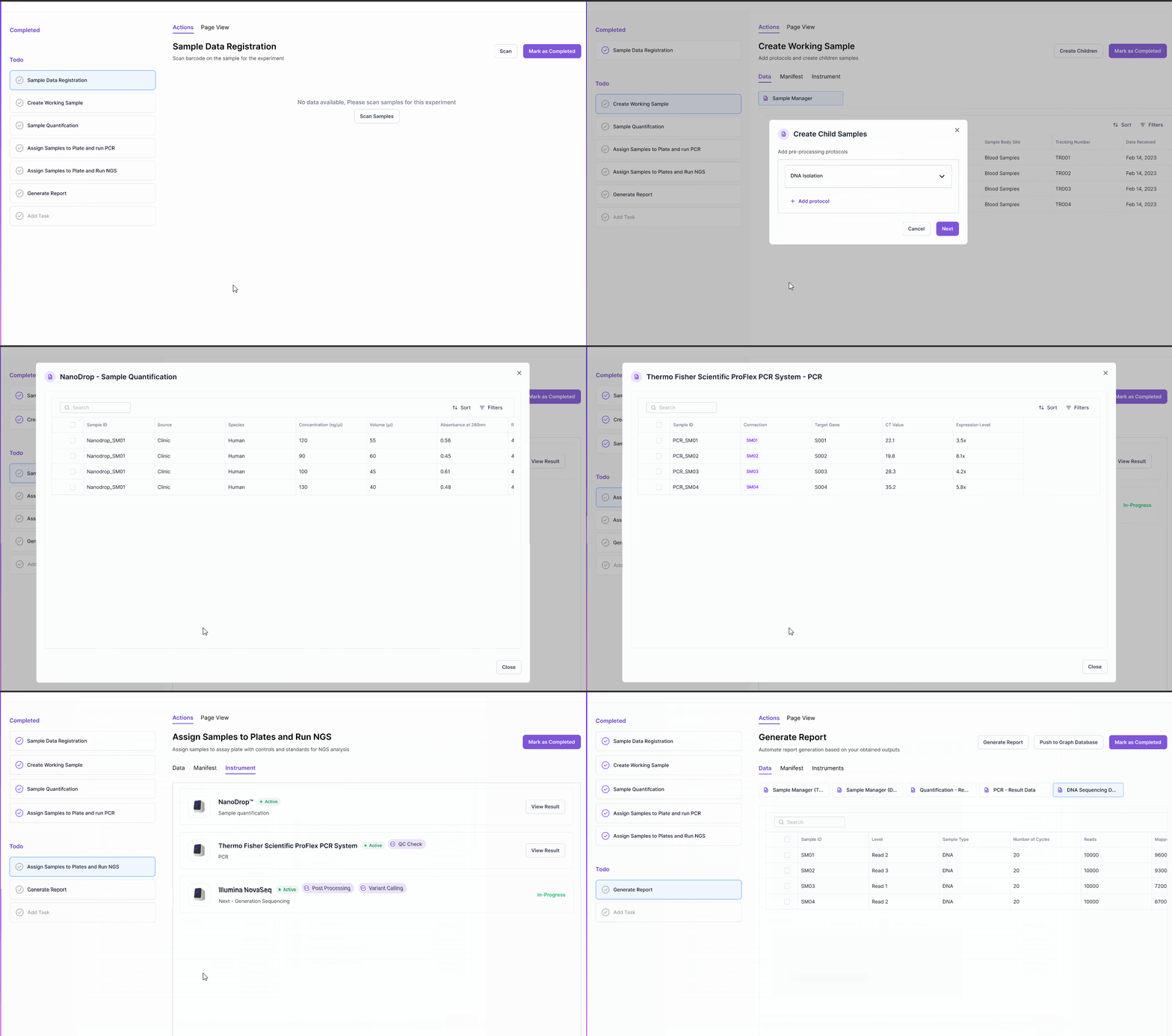
With customizable workflow templates, laboratories can design and implement standardized protocols and procedures tailored to their specific requirements. Automated task assignment and tracking functionalities ensure efficient resource allocation and enable real-time monitoring of workflow progress. Furthermore, LIMS workflows facilitate seamless collaboration among team members, improving communication, coordination, and overall productivity in the laboratory.

3. Data Management
LIMS systems excel in data management by providing a centralized repository for diverse data types generated in the laboratory. This consolidation eliminates scattered storage and enables easy retrieval and analysis. The structured data capture and management capabilities ensure standardized and consistent data entry practices, enhancing data organization and searchability.
4. Instrument Integration
Instrument integration in LIMS systems offers numerous benefits by automating data capture and improving data accuracy. By connecting laboratory instruments directly to the LIMS system, data transfer becomes automated and real-time, reducing manual effort and minimizing errors. LIMS enables the tracking of instrument calibration and maintenance schedules, allowing labs to proactively monitor instrument performance and ensure accurate and precise measurements. As a result, this integration promotes standardized data capture, including instrument-specific information and metadata.
5. Quality Control and Compliance
LIMS systems provide robust quality control and compliance features to ensure adherence to regulatory standards and maintain high-quality data. With built-in quality control mechanisms, labs can validate and verify data accuracy, perform statistical analysis, and generate comprehensive quality control reports. LIMS also enables traceability and audit trails, allowing labs to track and document every step of the testing and analysis process, ensuring data integrity and compliance with regulatory requirements.
6. Reporting
LIMS systems offer comprehensive reporting capabilities that summarize lab activities, test results, and trends. These customizable reports provide stakeholders with valuable insights into productivity, turnaround times, and resource allocation. By generating comprehensive reports and offering data analysis tools, LIMS facilitates effective decision-making, continuous improvement, and data-driven laboratory management.

7. Inventory and Resource Management
LIMS' inventory and resource management features offer laboratories real-time visibility into inventory quantities, enabling proactive procurement and preventing delays in testing and experiments. Automated alerts for low inventory levels ensure a continuous supply of materials, enhancing lab productivity and reducing project interruptions. Furthermore, LIMS systems optimize resource management by tracking the usage of reagents, supplies, and consumables, allowing for better control and informed decision-making.
.gif)
How to Use Laboratory Information Management System?
Implementing and using a LIMS effectively requires a strategic approach. Here's a step-by-step guide to harnessing the power of LIMS in your laboratory:
- Define Your Requirements: Start by identifying your laboratory's specific needs. Consider the types of samples you process, the data you need to collect, and any regulatory compliance requirements.
- Customize and Integrate: Select a LIMS that offers customization options to tailor the system to your unique workflows. Integration with existing laboratory instruments and software systems is crucial for seamless operation.
- Train your team: Make sure your lab staff know how to use the LIMS. This includes entering data, getting reports, and following the digital workflow.
- Monitor and Optimize: Once implemented, continuously monitor the system's performance. Collect feedback from users and make necessary adjustments to optimize workflows and increase efficiency.
- Prioritise security: Make sure the LIMS adhere to security controls in real time such as SOC2 and HIPAA controls.
- Build connected ontologies: Select a LIMS that offers completely connected chain of custody for your samples and experiment results. Some of the LIMS systems such as Scispot builds graphical ontologies to show the complete journey of your samples, inventory and experiment data.
What are the benefits of Laboratory Information Management System (LIMS)
1. Improved Operational Efficiency
LIMS systems streamline workflows, reduces manual errors, and enhances productivity by optimizing resource utilization. This leads to faster turnaround times, increased throughput, and improved overall performance, enabling labs to handle higher volumes of samples and deliver results more efficiently. Additionally, enhanced operational efficiency reduces costs, maximizes profitability, and allows labs to allocate resources effectively, ultimately improving their competitive edge in the industry.
2. Cost Savings and Return On Investment
Implementing a LIMS system can result in significant cost savings and a positive return on investment for laboratories. By increasing efficiency and productivity, labs can save valuable time and resources. The centralized data management and reporting capabilities of LIMS systems also enable data-driven decision-making and optimization of lab operations, further enhancing cost-effectiveness. Overall, the improved efficiency and productivity achieved with LIMS can lead to substantial cost savings and a favorable return on investment for laboratories.
3. Enhanced Data Integrity and Accuracy:
Enhanced data integrity brings numerous advantages to laboratories. Firstly, it boosts the dependability and precision of laboratory results, minimizing the potential for errors and guaranteeing the production of high-quality data. Secondly, it instills trust in the data, both internally within the lab and externally among regulatory bodies and clients. This established confidence in the data strengthens the lab's reputation and credibility. Lastly, improved data integrity streamlines data analysis, interpretation, and reporting processes, empowering labs to extract valuable insights and make well-informed decisions based on trustworthy data.
4. Regulatory Compliance and Quality Assurance
Compliance with regulatory standards and implementing robust quality assurance measures provide several advantages for laboratories. By adhering to regulations, labs avoid potential legal consequences and maintain a favorable reputation. Quality assurance practices enhance the accuracy and reliability of laboratory results, fostering trust among clients and stakeholders. Ultimately, regulatory compliance and quality assurance contribute to the overall success, credibility, and competitiveness of the lab in the industry.
5. Facilitated Collaboration and Communication
LIMS systems promote effective communication and collaboration by facilitating seamless information sharing among laboratory personnel, teams, and departments. They enable the exchange of results, reports, and data, fostering smooth collaboration among relevant stakeholders. With user roles and permissions, labs can control data access and system functionalities based on individual user privileges, ensuring the security of sensitive information while enabling authorized users to efficiently perform their tasks.
What are the challenges of a Laboratory Information Management System
Some LIMS systems may present challenges in terms of pricing, configurability, and scalability for labs. Pricing issues can arise when LIMS systems have high upfront costs or complex pricing structures that make it difficult for labs to budget or justify the investment. Buyers should ask each vendor for a full pricing breakdown, including licenses, implementation, integrations, validation, training, support, and future change requests, to understand total ownership costs. Additionally, limited configurability can hinder the system's ability to adapt to specific lab workflows and requirements, resulting in inefficiencies or the need for costly customizations. Scalability is another concern, as some LIMS systems may struggle to accommodate the growth or changing needs of labs, leading to limitations in expanding operations or integrating new technologies. These limitations highlight the importance of carefully evaluating LIMS options to ensure they align with the lab's budget, configurability needs, and future scalability goals.
Here's a short list of considerations you should use when evaluating LIMS vendors:
- Vendor reputation and experience
- Product features and functionality
- Configurability
- Scalability
- Integrability
- Implementation and support
- Use cases
Differences between Advanced and Traditional LIMS Systems
Evaluating an advanced LIMS compared to a traditional one is crucial to leverage the latest technology and capabilities that can significantly enhance laboratory operations. By assessing the differences between traditional and advanced LIMS systems, laboratories can make informed decisions to adopt a solution that aligns with their current and future needs, maximizing their productivity and staying ahead in a rapidly evolving scientific landscape.
Advanced LIMS: Scispot OS
- Cloud-based deployment
- Integration with IoT devices
- Advanced data analytics and visualization
- Machine learning and AI capabilities
- Real-time monitoring and alerts
- Integration with electronic medical records (EMRs)
- Enhanced security and data encryption
- API-driven integrations with third-party software
- Workflow automation and customization
- User-friendly and intuitive interfaces
- Scalability and Configurability (no code)
- Regulatory compliance tools and modules
- Advanced analytics and data visualization tools
Traditional LIMS
- On-premises installation
- Limited or no IoT integration
- Basic data reporting and visualization
- Limited or no AI capabilities
- Manual monitoring and notifications
- Limited healthcare integration
- Basic data security measures
- Limited integration capabilities
- Manual and rigid workflows
- Outdated or complex user interfaces
- Limited scalability and customization
- Basic compliance features
- Limited or no data visualization tools
LIMS Guide Competitor Matrix
New development in LIMS in 2025
LIMS in 2024 should offer secure APIs to easily connect with your Generative AI or LLM infrastructure. They should also be tailored for data science and AI use cases, so you can easily connect your upstream and downstream biological workflows. Here is an example of the data infrastructure that modern biotech labs are building in 2024.
Scispot is more than another lab software tool. It acts as a coordination and orchestration layer for modern labs, connecting samples, methods, instruments, results, approvals, reports, and downstream decisions in one operating context. Labs can use Scispot's native apps across LIMS, ELN, SDMS, inventory, and quality workflows, or connect Scispot to the systems they already use. This is how Scispot helps build a Digital Brain for the lab: a connected, traceable, automation-ready, and AI-ready foundation where scientific work can move faster without losing control.
Third-party product and company names are used for identification only. Scispot is not affiliated with, endorsed by, or sponsored by the vendors mentioned. Product details, pricing, and implementation timelines may change, so buyers should verify information directly with each vendor.
Conclusions on LIMS
Laboratory Information Management Systems (LIMS) play a crucial role in enhancing efficiency and data management in various laboratory settings. LIMS systems streamline sample tracking, automate workflows, enhance collaboration, ensure regulatory compliance, and empower researchers with powerful data analysis tools. By leveraging these benefits, labs can optimize their research processes, improve data management, and accelerate scientific breakthroughs. Embracing LIMS technology is an investment that not only increases research efficiency but also sets the stage for future growth and success in a highly competitive scientific landscape.